

Summary
- bit.bio has secured $25m in Series D financing, with backing from M&G Investments and Abcam founder Jonathan Milner.
- The company reports year-to-date increases of 76% in paid vial volumes, 34% in orders, and 40% in active customers.
- Funding will support expansion of a portfolio containing more than 50 human cell types for drug discovery, toxicology, and disease research.
Cambridge biotechnology company bit.bio has raised $25 million to expand its commercial range of laboratory-produced human cells, following increased demand from organisations developing medicines and investigating human disease.
The Series D investment includes support from existing investor M&G Investments and Dr Jonathan Milner, founder and former chief executive of life sciences supplier Abcam. It follows another financing round earlier in 2026 and will support the introduction of additional cell models using manufacturing infrastructure already established by the company.
Paid vial volumes increased 76% year to date, according to bit.bio, while orders rose 34% and active customers increased 40%. Academic customer numbers grew 63%, indicating rising activity across research institutions as well as commercial laboratories.
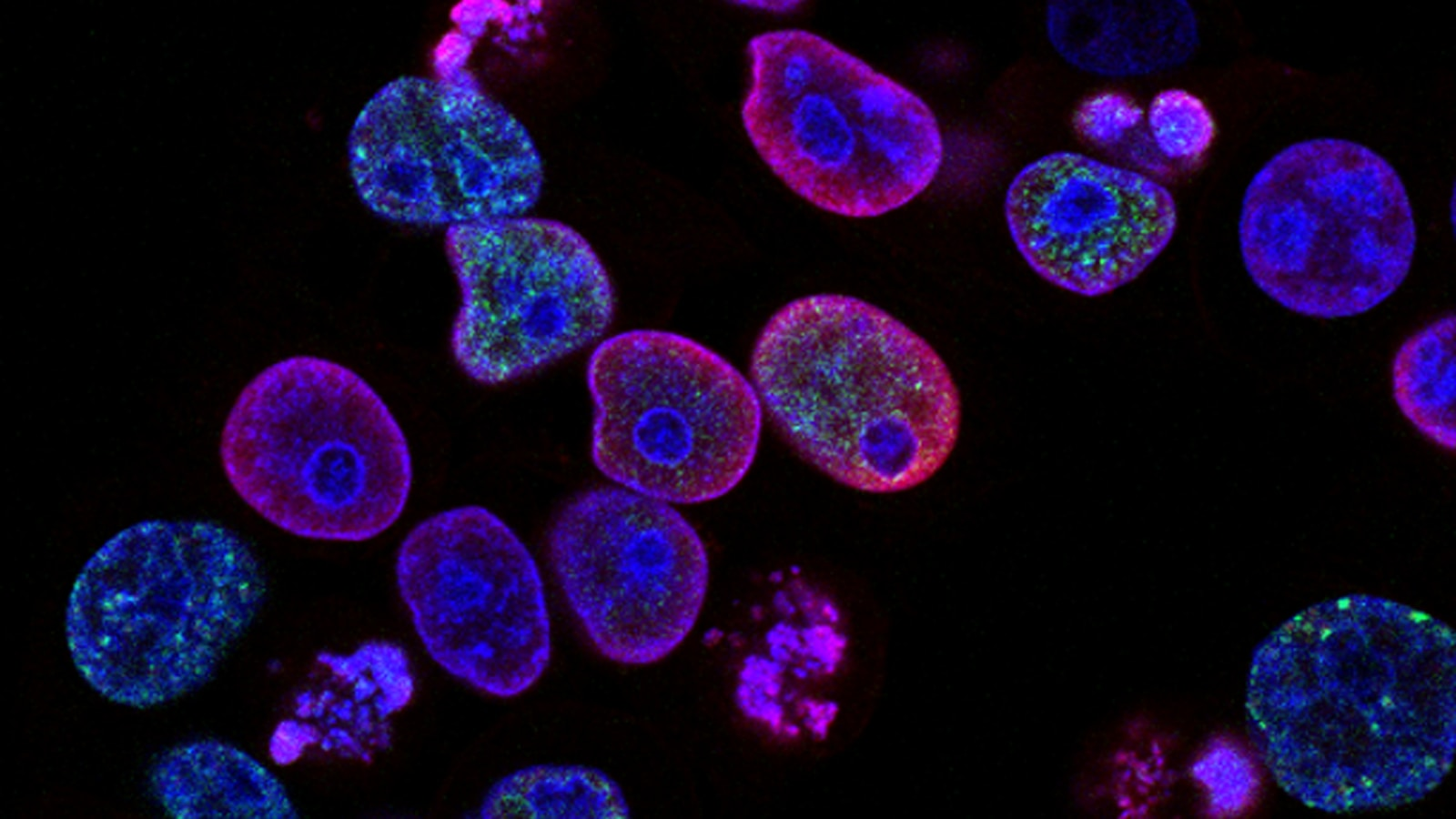
The company currently offers more than 50 human cell types, including models of the heart, liver, and central nervous system. Its products are used to investigate biological processes, assess experimental medicines, and generate data that can support drug discovery and toxicology research.
Reducing variation in experimental biology
Researchers examining a potential medicine need experimental systems that provide consistent information about how a substance interacts with human biology. Early testing often involves laboratory cells, animal models, and computational methods, each of which has different strengths and limitations.
Human cell models can provide evidence about biological mechanisms that may not be represented accurately in animal material. However, the usefulness of such systems depends on how closely the cells reproduce the characteristics relevant to a particular experiment.
Traditional methods of obtaining or producing specialised human cells can introduce substantial variability. Cells from different donors may behave differently, while processes used to develop particular cell types can produce mixtures whose composition changes between batches.
Those differences make it difficult to determine whether an experimental result reflects the medicine being tested or changes in the biological material used. Repeating a study with cells from another batch may produce different results even when the experimental conditions otherwise appear similar.
bit.bio uses a proprietary platform called opti-ox to programme cells into defined human cell types. The company aims to manufacture consistent research materials that can be supplied repeatedly, reducing one source of variation between experiments.
The approach draws on induced pluripotent stem cell technology, through which cells can be directed towards specialised biological functions. Producing useful research models requires control over their identity, maturity, purity, and performance.
Commercial customers may also need evidence that cells remain viable during storage and transport, and that different manufacturing batches meet the same specifications. These requirements become particularly important when research teams conduct repeated experiments over several years.
AI creates more candidates to validate
Artificial intelligence is increasingly used to identify potential drug targets, analyse molecular structures, and generate candidates for laboratory testing. Computational systems can examine large amounts of information and suggest possibilities that would otherwise require substantial manual investigation.
However, predicting that a molecule might interact with a biological target does not establish that the interaction will occur in a living system, or that the resulting effect will be useful and safe.
Researchers must still test candidates experimentally, often through several stages, to understand biological activity, toxicity, and potential differences between laboratory models and human patients.
As computational methods increase the number of promising candidates available for investigation, demand may grow for reliable biological material capable of supporting those experiments.
Dr Emma Pepperell, chief executive of bit.bio, connected the company’s commercial expansion with changes in drug development: “AI is changing the speed at which new medicines can be discovered”.
The company’s investment case also reflects interest in reducing the use of animal experiments where suitable alternatives exist. Human cell models may provide more directly relevant evidence for particular questions, although they cannot reproduce every interaction occurring within a complete human body.
For example, a laboratory model of heart cells may help identify effects on cardiac function, but it cannot independently establish how a medicine will be absorbed, metabolised, or distributed between organs.
Similarly, a liver cell model may provide valuable toxicity information without reproducing all the physiological processes that affect a medicine during clinical use.
These limitations mean laboratory models contribute to a wider evidence base rather than replacing the clinical development process. Their commercial value depends on providing information that is reproducible, relevant, and sufficiently reliable to guide further research decisions.
Manufacturing capacity supports a larger catalogue
Unlike a biotechnology company concentrating its resources on developing a single medicine, bit.bio supplies materials used by many research organisations. Its commercial performance depends on demand for those materials and the ability to produce them consistently.
The company says its manufacturing infrastructure is already in place, allowing the latest financing to concentrate on widening the catalogue and improving access for customers.
Additional cell types could support research in areas where suitable human models are difficult to obtain. However, bringing a new product to market involves scientific validation, quality control, production development, and customer support.
Laboratories also need to assess whether changing suppliers or experimental materials affects the comparability of their results. A standardised product may offer advantages, but researchers working with established methods often require evidence before adopting a replacement.
Distribution creates another practical requirement. Human cell products can be sensitive to handling and temperature, making dependable shipping arrangements and clear preparation procedures important for international customers.
bit.bio’s reported order growth suggests expanding commercial activity, although the financing material does not disclose the corresponding revenue, margins, or profitability of its cell-products business.
Likewise, a rise in active customers does not establish how frequently those organisations reorder or whether initial evaluations are developing into regular purchasing relationships.
The distinction is particularly relevant for research suppliers because demand can fluctuate between development projects, while routine laboratory products may generate more predictable repeat orders.
Commercial adoption remains the longer test
bit.bio’s investment follows increasing attention to the quality of evidence used in pharmaceutical development, particularly as computational methods are incorporated into experimental workflows.
Reliable human cell materials could support more comparable results across laboratories, reduce time spent reproducing inconsistent experiments, and help researchers evaluate additional drug candidates.
However, achieving those benefits requires product performance to be demonstrated within the specific experimental conditions for which cells are used. Manufacturing consistency is valuable, but it is not a substitute for evidence that a model accurately represents the relevant biology.
The new funding will allow bit.bio to expand its portfolio from an established production base. Its subsequent progress will be measured by recurring customer demand, successful validation of additional cell types, and the extent to which its products become routinely used in pharmaceutical and academic laboratories.


