

Summary
- VodafoneThree activated the first Ericsson AIR 3266 Massive MIMO radio in its London network in October 2026, becoming its first commercial operator.
- Ericsson says the equipment supports up to 400 MHz of mid-band spectrum and offers at least 30% lower energy consumption than comparable deployed radios.
- An AI-based scheduler has demonstrated up to 20% higher downlink throughput in initial congested-network testing, with a possible UK-wide rollout in 2027.
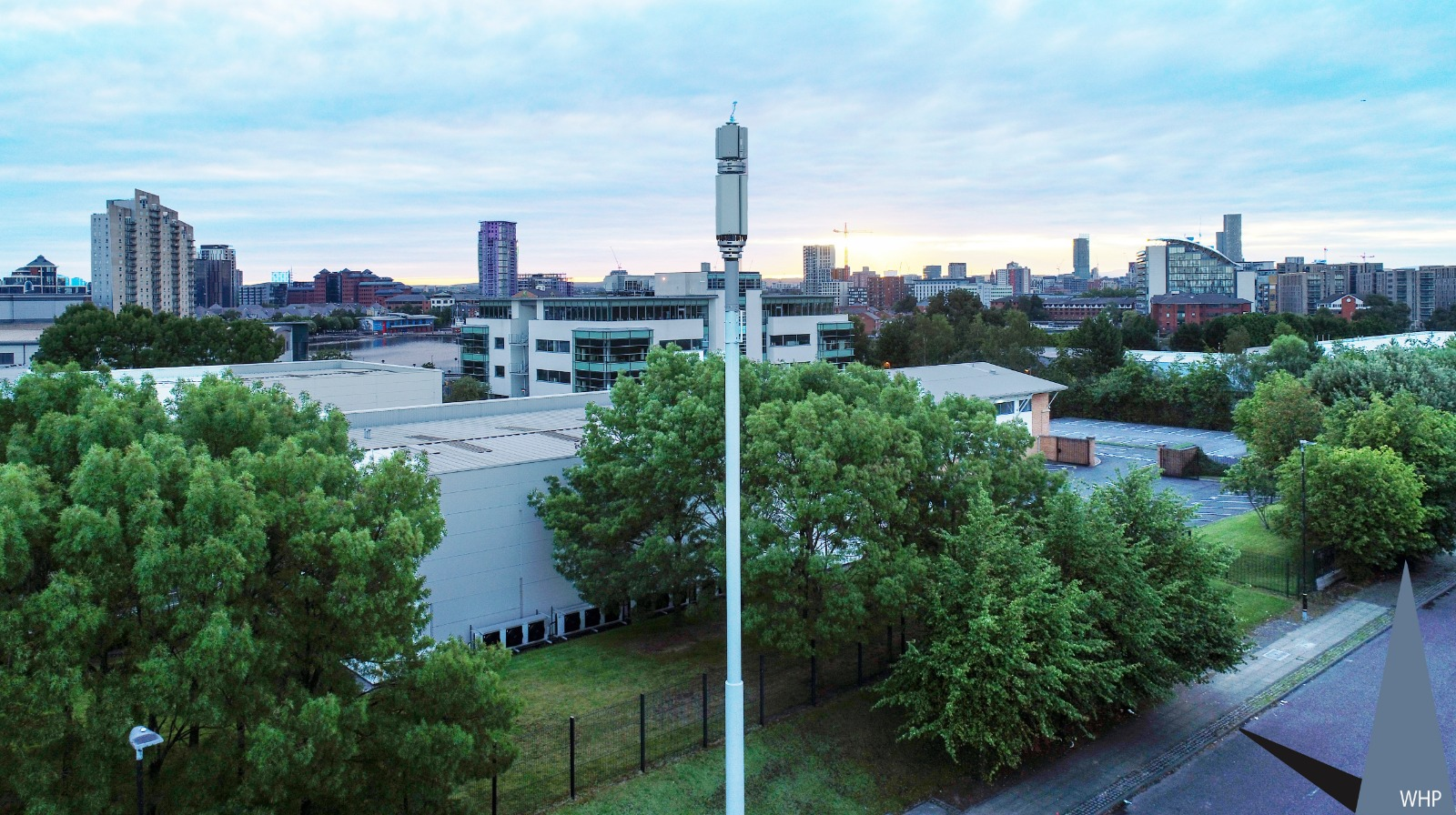
VodafoneThree has begun introducing Ericsson’s latest Massive MIMO equipment into its London mobile network, adding radio capacity and dedicated AI processing hardware as the operator modernises its infrastructure following the merger of Vodafone UK and Three UK.
The first Ericsson AIR 3266 radio entered commercial service in October, making VodafoneThree the first operator to deploy the product in a live network, according to the companies. The development forms part of an eight-year, SEK 12.5 billion agreement covering Ericsson radio access equipment at more than 10,000 UK sites and the operator’s national core network.
The new radio supports up to 400 MHz of mid-band spectrum and incorporates neural processing accelerators intended to support AI-based network optimisation. However, the hardware deployment is separate from the introduction of the AI software itself, which VodafoneThree intends to test before deciding on a wider rollout in 2027.
Ericsson also claims substantial improvements in equipment energy efficiency and embodied carbon. Those figures relate to comparisons between radio products, rather than measured reductions in VodafoneThree’s total network electricity consumption or emissions.
Capacity gains depend on spectrum and deployment
The AIR 3266 uses Massive MIMO technology, which combines multiple antennas with signal processing to direct radio transmissions more efficiently. By managing signals across several antenna elements, operators can improve the use of available spectrum and serve more devices within a cell.
The equipment is designed for mid-band 5G using time division duplexing, allowing uplink and downlink transmissions to share spectrum according to the network’s configuration. Its support for up to 400 MHz provides flexibility for operators using several mid-band spectrum allocations.
That technical capability does not mean every installed radio will immediately operate across the full supported bandwidth. Actual performance depends on the spectrum available to the operator, network configuration, connected devices, and the demands placed on each site.
Additional radio capacity is particularly valuable in London, where dense populations, office districts, transport corridors, and large events can produce substantial variations in mobile traffic. The amount of data carried by a particular cell can change rapidly as users move between locations or applications generate heavier demand.
The equipment’s compact design could also help VodafoneThree manage physical constraints at existing installations. Rooftop and mast locations have limits on structural loading, space, and the amount of equipment that can be installed without further engineering work.
Reducing the size and wind loading of replacement radios can simplify some installations, although individual sites may still require structural checks, changes to mounting arrangements, or upgrades to supporting electrical and transmission infrastructure.
The launch announcement describes the AIR 3266 as lightweight and relatively slim. However, the rollout material and Ericsson’s product specifications contain differing weight figures, so no numerical weight claim has been retained in this article.
For the merged operator, replacing radio hardware is part of a broader consolidation exercise involving equipment inherited from two previously separate networks. Changes must be coordinated with spectrum integration, coverage planning, and the need to maintain service while individual sites are upgraded.
AI processing moves closer to the antenna
Ericsson has incorporated dedicated neural accelerators into the radio through its latest silicon platform. The company says these increase AI inference capability by a factor of ten, providing additional processing resources for algorithms that must respond quickly to changing radio conditions.
AI inference involves running a trained model to produce a decision or prediction. In a mobile network, such processing could help adjust transmission parameters in response to interference, signal quality, or competing traffic demands.
Some optimisation functions operate within narrow timing windows, making the location of processing equipment important. Performing suitable calculations closer to the radio can reduce reliance on more distant computing resources, although the benefit depends on the software architecture and the work being carried out.
The tenfold processing claim should not be confused with a tenfold improvement in network throughput or customer connection speeds. It describes a capability of the radio hardware rather than the measured performance of VodafoneThree’s network.
One intended application is Ericsson’s AI-native Scheduler for Link Adaptation, which uses AI to support decisions about how radio resources are assigned and transmission settings adjusted.
Ericsson says initial tests demonstrated up to 20% higher downlink throughput under congested conditions. That result has not been presented as an independently verified improvement across VodafoneThree’s live network, and it does not establish the benefit customers would experience at every site.
VodafoneThree intends to trial the scheduler before the end of its financial year. A nationwide introduction is planned for 2027, subject to successful validation.
The trials will need to establish how the software performs across different frequencies, equipment configurations, traffic patterns, and device populations. Optimising throughput in one situation may also affect energy use or the distribution of capacity between users, requiring performance to be considered across several measures.
Equipment efficiency meets network growth
Ericsson says the AIR 3266 consumes at least 30% less energy than comparable currently deployed equipment and has an embodied carbon footprint up to 50% lower.
Operational energy consumption and embodied carbon are separate measurements. The first concerns electricity required while equipment operates, while the second includes emissions associated with producing materials and manufacturing the product.
Lower radio electricity consumption can contribute to operating cost reductions when similar equipment is installed across a large network. However, the resulting savings depend on how many radios are replaced, their operating conditions, traffic demand, and the characteristics of the previous installation.
The effect on the operator’s total electricity use may differ from the performance of individual products. Capacity expansion can introduce additional equipment or increase the amount of data processed, potentially offsetting some efficiency improvements.
Similarly, lower embodied carbon for a replacement radio does not by itself establish the lifecycle emissions benefit of a network upgrade. Manufacturing, transport, installation, equipment retirement, and the useful life of the new hardware all influence the wider comparison.
VodafoneThree has not published a quantified assessment of realised network-wide energy or emissions reductions attributable to the AIR 3266 deployment. The figures therefore remain product-level claims supported by Ericsson’s comparisons.
The radio upgrade complements a new core
The London rollout follows the September activation of VodafoneThree’s upgraded Ericsson cloud-native 5G core. That platform supports the combined operator’s move towards standalone 5G and additional services that depend on more programmable network infrastructure.
Standalone 5G separates mobile services from their reliance on the older 4G core, allowing operators to introduce capabilities such as network slicing, where different groups of traffic receive defined network treatment.
VodafoneThree has already introduced services using network slicing, including a business offering intended to provide more predictable connectivity. Such arrangements could support enterprise applications where performance requirements differ from ordinary mobile browsing.
Industrial monitoring, logistics operations, and business-critical communications are among the potential markets, although their requirements vary considerably. A service suitable for an employee’s connected device may not provide the guarantees required by industrial control systems or emergency communications.
The operator’s wider £11 billion investment programme includes plans to extend standalone 5G coverage to 99% of the UK population by 2030. Achieving that target involves further radio deployment, core integration, and network planning beyond the initial London installation.
Ericsson’s AIR 3266 adds new processing capability to that infrastructure, but the commercial benefit will depend on how widely the hardware is deployed and whether the planned AI software delivers repeatable improvements under real operating conditions.
With the first London site active, VodafoneThree can begin assessing the equipment within its live network. The planned scheduler trial will provide more specific evidence of whether its AI processing capability can improve service performance beyond the gains available from the radio hardware itself.


