

Summary
- XPENG has launched the L03 across 65 markets, with UK deliveries expected in 2027 and local prices still to be confirmed.
- The vehicle integrates Google Maps technology into XPENG’s navigation interface and uses mapping data to support driving assistance.
- European expansion will test approval, localisation, safety validation, data governance, service capacity, and long term software support.
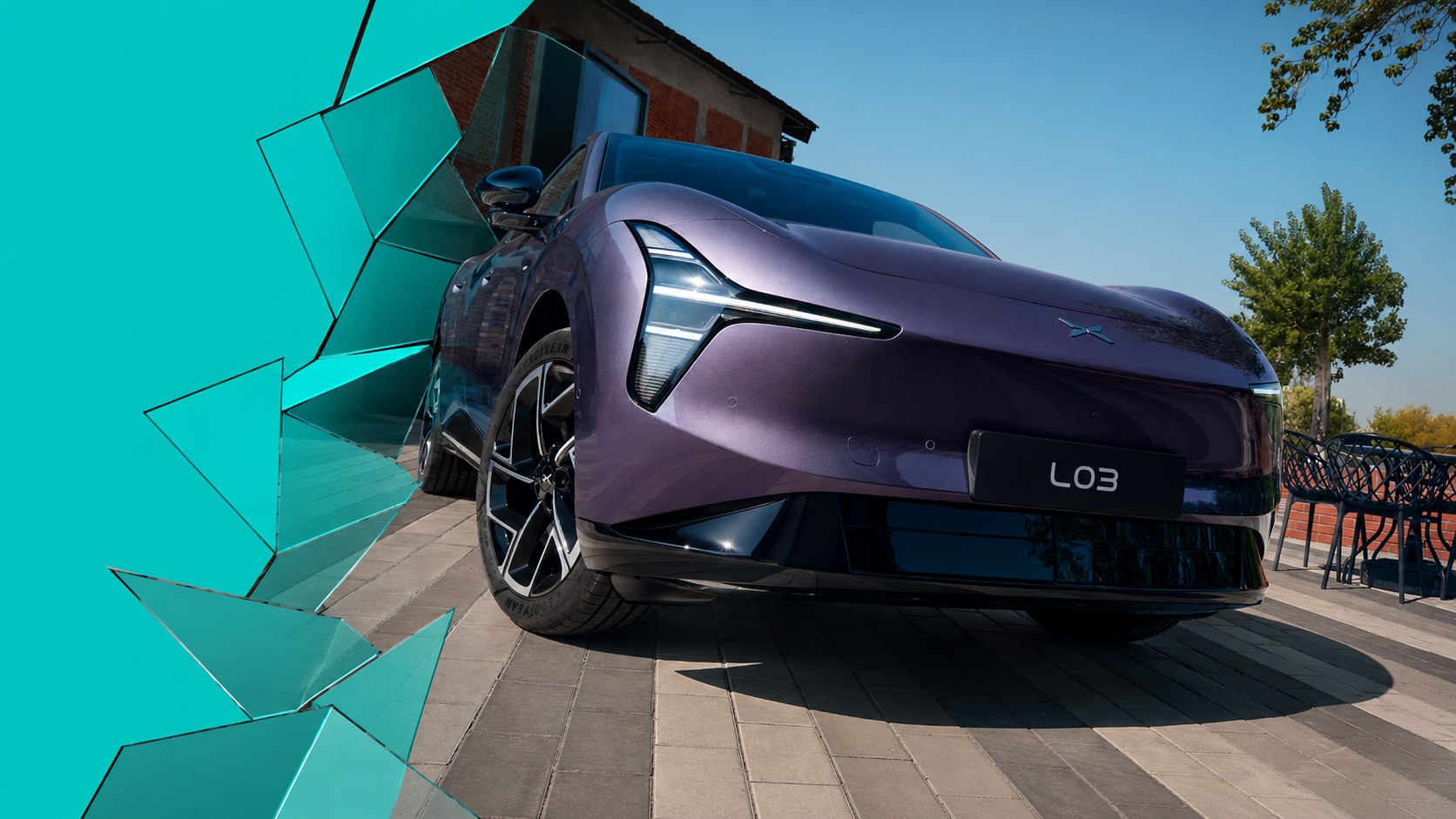
XPENG has used the Munich launch of its L03 to introduce a more global version of its vehicle software platform, combining its own assisted driving and cockpit systems with Google Maps technology as the Chinese manufacturer expands across Europe.
The SUV coupé is being introduced across 65 countries and regions, with UK deliveries scheduled for 2027. British prices and detailed specifications have not yet been confirmed, while configurations will vary as the vehicle passes through national approval and sales preparation.
XPENG will offer battery electric and range extender versions. The company says the L03 uses three Turing AI chips with combined performance of up to 2,250 trillion operations per second for assistance and cabin functions, although processing capacity alone says little about the safety or reliability of the software running on it.
The more consequential European development is the use of Google Maps’ Auto software development kit. XPENG will retain its own navigation interface while drawing on Google’s mapping, traffic, place search, route planning, and electric vehicle energy estimation services.
Drivers will not need to mirror a telephone or open a separate Google Maps application. Mapping data will also support XPILOT Assist and the company’s planned Next Generation Pilot system, which XPENG describes as using a vision language action model to interpret driving environments.
The company’s Google Maps collaboration announcement says it is the first automaker from the Asia-Pacific region to ship a vehicle using the Auto SDK. Google gains another position inside the vehicle software stack, while XPENG preserves control over the visible interface.
Navigation now reaches beyond the map
Vehicle navigation is becoming entwined with battery management, charging, range prediction, driver assistance, and the wider cockpit experience. Integrating an external mapping service therefore affects product performance, data flows, software dependencies, and responsibility when information is inaccurate or unavailable.
XPENG gains access to broad European coverage and frequent map updates, reducing the need to rebuild local services in every market. Google gains another route into the software defined vehicle, where manufacturers have resisted surrendering the customer relationship through a fully standardised technology platform.
The arrangement preserves more of XPENG’s design than adopting a complete Google branded interface, although it also creates layered accountability. A navigation failure could arise from base map data, vehicle sensors, XPENG’s software, route calculation, or the way information is consumed by a driver assistance function.
Clear logging and responsibility will be necessary whenever an incident has to be reconstructed. Suppliers and manufacturers cannot leave a customer moving between support teams while each company argues that another part of the stack caused the problem.
European roads provide a difficult validation environment because signs, lane markings, junctions, weather, driving conventions, and roadworks vary substantially between countries. Performance in one demonstration city does not establish reliability across rural roads, dense historic centres, mountain routes, or motorway construction zones.
XPENG states that its assistance systems cannot handle every traffic, weather, or road condition and that drivers must remain attentive. Such qualifications are important when phrases including “physical AI” and “human-like understanding” may suggest autonomy beyond the legal and technical function being sold.
Over the air updates create a continuing obligation after the vehicle leaves the showroom. New functions can be added remotely, but each release must be tested across hardware versions, national rules, vehicle configurations, and earlier software states.
Manufacturers also have to maintain cybersecurity, repair access, component compatibility, and support for owners who retain vehicles far longer than a typical telephone or laptop. A vehicle sold partly on future capability risks disappointing customers when a promised feature arrives late, performs differently in their country, or never receives approval.
XPENG is using Munich research and development, local partnerships, charging arrangements, and a growing sales footprint to support its European strategy. More than 60,000 European households have selected the brand, according to the company, although it remains much smaller than established manufacturers and faces intense competition from Chinese and European rivals.
Its wider “physical AI” narrative includes robots, robotaxis, and flying vehicles, but the L03 will face a more immediate examination. Regulators and buyers will judge whether the software performs safely on European roads, whether repair and service networks can support the hardware, and whether functions promised through later updates arrive consistently. The computing specification creates capacity; long term software and operational support will determine its value.


