

Summary
- Rockwell Automation has agreed to acquire Austrian autonomous mobile robot manufacturer AGILOX from Carlyle for an undisclosed amount.
- AGILOX's forklift robots will complement Rockwell's existing OTTO mobile robotics range, with the combined business expected to more than double Rockwell's AMR operation.
- The transaction remains subject to regulatory approval and other conditions, with completion targeted for Rockwell's second financial quarter of 2027.
Rockwell Automation has agreed to acquire Austrian autonomous robotics manufacturer AGILOX, adding automated forklift technology to its existing mobile robot portfolio as industrial customers seek more flexible ways to move materials through factories and warehouses.
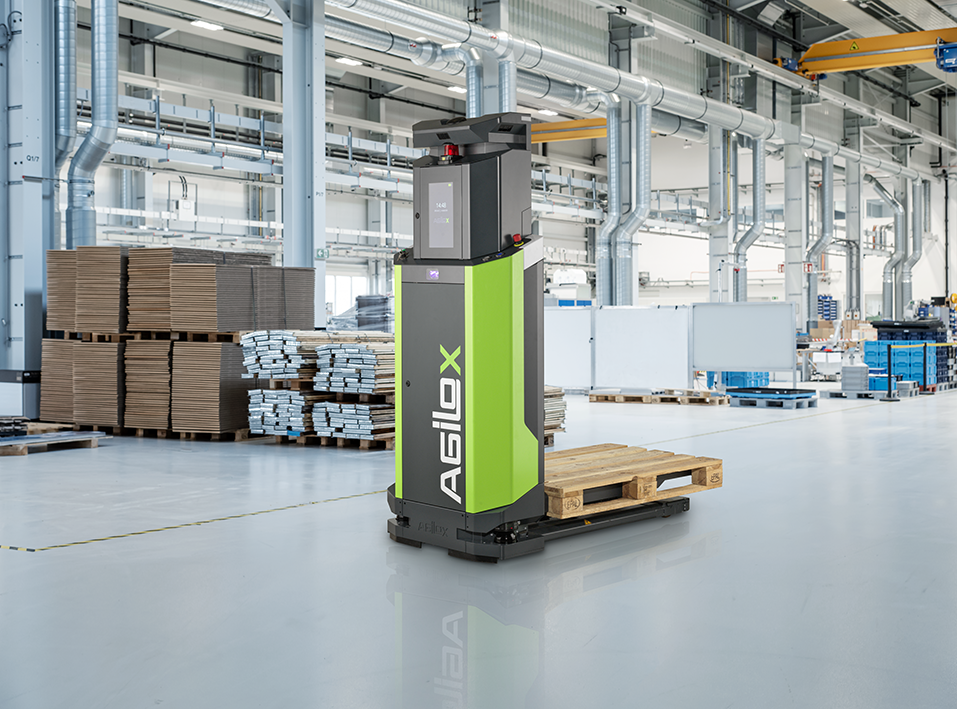
The agreement, confirmed on 18 November, would bring AGILOX’s forklift robots together with Rockwell’s OTTO flatbed mobile robots. Rockwell expects the combination to more than double its autonomous mobile robotics business, although the companies have not disclosed the purchase price or provided detailed financial forecasts for the combined operation.
AGILOX develops and manufactures autonomous mobile robots at its headquarters in Neukirchen bei Lambach, Austria. The company reports more than 2,500 deployed robots, over 400 customers worldwide and a network of more than 40 partners operating across upwards of 35 countries.
Private equity investor Carlyle agreed to sell the business after acquiring a majority stake in 2021. Completion remains subject to regulatory approvals and other closing conditions, with Rockwell targeting the second quarter of its 2027 financial year. Carlyle describes the expected completion period more broadly as the first half of calendar 2027.
Forklifts extend automated material movement
Rockwell’s OTTO range is established in autonomous transport using flatbed robots, which carry materials between production workstations, storage areas and other locations within industrial facilities. AGILOX adds vehicles able to lift and transport pallets, expanding the types of handling tasks that could be addressed within the same supplier portfolio.
Automated forklifts serve different requirements from flatbed platforms. They can collect loads from appropriate transfer positions and place them at specified destinations, provided the site layout, load characteristics and safety arrangements support autonomous operation.
Manufacturers frequently use a combination of forklifts, conveyors, industrial vehicles and manual handling equipment. Replacing selected movements with autonomous robots can reduce repetitive transport work, but the potential benefit depends on the distance travelled, the frequency of tasks and the reliability of equipment operating alongside people.
AGILOX uses navigation and proprietary swarm technology to coordinate robot movements. Its systems are intended to allow vehicles to share operating information, manage traffic and adapt their routes as activity changes within a facility.
Such coordination becomes important when several vehicles operate in confined industrial spaces, particularly where loading areas, production equipment and pedestrian routes intersect. A fleet management system must allocate work without creating congestion or allowing local transport activity to interrupt other processes.
The acquisition would expand Rockwell’s range of material handling equipment, but ownership alone will not establish that AGILOX and OTTO robots can be managed through one software environment. Rockwell has not published a complete technical integration roadmap covering common fleet controls, navigation systems or customer migration arrangements.
European operations support international growth
AGILOX has an established European business, while Rockwell identifies OTTO’s presence in North America as a complementary commercial strength. Combining those customer relationships could give the enlarged operation access to more manufacturing and logistics businesses on both sides of the Atlantic.
AGILOX serves industries including automotive manufacturing, consumer goods, pharmaceuticals, food and beverage production, and third-party logistics. The requirements vary considerably between these sectors, from transporting components in automotive plants to moving finished goods or raw materials within warehouse operations.
Those differences influence how customers assess a robotics deployment. Some facilities need equipment capable of handling particular loads, while others place greater emphasis on hygiene, continuous production or the ability to accommodate changing warehouse layouts.
Rockwell’s existing industrial automation business provides access to manufacturing customers already using controllers, production software and other technologies. AGILOX could consequently become part of wider automation projects rather than being purchased solely as an independent transport system.
That commercial opportunity depends on engineering integration as well as sales coverage. A robot completing transport tasks efficiently may deliver limited operational benefit if production systems cannot communicate when a load is needed or whether a destination is ready to receive it.
Connecting robots to warehouse and manufacturing applications can allow transport requests to follow actual production activity. The quality of that integration, together with commissioning effort and ongoing technical support, will influence whether customers obtain measurable productivity improvements.
Carlyle reports fourfold revenue growth
Carlyle says AGILOX’s revenue quadrupled during its five years of ownership, supported by international expansion, additional products and investment in the company’s operations. The investor has not disclosed the relevant annual revenue figures, preventing an independent calculation of AGILOX’s current sales or a valuation multiple for the proposed acquisition.
The company has expanded its portfolio and introduced a Robots-as-a-Service offering, allowing customers to obtain robotic transport capabilities through a service arrangement rather than necessarily purchasing equipment outright.
These commercial models can affect how businesses finance automation. A recurring agreement may reduce the initial capital required for deployment, although customers still need to assess the total cost of service, maintenance responsibilities, utilisation requirements and contractual commitments.
AGILOX employs more than 250 people worldwide and maintains subsidiaries in Europe, the United States and China. Rockwell has not disclosed whether the acquisition will change employment, manufacturing arrangements or the locations used for product development.
The Austrian business is expected to join Rockwell’s Intelligent Devices segment after completion, extending a portfolio that already includes industrial equipment and the OTTO robotics operation acquired through Clearpath Robotics in 2023.
Integration will determine the wider offering
Autonomous mobile robots have become an option for businesses seeking flexible material transport without installing extensive fixed conveyor infrastructure. However, their commercial performance depends on site-specific factors, including traffic patterns, equipment availability and the complexity of connecting robots to other systems.
Customers considering a combined Rockwell and AGILOX offering will need clarity about supported vehicle types, fleet coordination, safety arrangements and the long-term availability of replacement equipment and software updates. Industrial automation projects are often expected to operate for many years, making compatibility across product generations relevant to procurement decisions.
Although Rockwell expects the transaction to strengthen its position in autonomous robotics, the agreement does not establish a completed integration or identify the financial benefits customers might obtain from future joint deployments.
Regulatory clearance and the other closing conditions must first be satisfied. Rockwell would then take ownership of an established Austrian robotics company with international customers, deployed equipment and specialist forklift technology, while the scope of the combined software and service offering remains to be determined.


