

Summary
- Pure DC has installed the third and final transformer for its LON01 campus, a 75MVA Hitachi unit completing a 150MVA substation configuration.
- Restricted access beside the live substation required a specially engineered gantry rated to lift 1,000 tonnes, with the installation operation completed in four hours.
- The final transformer is not yet reported energised; the wider 90MW campus includes a 70MW building still under construction.
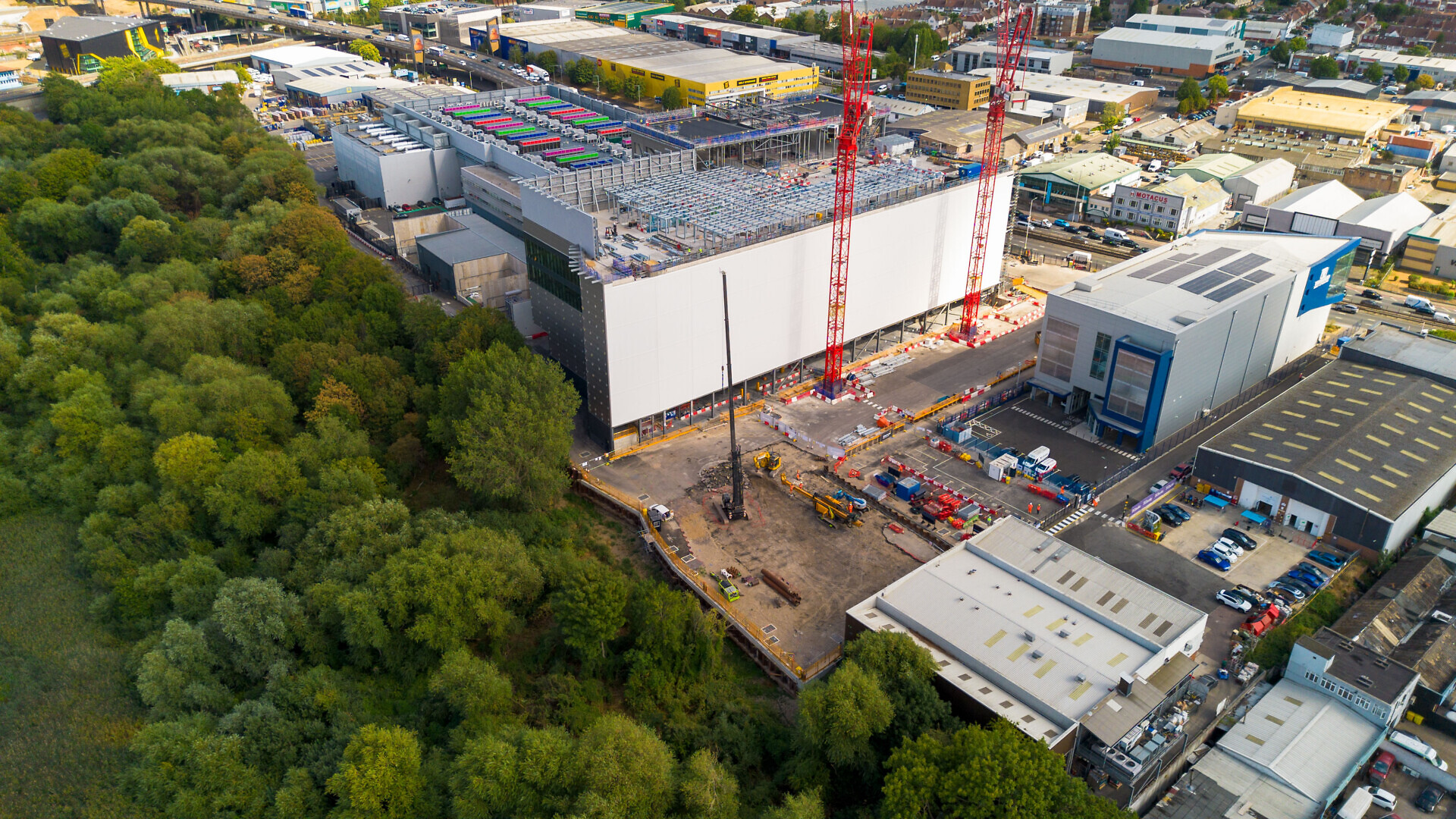
Pure Data Centres Group has installed the final major transformer at its LON01 campus in Brent Cross, north London, completing the planned three-transformer configuration for a data centre development intended to support cloud computing and high-density artificial intelligence workloads.
The 75MVA Hitachi unit brings installed substation capacity to 150MVA, according to the company’s announcement on 15 October. It is intended to supply infrastructure serving the campus’s B1 and B2 buildings, with dedicated ductwork already in place for the connection to B2.
Installation is complete, but the transformer has not yet been reported energised. Pure DC expects that step later in October, after which the unit will complete the site’s dedicated power system. The wider 90MW campus also remains under development, with its second building scheduled for completion in 2029.
The transformer was positioned using a specially engineered gantry rated for 1,000 tonnes because the restricted space surrounding the operational substation prevented the use of a conventional crane. The final lifting operation took four hours, following an equipment manufacturing and logistics programme lasting approximately 18 months.
Electrical capacity arrives before full campus completion
LON01 is planned as a 90MW data centre campus, with its infrastructure designed to support intensive computing activity and the electrical and cooling systems needed to maintain it.
The development combines an existing 20MW building, B1, which Pure DC describes as fully operational, with a second 70MW facility, B2, currently under construction. The two buildings form part of the same campus but are at different stages of development.
The latest transformer installation provides an important part of the infrastructure needed for that expansion. Incoming electricity must be connected to suitable transformation, protection and distribution equipment before it can support the power systems used by data centre operators and their customers.
A transformer’s rating in megavolt-amperes describes apparent electrical power, whereas the campus’s megawatt figure represents real power capacity. These measures are related but not interchangeable, and the presence of 150MVA of installed transformer capacity does not mean 150MW of computing load is already operating.
The announcement also does not establish that the new transformer has passed every remaining commissioning step. Equipment installation, energisation and the availability of power to additional data halls are distinct stages, each involving technical and operational requirements.
Pure DC says the final unit will serve both B1 and B2 once energised. Its connection to the wider electrical system will therefore support a campus whose construction programme extends beyond the immediate October milestone.
Constrained access changes the engineering approach
The final transformer had to be installed beside an existing live substation, where the surrounding space limited the machinery that could be used.
According to Pure DC, a conventional 500-tonne crane could not be deployed within the available working area. The project team instead designed a specialist gantry with a lifting capacity of 1,000 tonnes, allowing the equipment to be moved into position without relying on the space required by the conventional approach.
That 1,000-tonne figure refers to the gantry’s rated lifting capacity, not the weight of the transformer. Pure DC has not disclosed the transformer’s actual mass in its October announcement.
The distinction is important because lifting equipment is selected according to more than the nominal weight of a load. The available working area, the required movement, the installation method and the engineering controls used during the operation can influence the equipment selected.
Pure DC, MGE Group, logistics contractors and specialist suppliers were involved in the lifting operation. The company says the final move was completed over four hours, although the preparation required considerably longer.
Manufacturing began in Colombia in March 2025, with factory testing completed in June 2026. The unit was then shipped to Britain and transported to Brent Cross using arrangements that required route planning, road closures and approvals from local authorities.
The sequence illustrates the relationship between construction progress and the delivery of specialised electrical equipment. A data centre developer can advance building work while still depending on large components that require manufacturing, factory testing, international transport and complex installation.
Because such equipment is needed before the associated electrical systems can be brought into service, its delivery timetable can influence when additional data centre capacity becomes available.
AI capacity depends on physical infrastructure
Data centres supporting advanced computing require dependable electrical distribution, cooling and monitoring systems alongside processors, servers and networking equipment.
High-density installations can concentrate substantial electrical loads within relatively small areas, increasing the demands placed on supporting infrastructure. Operators must also remove the heat produced by computing equipment while maintaining the conditions required for reliable operation.
Pure DC plans to use closed-loop liquid cooling at LON01, reflecting the thermal requirements associated with the workloads the campus is intended to support.
That design does not eliminate the need for electrical infrastructure. Cooling equipment, pumps, monitoring systems and the computing hardware itself depend on the availability and reliability of power supplied through the site.
The physical scale of these supporting systems is one reason data centre development cannot be measured solely through announcements of new computing capacity. Construction, equipment delivery, electrical connections and commissioning determine when planned facilities can be made available for use.
Developers may also need to coordinate new work around existing operating infrastructure. At Brent Cross, B1 is already operational while construction continues on B2, introducing practical constraints around access, logistics and the sequencing of activities.
The transformer’s installation therefore represents progress within a wider programme rather than completion of the entire development.
The second building remains a longer-term project
Pure DC began the final major construction phase for B2 in September 2026, when contractor Glencar started piling works for the building’s western shell.
The new facility is expected to provide 70MW and extend the campus by more than 23,000 square metres, taking its planned combined capacity to 90MW. The wider B2 development is scheduled for completion in the second quarter of 2029.
Glencar’s scope includes structural work, foundations, underground services and connections to the adjacent eastern shell. These activities will continue while other construction and fitting-out work takes place across the site.
The planned building also includes a large living wall incorporating more than 750,000 plants. Pure DC says the installation is intended to encourage biodiversity and reduce noise and air pollution near Brent Reservoir’s Site of Special Scientific Interest.
Those are design intentions rather than independently measured environmental results. The completed installation and its subsequent maintenance will determine whether the anticipated benefits are realised.
The site’s existing operational capacity, the new transformer installation and B2’s longer construction timetable must therefore be considered separately. Pure DC has completed an important electrical equipment milestone, while the final transformer is still awaiting planned energisation and the second building remains under construction.
The immediate next step is bringing the transformer into service. Further construction and commissioning activity will determine when the campus can deliver its intended 90MW capacity.


