

Summary
- Pax8 unveiled 8os and 8bot at its Beyond EMEA conference in Copenhagen on 19 October, targeting managed service providers serving smaller businesses.
- 8os is designed to provide customer-level agent management and usage visibility, while 8bot offers a persistent AI coworker with dedicated cloud computing resources and employee approvals.
- Limited early access is beginning, with wider availability planned for 2027; integration support, spending controls and data handling arrangements require release-specific evaluation.
Pax8 is introducing a management platform for business AI agents alongside a persistent digital assistant, seeking to turn the deployment and supervision of automated work into an ongoing commercial service for technology providers.
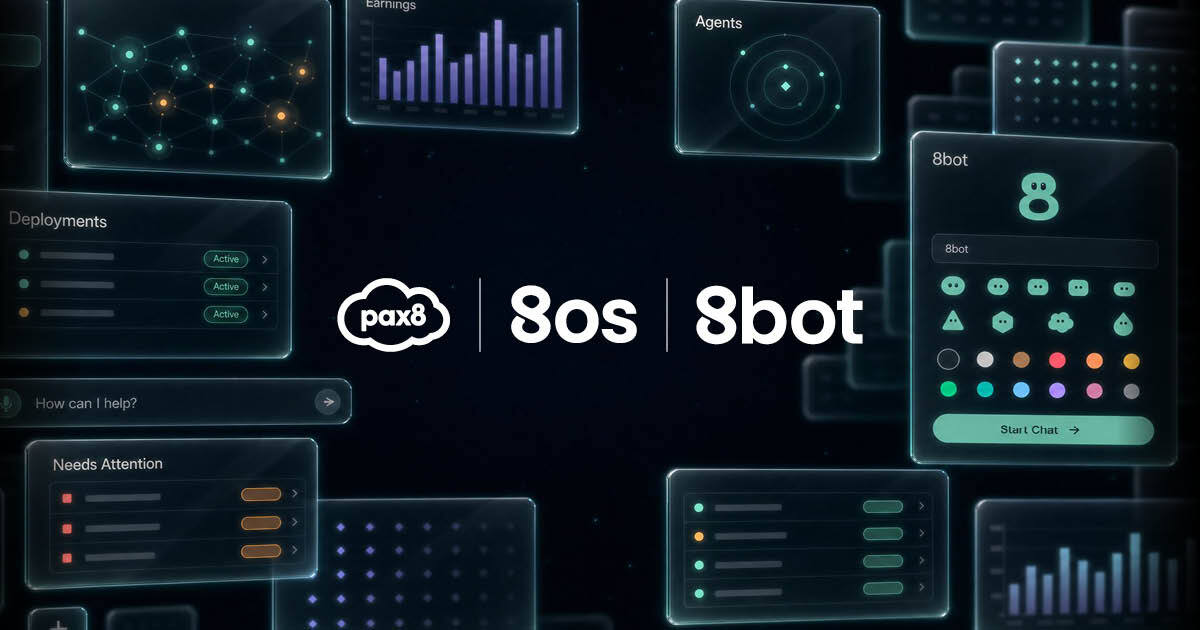
The company unveiled 8os and 8bot at its Beyond EMEA conference in Copenhagen on 19 October. The first product is intended to help managed service providers oversee agents operating across different customer organisations, while the second gives individual employees an AI coworker that can carry out authorised activities using connected applications.
Pax8 wants the products to extend its existing cloud software marketplace into what it calls managed intelligence, with partners responsible for deployment, configuration, support and supervision rather than simply reselling access to AI tools.
Limited early access is beginning, with broader availability planned for 2027. The company already works with more than 47,000 IT providers serving approximately 800,000 smaller businesses worldwide, although those figures describe its established marketplace rather than adoption of the newly announced products.
Existing AI use creates new support obligations
Businesses increasingly use AI applications for document preparation, information retrieval and routine administration, often introducing different tools in separate departments before agreeing a common approach to their operation.
That can leave technology providers with limited visibility into the applications customers use, the information available to those systems and the costs associated with their operation.
Pax8’s SMB AI Pulse research suggests that experimentation is widespread among surveyed small businesses. The company reports that 90% use or are experimenting with AI, while only 23% have a documented policy governing its use.
The figures come from the company’s small business research rather than a census of enterprises across Europe. They describe reported adoption and governance practices, not the prevalence of security incidents or the effectiveness of any particular AI product.
For managed service providers, the problem resembles earlier challenges involving unauthorised cloud software, but agents can add a different form of operational exposure because they may interact with applications and take actions.
An employee might grant an assistant access to mail, calendars and business files to simplify routine work. Without appropriate supervision, those permissions could expose information beyond the original task or allow changes whose consequences have not been considered.
Providers supporting several customers need to understand those arrangements separately for each organisation rather than manage every agent through one shared set of permissions.
The commercial opportunity is to supply continuing expertise around access, cost and operational reliability, although that work also introduces new support responsibilities for the provider.
8os aims to manage agents across customers
8os is designed as a multi-customer management environment that brings supported agents, usage and budgets into one interface for technology providers.
Partners will be able to develop agents, deploy packaged products such as 8bot and connect supported third-party AI systems as the platform’s capabilities expand.
Each customer’s applications and operating context are intended to remain separate, allowing a provider to support several organisations without treating their data and permissions as interchangeable.
Usage monitoring is central to the proposition because AI consumption does not always follow the predictable pricing structure of conventional per-user software.
Costs can vary with the models selected, the number of requests, the complexity of tasks and the external services an agent invokes. A seemingly inexpensive application may become more costly when it operates repeatedly or accesses additional processing services.
Pax8 says 8os will provide customer-level visibility into usage and budgets, giving partners information they can use to price and support their services.
However, the company’s technical guidance states that budget and usage controls vary between releases. Spending limits may be available for some supported services, but their presence should not be assumed for every agent or integration.
Nor does centralised monitoring guarantee a fixed total bill or profit margin. Providers must still account for costs that may arise through connected systems, customer support and work required to maintain individual agents.
The platform’s compatibility is another limitation. Pax8 intends to support multiple tools and models, but its product documentation explicitly warns that not every third-party AI service is supported.
Organisations therefore need to verify the connections available before promising customers that all their existing AI applications can be managed through 8os.
8bot gives employees a persistent workspace
The second product, 8bot, is a managed AI coworker intended to assist employees with recurring administrative work and continue handling tasks between direct requests.
Unlike a conventional chatbot that responds to individual messages, Pax8 describes each 8bot seat as a persistent digital worker operating on a dedicated cloud computer.
That environment includes a browser, files and memory associated with one user. The arrangement is intended to allow the assistant to retain context and undertake tasks through connected applications, including some that do not provide a conventional programming interface.
Initial use cases include preparing meeting information, researching business contacts, summarising communications, drafting follow-up material and running scheduled routines.
The company’s product documentation identifies Microsoft 365 applications among the initial integrations, including mail, calendars, Teams and business files. Additional connections are planned, but availability and supported permissions must be confirmed for the release being deployed.
Persistent operation introduces benefits and risks that differ from those of a tool used occasionally to generate a document.
An assistant with continuing access to communications and files may be able to identify unfinished work or prepare information before an employee requests it. That same access requires clear boundaries concerning which information is relevant and what the system is permitted to do with it.
Keeping the environment active also creates responsibilities for managing credentials, stored context, software updates and access when an employee changes roles or leaves the organisation.
Employee approval remains part of the design
Pax8 describes 8bot as beginning with read-only application connections, with employees approving additional permissions when they want the assistant to perform other actions.
Sending an email, changing a calendar entry or editing a file requires separate permission for the relevant application, while the product documentation says individual write actions still require user approval.
Such arrangements aim to distinguish preparing work from executing it. An assistant may assemble a proposed customer response, for example, while the employee retains responsibility for checking and approving the message before it is sent.
The company also says each 8bot operates within a protected cloud workspace, with restrictions on computer access and controls intended to prevent one user’s working environment from being shared with another.
Providers can view service status, usage and spending information for the deployments they manage. According to Pax8, the content of employees’ conversations and work is not visible to the managed service provider through the standard management interface.
These claims describe the controls built into 8bot. They must not be extended automatically to every agent connected to 8os.
Third-party and custom agents can rely on different permission models, approval processes and data-handling arrangements. Pax8 explicitly directs partners to examine those safeguards separately rather than assume that central management provides identical protection.
That distinction will matter where service providers support several products on behalf of customers with different security and compliance requirements.
European deployments need data handling scrutiny
The launch at a European partner conference gives the products particular relevance to service providers operating across the UK and European markets.
However, the current 8bot product documentation states that customer data is hosted in the United States during the beta programme.
For organisations handling personal, confidential or regulated information, that arrangement will require consideration of contractual terms, international data transfers and applicable information governance obligations.
US hosting does not by itself establish that a deployment breaches European data protection law. The assessment depends on the information processed, the legal arrangements governing its transfer and the safeguards offered by the relevant service providers.
Businesses will also need to examine what information is retained within the coworker’s persistent workspace, how it can be deleted and whether access is restricted appropriately when an employee no longer uses the service.
These requirements become more complicated where an agent connects to several applications subject to different data retention and security policies.
Pax8 has not disclosed a confirmed European hosting option in the material reviewed for the launch, and customers should not assume that regional data residency is available without verification.
Managed intelligence remains commercially unproven
Pax8 is positioning its partners as managed intelligence providers, extending the established managed service model into the operation of AI agents.
Rather than selling only software access, a provider could charge for setting up agents, connecting applications, establishing permissions, monitoring usage and supporting ongoing operation.
The approach gives partners an opportunity to build recurring services around work that smaller customers may lack the expertise to manage internally.
However, supporting agents can be more complicated than maintaining conventional software. When an automated process produces an incorrect result, the provider may need to examine the original instructions, model behaviour, retrieved information, permissions and actions performed through connected systems.
That investigation can require expertise beyond routine account administration, particularly where an agent has interacted with financial or operational processes.
The costs of providing that support will influence whether partners can develop profitable services and whether customers find the products economically worthwhile.
Pax8 has not published audited customer productivity results, adoption totals for 8os or 8bot, or evidence establishing the margins partners can expect from the new offerings.
Its launch announcement says limited early access begins during the week of 19 October, while the 8bot product page identifies January 2027 as the beginning of its broader access programme.
Those arrangements are not equivalent to general availability for every provider or business. Customers will need to confirm which capabilities and integrations are supported before committing to a deployment.
The existing Pax8 distribution network provides an established route to market, but it does not establish that its customers will adopt the new managed intelligence services.
As the products move through early access, their commercial value will depend on whether providers can supervise agents reliably, control the costs of delivering the service and demonstrate that customers save meaningful time without taking on unacceptable operational risk.


