

Summary
- Uniper has awarded more than SEK100m of engineering work for the planned NorthStarH2 e-methanol project in Östersund.
- The proposed plant is designed to produce about 115,000 tonnes of e-methanol annually.
- Engineering, permitting, electricity costs, customer demand, and a planned 2028 investment decision still separate the project from construction.
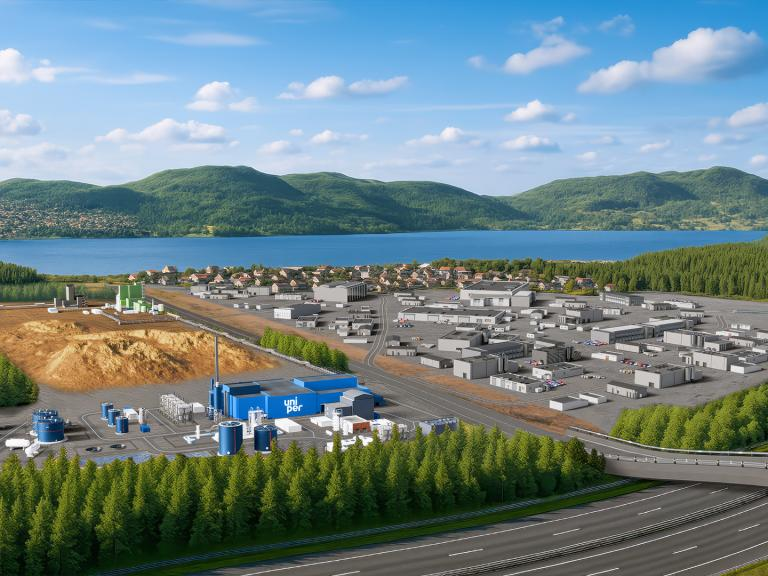
Uniper has committed more than SEK100 million to the next engineering phase of its proposed NorthStarH2 e-methanol plant in northern Sweden, moving the project into the part of development where technical design and commercial assumptions have to become detailed enough to support an investment decision.
AFRY, Carbon Clean, Siemens Energy, and Topsoe have been awarded contracts covering the next stage of work on the Östersund facility. Uniper expects basic engineering to continue for roughly a year and plans to submit an environmental permit application during autumn 2026.
The project is designed to produce around 115,000 tonnes of e-methanol each year using renewable electricity and biogenic carbon dioxide. A final investment decision is currently planned for 2028, with commissioning targeted for 2031 if the economics, permitting, and engineering support construction.
That timetable is important because the latest contracts do not constitute a decision to build. Basic engineering exists partly to replace headline capacity and process diagrams with detailed cost, equipment, integration, safety, and delivery assumptions before a developer commits the much larger sums required for construction.
Electrofuels encounter their cost base
E-methanol combines hydrogen produced through electrolysis with a source of carbon dioxide, creating a liquid fuel that can potentially replace fossil-derived methanol or conventional fuels in applications where direct electrification is difficult. NorthStarH2 plans to use biogenic carbon dioxide associated with biomass operations around Östersund.
The chemistry is established, but the economics depend heavily on the price and availability of low-carbon electricity. Electrolysers consume large amounts of power, while carbon capture, compression, synthesis, purification, and transport add further capital and operating costs before a tonne of fuel reaches a customer.
That places prospective e-methanol producers in a market where regulation and customer commitments can be as important as engineering efficiency. Shipping companies and industrial users may require lower-carbon fuels to meet tightening emissions requirements, but developers still need contracts at prices capable of supporting expensive new production facilities.
NorthStarH2’s location reflects an attempt to assemble those ingredients around one site. Northern Sweden offers renewable electricity, industrial infrastructure, and access to biogenic carbon streams, while Östersund provides road and rail links that could connect production with customers elsewhere in Sweden and northern Europe.
A project still has to become a market
Uniper says the engineering contracts are intended to assess technical and commercial feasibility, which leaves significant uncertainty around the final configuration. AFRY is leading engineering work, while Carbon Clean, Siemens Energy, and Topsoe bring specialist capabilities across carbon capture, electrolysis, and methanol production.
Those suppliers can reduce technology and integration risk, but they cannot determine future electricity prices or guarantee customers. E-methanol projects have to compete with other decarbonisation routes, including biofuels and other hydrogen-derived fuels, while shipping and chemical companies have their own investment cycles and infrastructure constraints.
The European policy environment is creating demand signals through tighter rules on maritime emissions and wider support for renewable and low-carbon fuels. Yet regulation works through a market in which fuel buyers still compare cost, supply security, compatibility, and infrastructure rather than purchasing a product simply because it carries a lower-carbon label.
That makes the 2028 investment decision more consequential than the current engineering award. By then, Uniper should have a clearer view of capital costs, permitting conditions, electricity requirements, technology performance, prospective customers, and the price at which NorthStarH2 could supply fuel.
The long development period also illustrates why announced clean-technology capacity cannot be treated as existing industrial output. Four years separate the current engineering contracts from the proposed commissioning date, with several opportunities for assumptions about power, equipment, policy, or customer demand to change.
NorthStarH2 has nevertheless moved beyond an early concept into work that requires meaningful expenditure and named engineering suppliers. That provides a firmer basis for assessing the project, while keeping the distinction between development and construction intact.
Over the coming year, the value of the SEK100 million engineering programme will lie in how many uncertainties it removes. If NorthStarH2 can establish a credible technical design, obtain its environmental permit, secure enough affordable electricity, and find customers prepared to contract for the output, the 2028 investment decision can move onto much firmer ground; until then, the plant remains an industrial proposition being tested rather than production capacity waiting to switch on.


