

Summary
- JULIAN SOLER uses MyForterro.ai and Abas ERP to rank grape ingredient formulations against raw material costs and customer requirements.
- The manufacturer anticipates four to eight hours of daily calculation savings and production optimisation of up to 10%, with the figures remaining forecasts.
- The project relies on existing production, laboratory, and quality data, while further AI applications remain under consideration.
Spanish grape ingredient manufacturer JULIAN SOLER is using artificial intelligence connected to its enterprise resource planning system to calculate production formulations, replacing a process that previously required hours of manual spreadsheet work.
The family-owned producer has developed a recipe optimiser using Forterro’s MyForterro.ai platform and Abas ERP. The application combines production, laboratory, and quality information to identify viable combinations of raw materials, ranking the resulting recipes by cost and their ability to meet individual customer specifications.
JULIAN SOLER expects the system to save between four and eight hours of calculation and review work each day, with potential production optimisation of up to 10% through more economical ingredient selection. These are anticipated benefits rather than independently measured results, and the company has not published the baseline used to calculate the proposed percentage improvement.
Forterro first identified JULIAN SOLER as an early customer when it launched MyForterro.ai in October. The company’s 13 November disclosure provides additional information about the implementation, including how employees configured the application and the production decisions it is intended to support.
Formulations depend on production and laboratory records
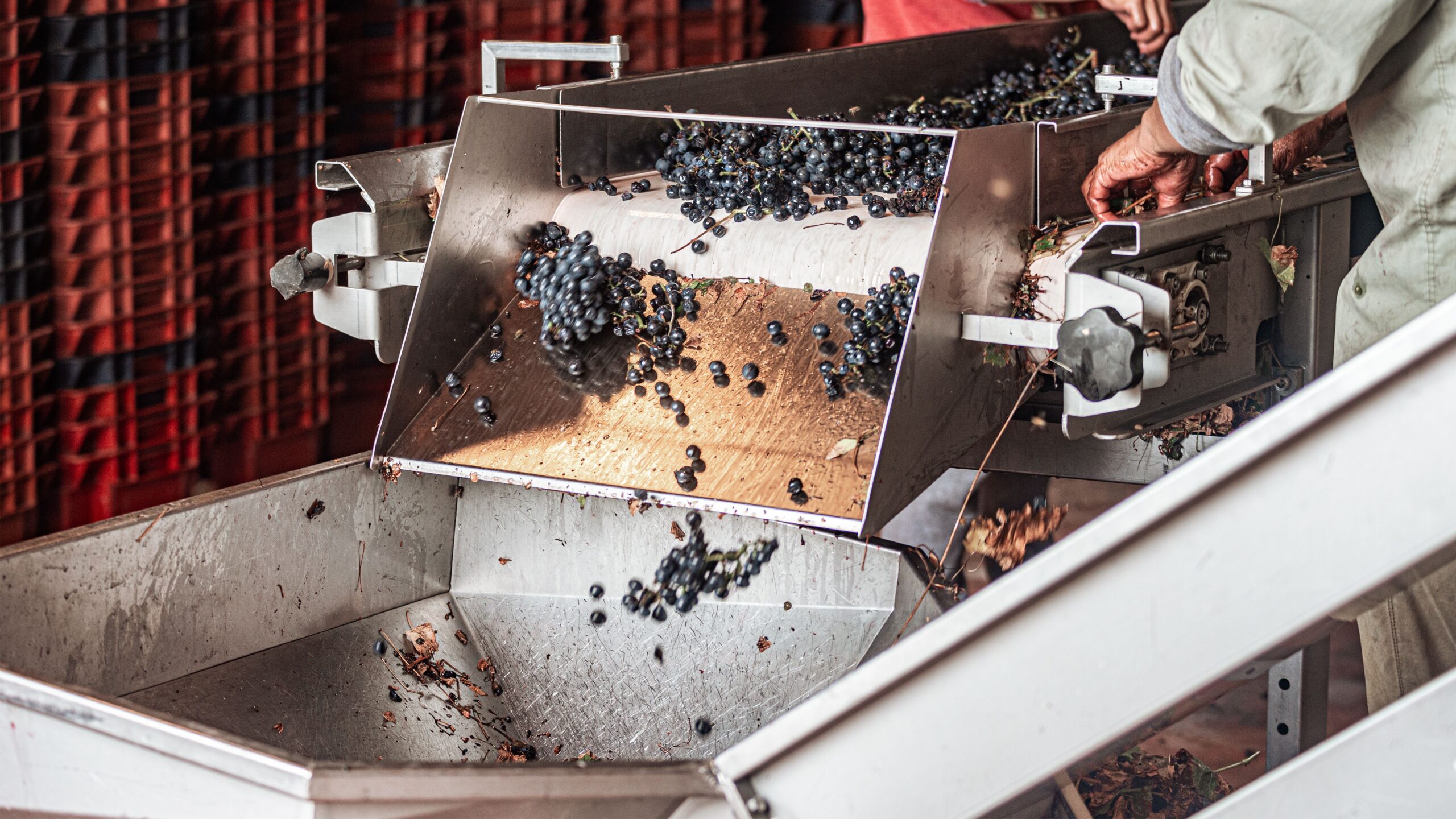
Founded in 1968 in Villanueva de la Jara, JULIAN SOLER produces grape juice and concentrated grape must for manufacturers of drinks, vinegar, confectionery, and other food products. It exports to more than 60 countries and handles between 30 and 40 production runs daily.
Its formulation work involves selecting combinations of raw materials capable of meeting particular product specifications. Different batches can have varying characteristics, while customer requirements place additional constraints on the ingredients and processing arrangements available to the manufacturer.
Quality and laboratory records provide information about the characteristics of the raw materials, including measurements relevant to concentration, acidity, and other product requirements. Production information supplies the operational context, while raw material costs influence which viable combination is commercially preferable.
Previously, staff used Excel calculations to compare formulations and identify suitable options. Forterro says that work could occupy four to eight hours each day, particularly when employees needed to evaluate alternatives against customer specifications and cost considerations.
The AI optimiser uses information already available within Abas ERP to calculate possible combinations and rank them for review. Rather than beginning with a separate collection of documents or general information about grape processing, the system operates against the manufacturer’s own records.
That connection is fundamental to the application. A general-purpose AI assistant might describe how grape juice formulations are prepared, but it would not automatically know the properties of materials held by JULIAN SOLER, their current costs, or the specifications associated with individual production orders.
Employees retain responsibility for formulation decisions
The project began during a two-day hackathon organised by Forterro’s Abas teams, where JULIAN SOLER selected recipe formulation as a practical problem for automation. Employees subsequently configured the agent, refined its instructions, and chose AI models with support from Abas specialists.
Keeping the application connected to the ERP environment reduces the need to assemble separate datasets before each calculation. It also allows recommendations to be based on the same categories of production and quality information that staff already use when evaluating recipes.
The available description presents the optimiser as a decision support application. It generates and ranks options that employees can assess, rather than establishing that AI independently approves formulations or releases batches into production without human involvement.
That distinction is important because an apparently economical formulation must still satisfy product requirements and manufacturing constraints. A proposed combination may offer a lower raw material cost but require further assessment if its quality characteristics or expected processing behaviour differ from those of established recipes.
Laboratory and production teams can compare the ranked alternatives before a run begins, potentially reducing the manual work associated with finding viable options. However, the company has not disclosed the proportion of recommendations accepted by employees or how closely predicted results have matched subsequent production outcomes.
Such information would provide a firmer assessment of the system’s reliability. Time spent calculating formulations is one measure of efficiency, while the frequency of rejected batches, specification deviations, and changes in material consumption would help establish the wider operational effects.
Production improvement remains a forecast
The proposed four-to-eight-hour saving concerns calculation and review work, not the physical duration of manufacturing. Similarly, the forecast improvement of up to 10% relates to more economical formulations and should not be interpreted automatically as a 10% increase in production volume.
Forterro’s customer profile describes an expected optimisation range of 5% to 10%, while the November disclosure refers to improvement of up to 10%. Neither source provides independently audited performance figures or a detailed calculation of the projected financial return.
JULIAN SOLER also manages more than 1,000 items, according to Forterro’s customer material. The variety of ingredients, products, and customer requirements creates numerous potential combinations, making formulation a plausible candidate for computational assistance.
Although the application can examine alternatives quickly, its effectiveness depends on the completeness and accuracy of the information supplied. Laboratory measurements must represent the materials being used, while stock and cost records need to reflect current operating conditions.
Incorrect or outdated records could produce recommendations that are mathematically consistent with the system’s inputs but unsuitable for the actual production run. Maintaining the underlying data therefore remains an operational responsibility alongside the new automation.
Industrial AI grows around existing ERP systems
Forterro is developing MyForterro.ai for industrial businesses that already depend on its software for manufacturing, logistics, and commercial processes. The platform connects AI models to information held within existing applications, allowing customers to develop specialised assistants and automated workflows around their own operations.
Its wider introduction followed a customer development programme involving more than 540 European businesses. The JULIAN SOLER application is one example of that approach, although the number of participants in the earlier programme does not establish how many have completed live AI deployments.
For manufacturers, embedding AI within established ERP systems may reduce some of the integration work involved in using standalone tools. It does not eliminate the need for suitable access controls, reliable source data, validation procedures, or employees able to assess the results.
JULIAN SOLER is considering further applications, including extracting information from purchase delivery notes received as PDFs and building agents that work with raw material records. Those projects remain prospective uses rather than confirmed operational capabilities.
The manufacturer has established a working application for a recurring production task and identified the improvements it expects to achieve. Its next useful evidence will come from routine production measurements showing whether the predicted time savings and formulation benefits are consistently realised.


