

Summary
- Gama has raised €15 million from investors including Transition, Planet A, Draper Associates, and Manta Ray to develop its Wing satellite solar arrays.
- The company plans a production line near Paris and approximately 60 new engineering roles, with its first demonstration Wing expected in summer 2027.
- Its manufacturing roadmap includes a 10MW annual output target and a facility designed for 100MW, although neither represents verified current production.
French space technology company Gama has raised €15 million to develop industrial manufacturing capacity for deployable satellite solar arrays, targeting growing electricity requirements across commercial spacecraft and satellite constellations.
The seed investment, involving Transition, Planet A, Draper Associates, and Manta Ray, will support Gama’s first production line for its Wing solar array system at Ivry-sur-Seine, near Paris. The company also plans to expand its engineering and testing facilities and recruit approximately 60 employees across mechanical engineering, electronics, software, manufacturing, and testing.
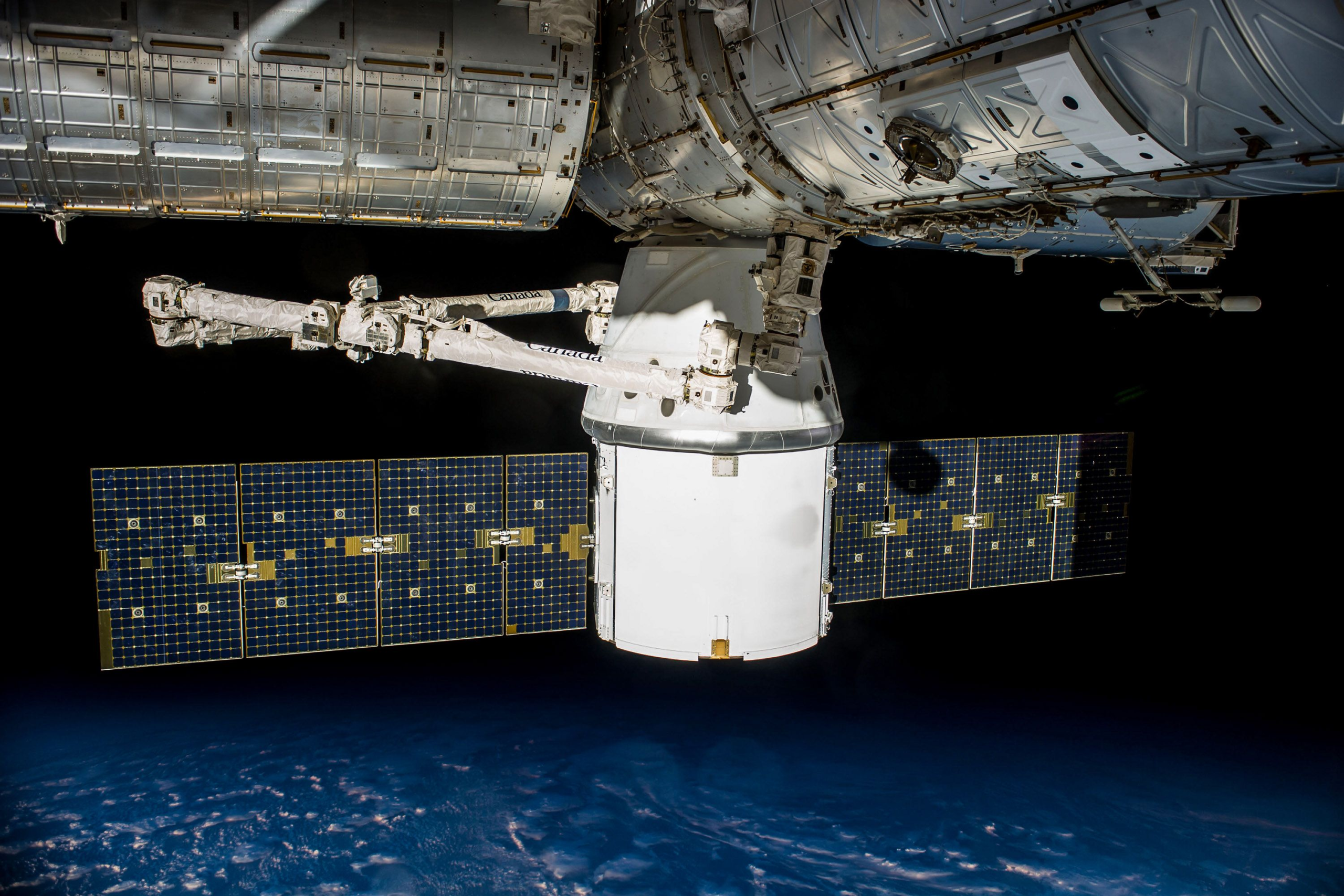
Wing is designed as a modular solar power system that can be folded for launch and deployed once a satellite reaches orbit. Gama intends to offer arrays with electrical outputs ranging from approximately 3 kilowatts to more than 100 kilowatts per wing, alongside power management equipment, optional batteries, and software for controlling the structures.
The financing brings the company closer to commercial production, although its first demonstration Wing is not expected until summer 2027. Its proposed manufacturing capacity and operating performance therefore remain development targets rather than independently verified achievements.
Satellite power becomes an industrial constraint
Satellites depend on electrical power to operate communications equipment, sensors, onboard computers, and other systems. As spacecraft become more capable, their electricity requirements can increase substantially, particularly where they carry demanding communications or processing workloads.
Solar arrays provide much of that power, but their design involves competing requirements. They must produce sufficient electricity while remaining light enough for launch, compact enough to fit within a rocket’s available volume, and durable enough to operate under the conditions encountered in orbit.
Larger arrays introduce additional mechanical and operational challenges. Structures that unfold over considerable distances can influence a satellite’s stability, requiring careful coordination between the deployment hardware and the spacecraft’s attitude control systems.
Gama is developing both the physical array and the software needed to control its movement. The company intends to provide algorithms that can operate through customers’ flight computers, allowing the solar system to be integrated with the wider spacecraft.
The complete Wing offering can include an array rotator, power conditioning equipment, and optional energy storage. Supplying these components together could reduce some of the engineering work required to combine equipment from different providers, although individual customers must still validate compatibility with their satellite platforms.
Gama’s stated power range covers substantially different spacecraft requirements. A relatively small array may support a conventional satellite platform, while designs at the upper end of the proposed range introduce more demanding structural, electrical, and control considerations.
The company has not disclosed completed flight qualification results across that range, and the announced capacity figures should not be treated as evidence that all configurations are commercially available.
Manufacturing methods influence cost and lead times
Gama is developing Wing around silicon solar cells derived from high-volume terrestrial manufacturing, rather than relying exclusively on the specialist compound semiconductor cells commonly used in space applications.
Traditional space-grade solar cells can provide strong performance in demanding orbital conditions, but their production involves specialised materials and relatively concentrated supply chains. Gama believes that adapting components from the much larger terrestrial solar industry could help reduce costs and improve manufacturing availability.
That approach introduces technical trade-offs. The lower purchase cost of individual cells does not automatically produce a cheaper or more reliable satellite power system, because the completed array must satisfy requirements concerning electrical efficiency, mass, radiation resistance, temperature variation, and long-term durability.
Performance must also be assessed across the complete assembly, including its deployment mechanisms, electrical connections, control electronics, and structural components.
Gama intends to address production costs through repeatable manufacturing processes rather than developing every customer array as a separate engineering project. Its plans include internal testing capabilities and standardised interfaces intended to simplify integration with satellite platforms.
The company is targeting lead times of approximately six months once its production line is operating, with further reductions anticipated as manufacturing volumes increase. Those figures remain commercial objectives rather than established delivery performance.
Its website also identifies two distinct manufacturing figures. An annual output target of 10MW appears alongside plans for a facility designed to accommodate 100MW of annual array production. The larger figure represents intended capacity, not current output, and the company has not published a detailed schedule explaining how production would progress between the two levels.
A subsequent facility is envisaged with an annual output target of 1GW, but that remains part of the longer-term roadmap rather than a funded or operating manufacturing programme confirmed by the latest investment.
A European supplier seeks constellation customers
Gama announced a partnership with Eclipse Space in September 2026, under which it intends to supply deployable solar arrays for the company’s satellite platforms.
Eclipse was founded by engineers with experience of SpaceX’s Starlink programme and is developing satellite platforms for organisations seeking their own constellations. The partnership provides Gama with a named commercial development relationship, although the parties have not disclosed the contract value or confirmed delivery volumes.
Gama’s technical leadership also includes former SpaceX engineers. Chief technology officer Daniel Chapman and vice-president of engineering Duncan Adams previously worked on Starlink hardware and manufacturing systems.
That experience is relevant to the company’s emphasis on repeatable production, but it does not establish that its own facilities will achieve the planned output or cost targets.
The French business originally concentrated on solar sails, which use the pressure of sunlight for propulsion. It launched its Gama Alpha demonstration mission in 2023 before shifting its commercial focus towards satellite power systems.
Both applications require expertise in lightweight deployable structures, although solar sails and electricity-generating arrays have different operating requirements. The experience gained through earlier development may therefore inform aspects of Gama’s hardware engineering without validating the performance of Wing itself.
The investment follows growing interest in European space infrastructure and the suppliers needed to support more demanding satellite services. Solar arrays are one part of that wider industrial base, alongside power electronics, communications equipment, propulsion, and spacecraft structures.
Gama has not disclosed a complete order book, audited production costs, or independent reliability measurements for the new product. Its near-term development will involve building the production line, recruiting specialist staff, expanding testing facilities, and delivering the first demonstration Wing in 2027.
Those milestones will establish whether the company can translate its proposed manufacturing approach into repeatable hardware production at the costs and delivery times required by satellite manufacturers.


