

Summary
- The Exploration Company has raised $450 million in a Series C co-led by Bessemer Venture Partners, Atomico, and the EQT-managed Scaleup Europe Fund.
- The immediate engineering milestone is a full-scale Nyx mission intended to dock with the International Space Station and return safely to Earth.
- Capital will also accelerate the Storm reusable engine programme, widening the company’s ambition from orbital logistics into propulsion infrastructure.
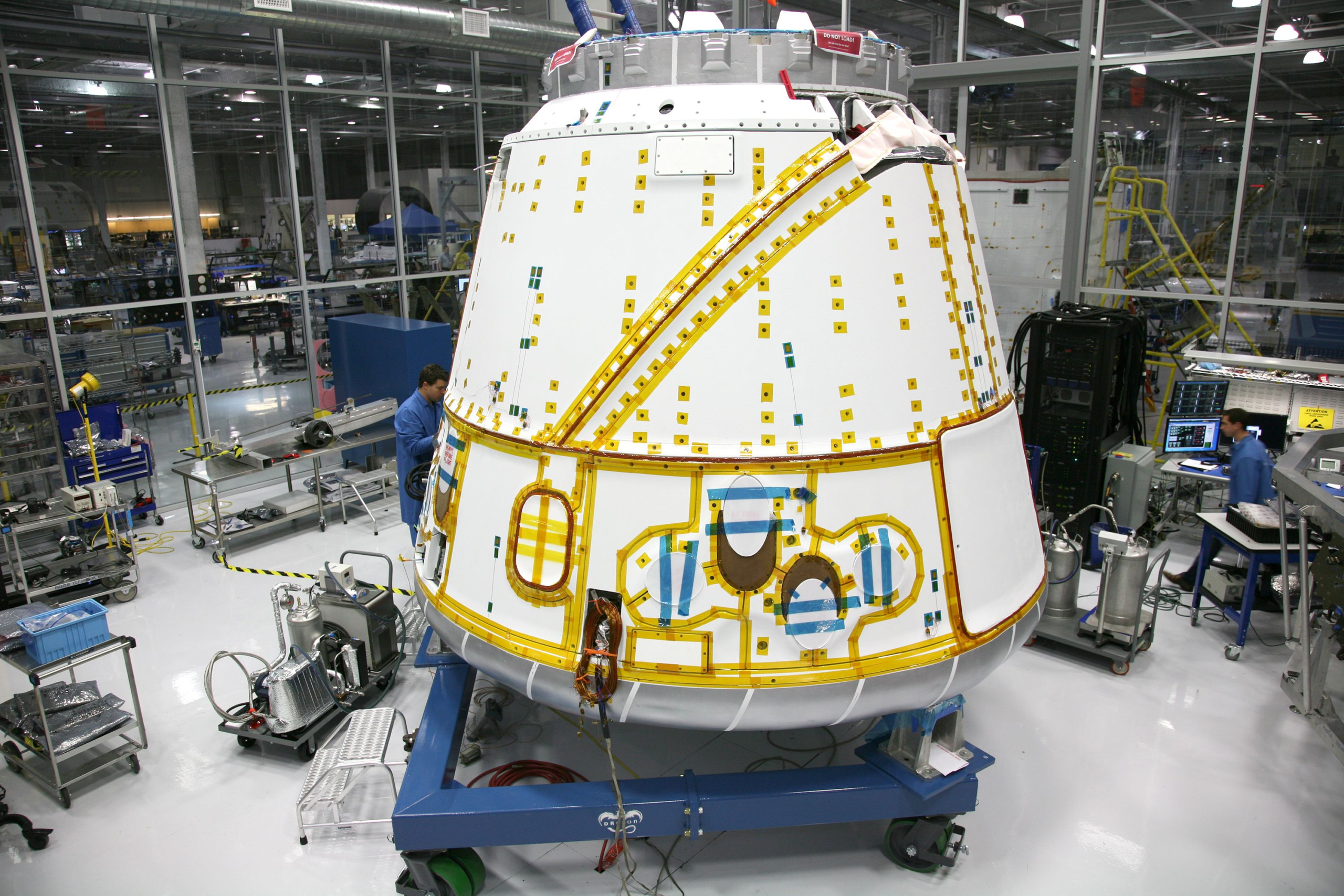
The Exploration Company has raised $450 million to push its reusable Nyx spacecraft towards an International Space Station mission and accelerate development of a high-thrust rocket engine, putting unusually large European growth capital behind the physical transport infrastructure needed to reach, service, and return from orbit.
The Series C is co-led by Bessemer Venture Partners, Atomico, and the Scaleup Europe Fund managed by EQT, with existing investors including Balderton, Plural, Cherry Ventures, and Red River West also participating. The company says the transaction takes total funding to roughly $680 million.
Nyx remains the immediate priority. The reusable capsule is intended to carry cargo to public and commercial space stations independently of a single launch vehicle, with the planned full-scale orbital demonstration expected to dock with the ISS before returning safely to Earth.
The financing will also accelerate Storm, a reusable high-thrust oxygen-and-methane engine based on a full-flow staged-combustion architecture. That programme extends the company’s ambitions beyond orbital logistics and into propulsion technology for a possible future European reusable heavy launcher.
Transport remains a bottleneck
Europe has deep capability in satellites, Earth observation, telecommunications, science, and aerospace manufacturing, yet dependable transport to orbit and back remains concentrated among a limited number of providers. That dependency becomes more commercially significant as governments and private companies plan new stations, in-orbit services, defence systems, and constellations requiring repeatable logistics rather than occasional demonstration missions.
Nyx is designed to address part of that gap by carrying cargo independently of a single launcher. Such flexibility could make mission planning less dependent on one rocket programme, although launcher independence still requires certification, docking reliability, re-entry capability, manufacturing capacity, and enough flight opportunities to demonstrate that the hardware performs consistently.
The company says it has secured more than $2 billion in contracts and commitments involving public and commercial customers, including work connected with the European Space Agency and future space-station logistics. It has also signed a Space Act Agreement with NASA covering technical and safety qualification work for future missions.
Those relationships provide more substance than a financing round alone, although space contracts can sit a long way ahead of recurring revenue. Engineering problems, launch delays, certification, regulatory approval, and dependence on other parts of the space ecosystem can all alter programme economics before a planned mission reaches orbit.
Storm adds another industrial challenge
Developing Storm alongside Nyx gives the company exposure to a second capital-intensive engineering problem. High-thrust reusable propulsion is difficult to design, manufacture, test, and certify, while the development path requires expensive facilities and repeated hardware testing before an engine can become part of a launch system.
The company intends Storm to use a full-flow staged-combustion cycle with oxygen and methane, an architecture associated with high performance but considerable technical difficulty. The test programme is expected to progress through subsystems and power-pack work before a complete development engine is demonstrated.
If successful, the engine could address a separate weakness in Europe’s space infrastructure. Reusability has altered launch economics and cadence in the United States, while European programmes have spent recent years rebuilding independent launch capacity following delays, geopolitical changes, and the transition towards new vehicles.
The Exploration Company is therefore moving across two connected markets: reusable cargo transport through Nyx and propulsion technology through Storm. Capturing more of that technical stack inside Europe could reduce dependency, although the company must now manage two hardware programmes whose costs and schedules can move rapidly when engineering problems appear.
Growth capital meets industrial risk
The financing also reflects Europe’s attempt to provide larger pools of capital for companies whose economics differ sharply from conventional software. Spacecraft, propulsion, robotics, semiconductors, and energy systems require substantial spending before commercial production becomes mature, leaving many deeptech companies exposed to a financing gap between prototype and industrial deployment.
The involvement of the Scaleup Europe Fund places the transaction within that wider policy effort. Late-stage capital becomes especially sensitive when the technology supports communications, security, scientific infrastructure, or sovereign access to services that governments consider strategically important.
Capital alone does not create independent space capability, however. Europe still needs launch cadence, qualified hardware, manufacturing depth, supply chains, customers, and enough mission demand for providers to survive beyond successive funding rounds.
Nyx offers a relatively clear near-term test because an ISS docking and successful return would demonstrate an end-to-end capability that agencies and commercial customers can assess. Storm has a longer path before it can influence launch economics, and progress will depend on engineering milestones rather than the amount of money already committed.
The $450 million round therefore gives Europe a better-financed attempt to build more of its own orbital transport stack, but the decisive evidence will arrive through hardware. A successful Nyx mission would show whether large-scale growth capital can be converted into repeatable space logistics, while Storm will determine how far that ambition can extend down into the propulsion systems required to get there.


