

Summary
- Deutsche Telekom's T.Capital Tech Fund has invested €100m in Mistral AI's Series D funding round.
- The companies intend to develop a strategic relationship linking AI models with computing infrastructure and enterprise delivery services.
- The investment builds on Deutsche Telekom's German AI infrastructure expansion, but specific joint products and customer deployments remain to be established.
Deutsche Telekom has invested €100m in French artificial intelligence developer Mistral AI, strengthening the financial relationship between European model development and the infrastructure needed to deploy AI in commercial and public sector environments. The companies intend to develop a strategic partnership focused initially on Germany, where organisations face growing pressure to combine AI adoption with tighter control over technology and information.
Confirmed on 19 November, the investment was made through Deutsche Telekom’s T.Capital Tech Fund as part of Mistral’s Series D financing round. The transaction establishes a financial commitment, while the proposed commercial partnership remains subject to further development.
The planned cooperation would combine Mistral’s AI models and software with Deutsche Telekom’s computing infrastructure, enterprise services and systems integration capabilities. Industrial businesses and regulated organisations are among the intended customers, although neither company has disclosed a timetable for specific joint products or named deployments.
The investment follows Deutsche Telekom’s expansion of AI computing capacity in Germany and Mistral’s establishment of a stronger local presence, including its Munich hub. Together, these developments create the foundations for a more integrated European AI offering, but the commercial results will depend on the services subsequently developed and adopted.
Computing capacity needs applications to generate returns
Developing advanced AI models requires access to substantial computing resources, but the economics of the industry also depend on finding organisations willing to pay for the resulting capabilities. Infrastructure operators face a comparable problem: expensive processing capacity must attract sufficient workloads to justify investment in equipment, electricity and supporting systems.
Partnerships between model developers and infrastructure providers can connect those requirements. A model company gains routes to computing capacity and commercial customers, while an infrastructure operator can use the models to support demand for hosting, deployment and related services.
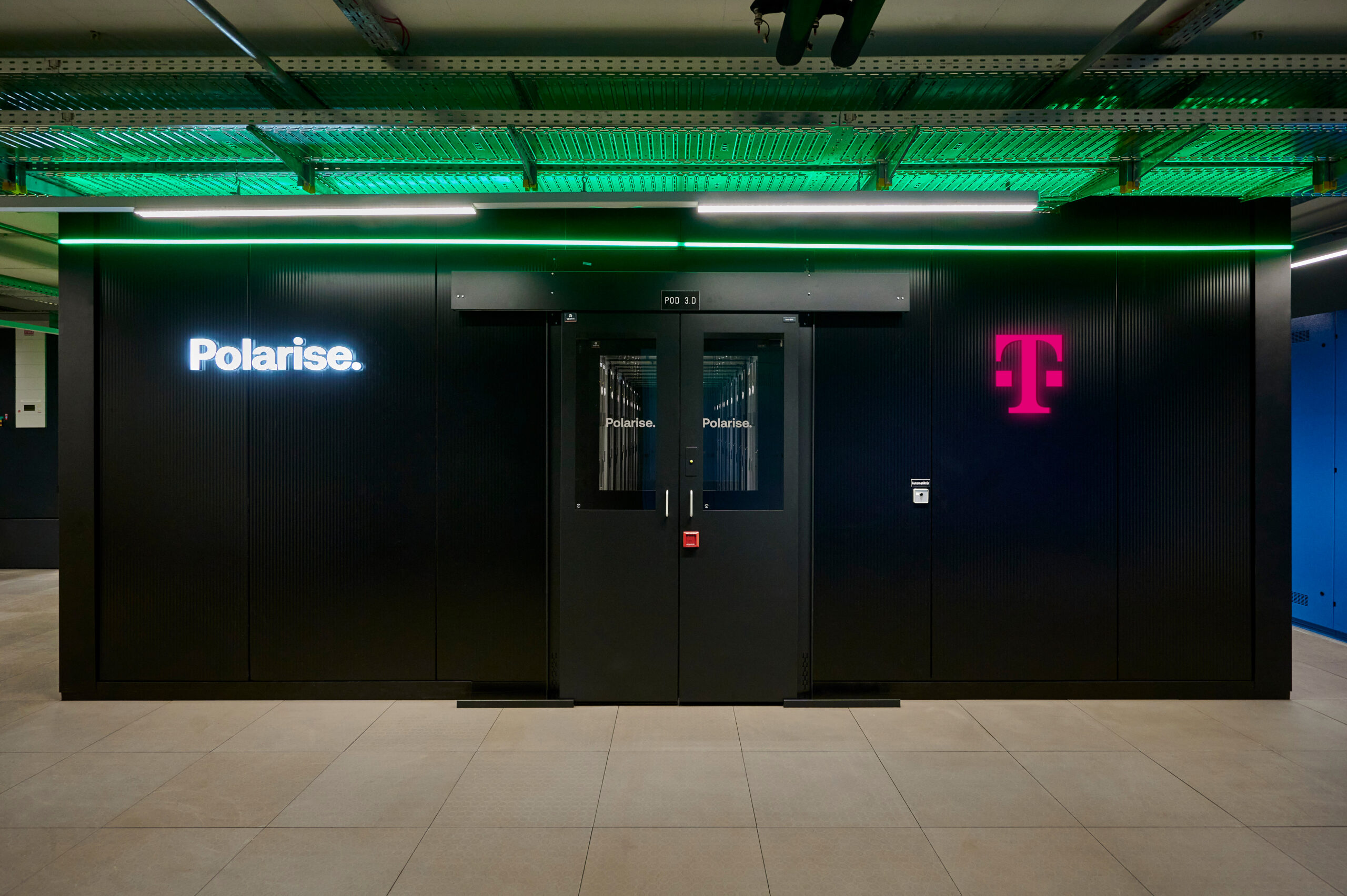
Deutsche Telekom already provides enterprise technology through T-Systems and has been investing in German AI computing facilities. In November, Techopia reported on its plans to expand Munich AI infrastructure to 20MW, part of a broader effort to provide capacity for advanced computing workloads.
The relationship with Mistral could allow the telecommunications group to connect that infrastructure with European-developed models and the engineering services required by customers. However, the investment announcement does not establish that a particular model will be exclusively hosted on Deutsche Telekom’s systems or that all future Mistral deployments will use German computing capacity.
Those details will matter commercially. Customers need to understand the infrastructure available for each workload, the pricing of model access and whether the intended service can meet performance and security requirements.
Enterprise deployment extends beyond model selection
Organisations introducing AI into established business processes face challenges that are only partly addressed by choosing a capable language model. The surrounding systems must supply relevant information, protect confidential records and determine how generated outputs are used.
An industrial manufacturer might consider models to support engineering documentation, maintenance processes or operational analysis. Those applications can require connections to specialist software and historical records whose formats and access arrangements differ considerably from conventional web-based information.
Integrating a model with those systems requires additional engineering. Information must be retrieved reliably, access permissions enforced and workflows designed so that incorrect or incomplete outputs do not create unacceptable consequences.
For regulated organisations, the processing location and operational arrangements may also influence deployment decisions. Financial services businesses, healthcare organisations and public authorities can face additional requirements concerning confidentiality, information security and accountability for automated activities.
Deutsche Telekom’s systems integration and enterprise service capabilities could help address these requirements, although the effectiveness of the proposed partnership will depend on the technical architecture, support arrangements and commercial responsibilities ultimately established.
The distinction between an available model and a working business application is important when assessing the likely benefits of the investment. Even high-performing models can require substantial preparation before they operate reliably within established processes.
European control requires technical evidence
The investment also reflects wider European efforts to develop alternatives to AI services controlled primarily by technology companies headquartered elsewhere. Regional model development and computing infrastructure can provide additional choices for organisations concerned about jurisdiction and dependency on a limited number of suppliers.
Those considerations are relevant to procurement, but European ownership does not automatically establish complete technological independence. Computing facilities use hardware, networking equipment and software components supplied through international markets, while AI systems may depend on external libraries and specialised services.
Customers seeking greater control will therefore need evidence about where their information is processed, who can administer the relevant systems and whether the service can be maintained if particular suppliers become unavailable.
Model portability may also influence long-term technology decisions. Organisations can reduce some dependencies when applications are designed to accommodate alternative models, although compatibility and performance can differ substantially between providers.
A closer relationship between an infrastructure operator and model developer can simplify commercial delivery, but it may also concentrate customer relationships around a particular technology combination. Procurement teams need to understand whether applications can be transferred or updated without disproportionate redevelopment.
Germany provides an initial commercial focus
German industrial businesses provide a substantial potential market for AI services that can be integrated with established enterprise software and production environments. However, practical adoption depends on the quality of available information, the costs of implementation and the ability to demonstrate improvements under operational conditions.
Mistral’s Munich presence could support closer relationships with customers and partners, while Deutsche Telekom can provide infrastructure and integration services through its established commercial network. The combination may reduce some barriers for organisations considering European AI suppliers, although no quantified adoption targets have been disclosed.
The €100m investment also adds a major European telecommunications group to Mistral’s financial backing. For Deutsche Telekom, the transaction creates a closer relationship with a model developer whose technology could support demand for its infrastructure and services.
Neither company has disclosed the expected revenue contribution of the proposed partnership or the return anticipated from the investment. Those outcomes will depend on commercial agreements, customer adoption and the economics of operating AI workloads within the infrastructure provided.
The financial transaction is complete, but the broader partnership remains at an earlier stage. Its next meaningful milestones will involve identifying the services to be delivered, establishing their operating arrangements and demonstrating that they can support commercially useful AI applications for German organisations.


