

Summary
- CSG has acquired a 9.5% stake in Canadian satellite manufacturer MDA Space, becoming its largest shareholder.
- The companies may explore European manufacturing facilities, strategic acquisitions and closer commercial relationships, but no joint project has been committed.
- CSG has established a dedicated space team, building on earlier investments in Britain's SatVu and Germany's Atmos Space Cargo.
Czech-led industrial and defence group CSG has acquired a 9.5% stake in Canadian satellite manufacturer MDA Space, becoming its largest shareholder as it develops a broader space technology business and considers potential manufacturing partnerships in Europe.
Announced on 13 October, the investment creates a substantial commercial relationship between an established European defence manufacturer and a Canadian company supplying satellite communications, robotics and geointelligence technology. The two businesses could explore European satellite production facilities, acquisitions and cooperation involving CSG’s existing customers, although they have not announced an agreed joint venture or committed manufacturing investment.
CSG, whose management is headquartered in Prague and whose shares trade in Amsterdam, has developed a sizeable industrial business through investment in defence manufacturing and associated engineering activities. Its position in MDA Space provides exposure to technologies increasingly relevant to military communications, surveillance and operations involving assets in orbit.
The 9.5% holding makes CSG the largest individual shareholder at the time of the announcement without giving it majority ownership. MDA Space remains independently managed and publicly traded in Toronto and New York, while any closer operational relationship will depend on subsequent agreements between the companies.
Established technology rather than an early-stage investment
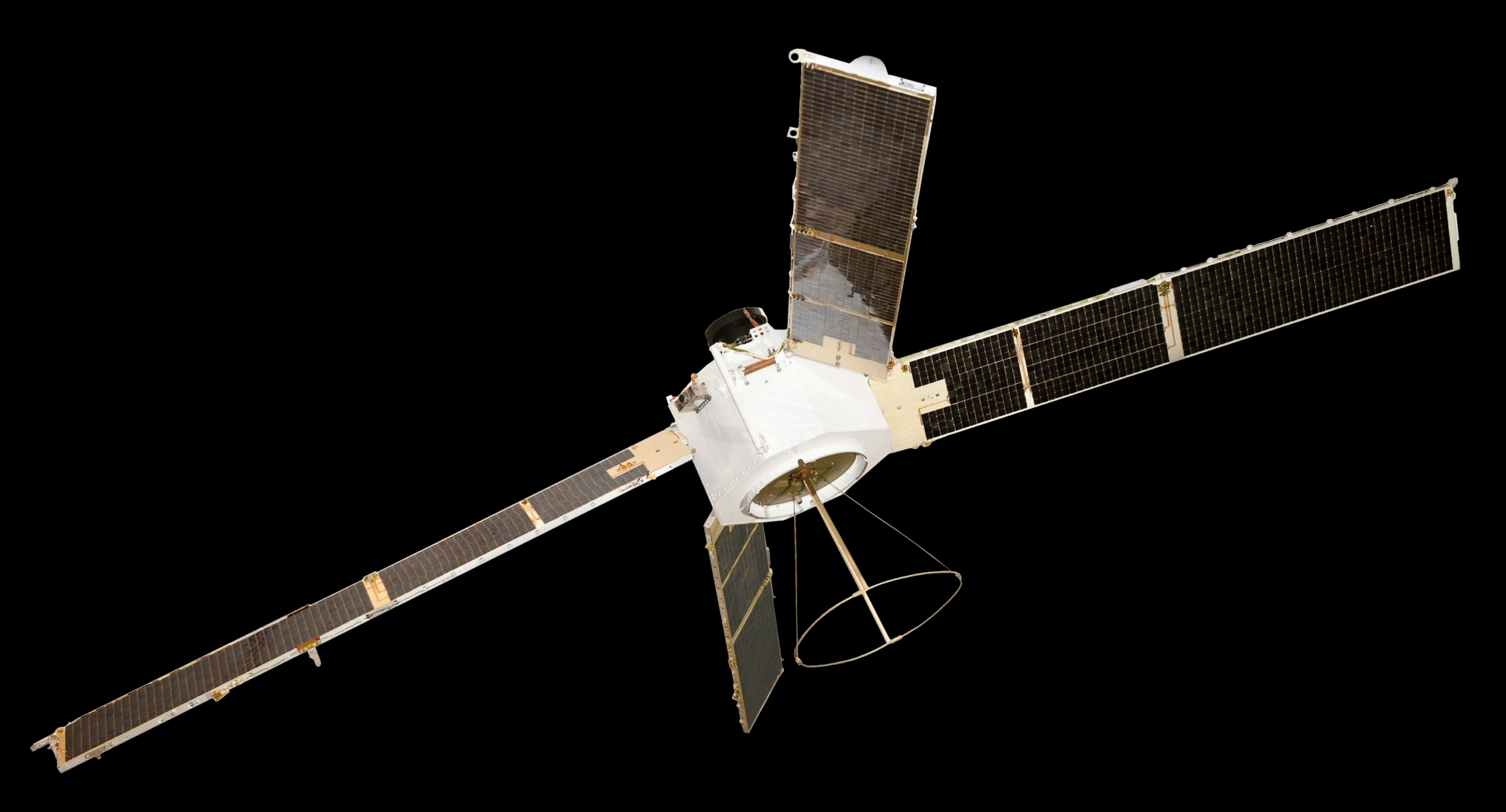
MDA Space operates across communications satellites, Earth observation, space robotics and infrastructure, employing more than 4,000 people. Its business spans both commercial programmes and government customers, giving CSG access to an established industrial relationship rather than an investment centred on technology still awaiting its first commercial deployment.
Among MDA’s products is the AURORA family of software-defined satellites, designed to support communications services whose capacity and functions can be configured through software. In September, the company introduced AURORA BLACK, a defence-focused extension intended to provide additional protection against interference and other threats affecting communications in contested environments.
That product development illustrates why satellite technology increasingly overlaps with conventional defence procurement. Military organisations need dependable communications and information about activity beyond their immediate operating areas, while orbital systems can support services used by aircraft, ships and ground-based equipment.
However, ownership of shares in a supplier does not automatically give an investor access to its designs, manufacturing facilities or government contracts. Commercially sensitive information, export controls and national security requirements may restrict how technology is transferred or incorporated into products supplied across borders.
For CSG, the potential attraction lies partly in combining its existing industrial relationships with MDA’s established space capabilities. The group operates manufacturing businesses across several European countries and maintains customer relationships in defence markets where satellite communications and observation have become increasingly important.
MDA could benefit from access to those relationships, particularly where European governments are seeking to expand domestic industrial capacity and reduce reliance on distant suppliers. Yet the announcement provides no estimate of additional sales, and the companies have not identified specific procurement programmes that would result from the investment.
European production remains a possibility
One potential area of cooperation involves co-investment in European satellite manufacturing or assembly facilities. Such an arrangement could position production closer to regional customers and potentially create opportunities for European suppliers of electronics, precision components and other specialised equipment.
The economics would depend on the type of satellites being manufactured, the level of existing capacity available and whether customers could support the investment through sufficiently predictable orders. Space hardware requires specialised testing and qualification, while changes to established production arrangements can introduce additional technical and delivery risks.
Neither CSG nor MDA has specified a location, capital budget or timetable for a European facility. The proposal is therefore an option under consideration rather than an announced construction project, and it would be premature to associate the share acquisition with particular manufacturing jobs or production volumes.
The companies may also explore strategic acquisitions, potentially allowing them to obtain technology or expand commercial capabilities through businesses already operating in the space sector. Those possibilities remain similarly preliminary, with no targets or agreed transactions disclosed.
CSG has meanwhile created a dedicated management team to assess its expansion. Ladislav Stahl, a former NATO space adviser and previous head of the Czech Republic’s Satellite Centre, will lead space strategy and technology. Filip Kocián has been appointed Space Director for Corporate Development, while Canadian aerospace and defence executive Cameron McKenzie will advise on the group’s activities in Canada.
The appointments provide specialist management capacity for a business that has historically concentrated on defence and industrial manufacturing. Space programmes involve long development cycles, substantial engineering commitments and procurement arrangements that can differ considerably from those associated with conventional military equipment.
Although CSG describes the acquisition as its entry into the space sector, it already held smaller investments through its Tech Horizons venture capital fund. These include British thermal satellite imaging company SatVu and German space cargo developer Atmos Space Cargo, whose activities address different parts of the emerging commercial space market.
The MDA transaction gives CSG a much larger interest in an established supplier, complementing those earlier investments with exposure to production capabilities and an international customer base. The distinction is important because venture stakes in developing businesses create different operational opportunities from a substantial shareholding in a publicly traded manufacturer.
Space sovereignty depends on industrial capacity
European governments are increasingly examining how satellite communications, Earth observation and supporting infrastructure can remain available during periods of geopolitical tension. Techopia previously explored how European space sovereignty depends on industrial and operational infrastructure, including the systems required to manufacture, operate and maintain space assets.
A larger manufacturing presence in Europe could contribute to that capability if it results in actual production, established supplier relationships and systems available to customers under suitable contractual arrangements. A European investor in a Canadian company does not, by itself, make the underlying technology European-controlled or remove existing dependencies.
Equally, expanding production into another jurisdiction may introduce questions about intellectual property ownership, access to sensitive designs and the allocation of work between established and newly created facilities. Those matters would become relevant if the companies advance a manufacturing agreement beyond the exploratory stage.
CSG’s acquisition gives both businesses a strategic relationship through which they can examine those opportunities. For now, the confirmed developments are the 9.5% holding and the creation of a specialist space team, while the industrial and commercial consequences will depend on whether proposed cooperation becomes formal investment and customer contracts.


