Summary
- ASP Data Center has raised NOK 1.6 billion in bond capital, largely to refinance investment around its K11 site.
- The operator says contracted revenue is approaching NOK 2 billion, including a 6MW agreement with an international customer.
- Its Norwegian and Finnish pipeline illustrates how secured electricity is becoming a financial asset in European data-centre development.
Norwegian operator ASP Data Center has raised NOK 1.6 billion in bond capital as it expands a Nordic infrastructure portfolio built around something becoming increasingly scarce across European data-centre markets: credible access to large amounts of electricity.
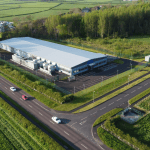
The proceeds will principally refinance investment associated with ASP’s K11 facility in Stavanger and an existing NOK 685 million bond. The company says its contracted revenue backlog is approaching NOK 2 billion, including a recently signed agreement to supply 6MW of IT capacity at K11 to an unnamed international customer.
ASP operates sites in western Norway and is developing a larger pipeline extending into Finland. Its estate combines existing and planned capacity with expansion potential measured in hundreds of megawatts, putting the business into a market increasingly shaped by whether developers can secure power before customers need it.
Nordic markets have attracted more infrastructure capital as AI and high-performance computing increase electricity demand per deployment. Cooler climates and access to low-carbon generation remain useful, but their value rises sharply when established European hubs face longer grid queues and greater competition for land and power.
Electricity becomes part of the asset
Data-centre economics have traditionally revolved around land, connectivity, construction, customer proximity, and electricity prices. Grid access is becoming just as consequential because a site with a credible route to tens or hundreds of megawatts can hold strategic value years before every data hall has been built.
ASP says it has secured 67MW of power across its estate and identifies more than 400MW of expansion potential. Its projects include operating facilities in Norway and planned development in Finland, where the first phase of its Pori project is intended to reach 30MW before potentially expanding much further.
The company sits inside a broader movement of institutional capital into Nordic compute infrastructure. 3i Infrastructure recently invested in Norway’s Lefdal Mine Datacenter, while the acquisition of atNorth placed another large pool of capital behind regional AI and cloud capacity.
Those investments reflect more than low electricity prices. Large compute customers need confidence that additional power can arrive on a timetable aligned with accelerator deployments, while sites in congested markets can be commercially stranded if grid reinforcement takes years.
AI changes the size of customer commitments
ASP’s 6MW customer agreement shows how quickly individual deployments can consume capacity that once supported a much broader mixture of enterprise workloads. AI clusters concentrate large electrical requirements into relatively small physical areas, increasing demand for liquid cooling, high-density power distribution, and scalable utility infrastructure.
Some AI training, batch processing, backup, and cloud workloads are also less sensitive to physical distance from major European cities than trading platforms or interactive applications. That gives Nordic operators more room to compete, provided network connectivity and reliability compensate for their distance from the largest customer clusters.
ASP promotes liquid cooling and heat reuse alongside access to Norwegian hydropower. Waste heat can improve the local energy economics of facilities where a suitable user exists, although those projects still depend on matching the data centre’s heat output with nearby demand and infrastructure.
The competitive advantage therefore rests on an interlocking set of conditions: power, land, connectivity, capital, technical design, and customers. Nordic operators may have more room to build, but turning that potential into operating capacity still requires financing well before every rack starts producing revenue.
Debt follows the pipeline
The new bond does more than refinance earlier commitments because it strengthens ASP’s financial capacity during a period when large sites have to secure equipment and development rights in advance of customer utilisation.
Contracted backlog gives investors visibility over future revenue, while the K11 agreement demonstrates that customers are already absorbing meaningful amounts of capacity. Even so, a development pipeline running into hundreds of megawatts will require far more capital if all of it is to move from secured power and land into operating infrastructure.
Nordic operators therefore face a growth problem different from that of developers in the most constrained metropolitan hubs. Their opportunity is to build larger campuses around comparatively abundant low-carbon electricity; their challenge is financing and filling that capacity quickly enough to justify bringing it online.
ASP’s NOK 1.6 billion bond captures that change neatly. Data-centre investment is becoming inseparable from electricity infrastructure and capital markets, while the sites capable of demonstrating credible power access gain value before the computing equipment itself arrives.