

Summary
- Amazon has agreed to purchase 36MW from Statkraft’s Mossy Hill wind farm near Lerwick, adding another long-term corporate buyer to Scotland’s renewable-energy market.
- Mossy Hill is being redesigned around eight turbines and requires new grid infrastructure connecting the project into Shetland’s transmission network and the UK mainland.
- The agreement illustrates how large technology companies are becoming more closely involved in energy procurement as computing, logistics, and wider electrification increase electricity demand.
Amazon has agreed to buy 36MW of power from a planned wind farm in Shetland, giving Statkraft a long-term corporate customer for the project as large technology companies become more closely entangled with the infrastructure needed to produce the electricity their operations consume.
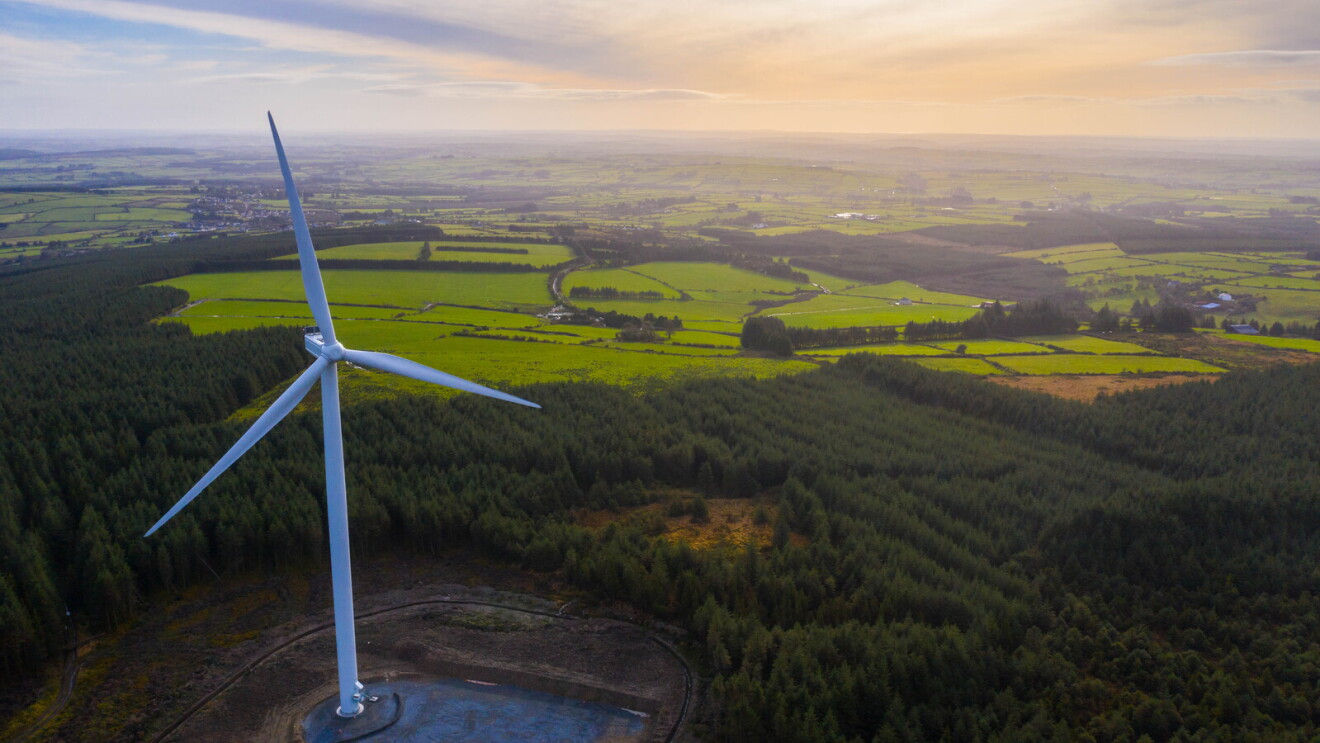
Amazon has signed a power purchase agreement with Statkraft covering the Mossy Hill wind farm near Lerwick. The redesigned project is expected to comprise eight onshore turbines with a maximum generation capacity of 36MW, down from an earlier 12-turbine, roughly 48MW configuration.
Amazon says the wind farm could generate electricity equivalent to the annual consumption of more than 57,000 homes, while the agreement takes its UK portfolio to more than 50 carbon-free energy projects representing over 1GW of capacity. Those household equivalents describe annual generation rather than electricity physically reserved for particular homes or Amazon facilities.
The same distinction applies to the power purchase agreement itself. Mossy Hill will feed electricity into the grid rather than operate as a private power plant attached to an Amazon data centre, fulfilment centre, or office. The commercial role of the contract is to provide a long-term buyer for generation while Amazon uses renewable-energy procurement across its wider UK operations.
Technology companies are becoming energy counterparties
Corporate renewable agreements have acquired greater importance as technology companies expand physical infrastructure alongside software services. Amazon operates fulfilment and logistics facilities as well as Amazon Web Services data centres, while electricity demand from cloud computing and artificial intelligence is adding another large industrial load to grids already being reshaped by electrified transport, heating, and manufacturing.
That does not mean Mossy Hill has been developed solely to supply computing infrastructure. The wind farm is a generation project feeding the wider electricity system, and Statkraft has been working on it independently of the latest Amazon agreement. Yet the presence of a large corporate buyer can improve the revenue certainty available to a developer while a project moves through construction and financing.
Amazon says its UK carbon-free energy portfolio now represents more than 1GW of capacity and forms part of a wider European portfolio exceeding 10GW. Those figures are company disclosures covering multiple types of renewable project, and they should not be confused with the instantaneous electricity consumption of Amazon’s UK operations or with generation physically dedicated to the company.
The commercial relationship nevertheless shows why energy procurement is moving closer to technology strategy. Companies running large digital estates can no longer treat electricity simply as another utility bill when the availability, cost, carbon intensity, and location of power can influence where new infrastructure is economically viable.
Shetland still needs the physical grid
Mossy Hill also demonstrates the amount of infrastructure sitting behind a corporate renewable contract. Statkraft has begun work on a new substation intended to connect the wind farm into the 132kV transmission network between Kergord and Gremista, creating the route through which generation can reach the wider energy system.
The project therefore depends on more than turbines. Roads, foundations, substations, cables, transmission capacity, grid-management systems, planning conditions, and equipment procurement all have to be delivered before the electricity represented by a power purchase agreement can enter the network.
Statkraft’s current design reduces the proposed turbine count from twelve to eight while retaining a maximum project capacity of 36MW. That redesign reflects the way renewable projects continue changing after initial consent as developers respond to planning, engineering, environmental, commercial, and local considerations.
There is also an unresolved difference between the public timetables currently given by the two companies. Amazon’s 30 September update says Mossy Hill is expected to become operational in November 2030, while Statkraft’s project update currently says the wind farm is expected to be complete and generating in summer 2029. Neither source explains the discrepancy, so the eventual commissioning timetable remains unclear.
Power demand and generation investment converge
Amazon has been expanding renewable procurement in Scotland beyond Mossy Hill, including agreements around the Moray West offshore wind farm and the planned Chirmorie onshore project in South Ayrshire. The company says it invested more than £3 billion in low-carbon technologies in the UK between 2021 and 2025, based on analysis commissioned from Frontier Economics.
Those investments sit beside a much larger UK capital programme. Amazon announced in 2025 that it intended to invest £40 billion in the country through 2027 across operations including logistics, technology, and data-centre infrastructure, making its exposure to the cost and availability of electricity correspondingly larger.
Corporate procurement cannot substitute for national grid planning. A company can sign contracts with renewable generators, but those projects still require transmission capacity, balancing, storage or flexible generation elsewhere in the system, and enough network investment to move electricity between places where it is generated and places where demand is concentrated.
Shetland makes those dependencies particularly visible because the islands combine substantial renewable resources with a comparatively small local electricity market and a need for transmission infrastructure connecting generation into the wider Scottish and British system. Building more wind capacity therefore depends partly on whether the network can carry it away.
The growth of AI and cloud infrastructure adds another demand-side pressure to the same system. New data centres can require power at the scale of industrial facilities, while transmission projects and renewable generation routinely take years to develop. Electricity procurement made today can consequently be part of capacity planning for technology infrastructure that will not be operating at full scale for several years.
Amazon’s Mossy Hill agreement is modest beside the multi-gigawatt energy requirements now associated with some global computing programmes, although its structure captures the direction of travel. Digital businesses are becoming long-term participants in electricity markets because the physical resources underneath computing — land, substations, transmission lines, generation, and ultimately megawatts — increasingly determine how much digital capacity can actually be built.


