Summary
- The Royal Navy has agreed a multimillion-pound contract to deploy Arondite's Cobalt mission orchestration software across UK Commando Force systems.
- The platform connects information from sensors, autonomous equipment, and operational systems to support planning and decisions by military personnel.
- Arondite plans £35m of investment in Norway over five years, while its workforce is expected to double to 150 by summer 2027.
The Royal Navy has agreed a multimillion-pound contract with British defence software developer Arondite to connect sensors, autonomous equipment, and operational information across UK Commando Force systems.
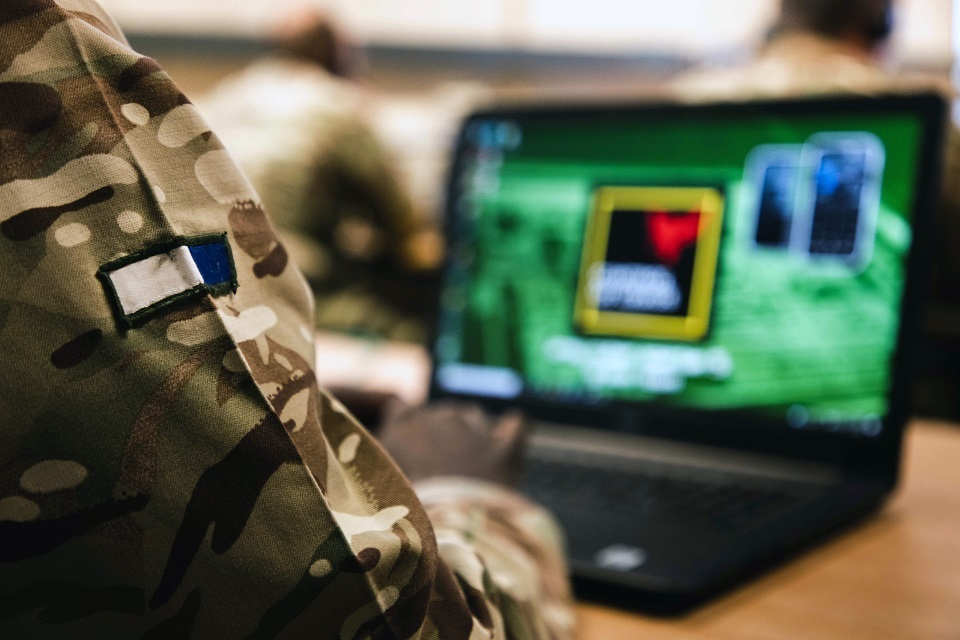
London-based Arondite will supply its Cobalt mission orchestration platform, which combines information from different military systems to support planning, coordination, and decision-making by personnel operating in complex environments.
The agreement was confirmed during the Atlantic Futures Forum on 12 November, alongside Arondite's plans to invest £35m in Norway over the next five years. The company will open its first international office in Oslo as it develops relationships with Norwegian defence organisations and NATO partners.
Although the Royal Navy has confirmed a multimillion-pound contract, its exact value has not been disclosed. The £35m Norwegian expansion is a separate company investment commitment rather than the value of the British software agreement.
Connecting equipment through a common platform
Modern military operations can involve information from surveillance sensors, uncrewed vehicles, communications systems, and specialist software supplied by several manufacturers.
Combining these sources presents practical difficulties where equipment relies on different technical standards or stores information in incompatible formats. Personnel may need to work across separate applications, making it harder to establish a consistent view of changing conditions.
Arondite's Cobalt platform is designed to connect these systems through a common operational environment. Its software supports the integration of sensors and autonomous platforms, the management of operational information, and the coordination of activities involving several types of equipment.
The company also provides AI-assisted functions intended to help personnel analyse information and manage complex workflows. These features support human decision-making rather than establishing that every operational decision or subsequent action is made autonomously.
The new contract will extend Cobalt across UK Commando Force systems, with the Ministry of Defence expecting improvements in planning and information sharing between military units.
Those benefits remain subject to implementation. Awarding a contract does not establish that every intended system has already been integrated or that the proposed improvements have been independently demonstrated across all operational environments.
For organisations operating equipment from several suppliers, software integration can reduce the need to maintain separate control arrangements for every system. However, the process depends on suitable interfaces, dependable data, and agreement about how information should be shared.
Existing trials provide a technical foundation
Arondite has previously worked with British military organisations, including 16 Air Assault Brigade Combat Team and Royal Navy units examining the use of autonomous systems.
The company's published case studies describe Cobalt being introduced within 16 Air Assault Brigade's planning and operational arrangements, alongside activities involving sensors, software, and autonomous equipment.
It has also participated in Royal Navy experiments under the Maritime Big Play programme, where the platform was used to combine information from different maritime and aerial assets.
These projects provide experience in integrating technologies developed by multiple suppliers, although company descriptions of their performance should not be treated as independent evidence of results across wider deployments.
Moving from individual trials into a more extensive operational programme introduces additional requirements involving training, reliability, security, and the maintenance of connections between equipment.
Software used in military environments may need to operate despite restricted communications, incomplete information, or rapid changes in the systems available to personnel. Its design must account for situations in which expected data is delayed or cannot be obtained.
Where AI contributes to information analysis or decision support, users also need to understand the limits of the outputs provided. Inaccurate information can influence operational decisions even when it is presented through an otherwise reliable software platform.
Arondite describes Cobalt as modular, allowing new hardware and software capabilities to be introduced through additional integrations. Whether that approach reduces deployment times will depend on the compatibility of individual systems and the technical requirements imposed by their operators.
Norway becomes Arondite's first overseas base
The company's planned Oslo office represents its first international location outside Britain. Arondite intends to invest £35m over five years as it develops commercial and technical relationships with Norwegian armed forces, domestic industry, and other NATO partners.
The Ministry of Defence says UK Commando Force and Arondite will make Cobalt available to Norwegian units for joint testing during upcoming deployments.
Those activities are expected to support the Joint Expeditionary Force's Northern Navies Initiative, which seeks closer interoperability between northern European maritime forces.
Interoperability involves more than exchanging information between headquarters. Military organisations may also need to coordinate sensors, uncrewed equipment, and operational responsibilities across platforms belonging to different countries.
Common software systems could help support such cooperation, provided security requirements, communications standards, and national operational procedures allow the necessary information to be shared.
Arondite's investment programme does not establish that Norwegian forces have already awarded additional procurement contracts or adopted Cobalt across their existing systems. The company's local expansion will require separate commercial agreements and technical work as individual projects develop.
Its workforce is expected to double to approximately 150 employees by summer 2027, with the expansion supporting its British and international activities. That employment figure is a company projection rather than a completed increase.
Software becomes an operational infrastructure investment
The Royal Navy's agreement forms part of a wider programme to develop UK Commando Force capabilities, including a separately identified £100m investment uplift under the government's Defence Investment Plan.
That funding should not be treated as the value of Arondite's contract. The broader investment is intended to support developments across the force, including equipment and capabilities for maritime and amphibious operations in northern Europe.
Arondite's role centres on the software used to coordinate information and equipment, rather than manufacturing every sensor, vessel, or autonomous platform within the system.
This distinction is commercially relevant because the introduction of new hardware can increase the complexity of existing operations. Without suitable software integration, additional sensors and autonomous equipment may create more information for personnel to manage without providing an equivalent improvement in their ability to act on it.
Common platforms can also create continuing technical obligations. Suppliers may need to maintain compatibility with equipment from other manufacturers, update software as requirements change, and provide security and operational support throughout a contract.
Reliance on a shared system introduces its own risks, particularly where several operational activities depend on access to the same information or services. Customers must assess resilience, permissions, and the ability to continue operating when individual software components or communications links become unavailable.
The Royal Navy is pursuing other programmes involving autonomous systems, including the Ocean Infinity agreement for Atlantic surveillance technology. That programme concerns a different operational capability from Arondite's mission orchestration software.
The new Cobalt agreement establishes a route towards wider deployment within UK Commando Force, while the Norwegian expansion creates opportunities for international testing and future business. The results will become clearer as systems are integrated, joint exercises take place, and Arondite advances its stated investment and employment plans.