

Summary
- Deutsche Telekom is expanding its Munich Industrial AI Cloud to 20MW, investing nearly another €250m.
- NVIDIA Blackwell Ultra B300 processors will supplement the existing computing systems.
- Industrial customers are using the facility, but independently verified commercial returns have not been published.
Deutsche Telekom is expanding its Industrial AI Cloud in Munich to 20 megawatts after reporting that the initial computing capacity was fully booked seven months after the facility began operating.
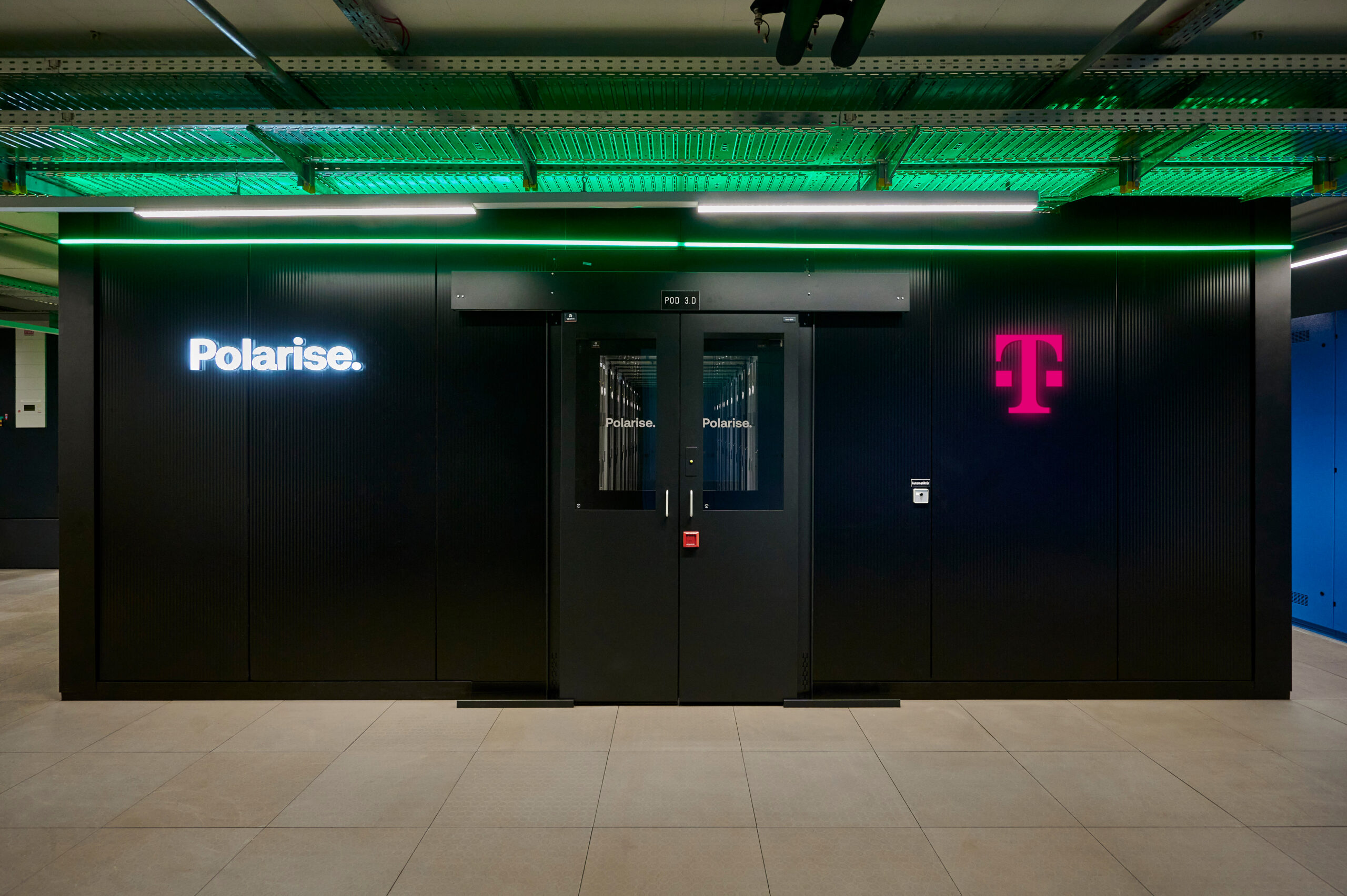
Announced on 9 November, the expansion involves nearly another quarter of a billion euros of investment and additional NVIDIA Blackwell Ultra B300 processors. These will supplement existing Blackwell B200 systems and RTX PRO 6000 server hardware, increasing the computing resources available to industrial customers.
The facility opened in February 2026 at Munich’s Tucherpark. Telekom says the next stage will double the number of chips in the Blackwell class, while newer hardware will increase processing performance by a greater proportion. It has not disclosed audited utilisation data or the profitability of the service.
Industrial customers drive capacity demand
Telekom identifies Siemens, Daimler Truck, Currenta, Agile Robots, Wandelbots, PhysicsX, Noxtua, EDAG and others among the organisations using the infrastructure. Applications include industrial simulation, robotics, model development and testing production processes in virtual environments.
These activities can require high computing capacity for different reasons. A factory simulation may involve detailed physical models, while robotics development often needs numerous trials under changing conditions. Running a large language model for employees or customers introduces a separate demand for reliable inference resources.
The presence of named customers supports the case for the investment, but it does not establish how intensively each company uses the facility or what productivity gains they have achieved. Full booking is a statement about allocated capacity, not a measure of the financial returns generated by every workload.
Telekom began planning additional capacity earlier in the year, and the company is exploring further investment elsewhere in Bavaria. No final decision has been announced for that separate possibility.
New hardware changes performance economics
Blackwell Ultra B300 processors are designed for demanding AI tasks, including training, inference, reasoning and agent-based applications. Customers may benefit from more computing capacity without developing and operating their own large facilities.
However, processor performance is only one component of a functioning service. Networking, storage, software frameworks and access to reliable data influence the time required to complete actual business tasks.
For example, running a model repeatedly inside an automated workflow may consume substantial resources even if each individual response is relatively quick. Some industrial applications additionally rely on specialised simulation software and integration with physical equipment.
Procurement decisions therefore involve more than comparing the headline number of processors. Businesses need predictable service availability, cost information, security controls and evidence that the infrastructure supports their software.
Using NVIDIA hardware also illustrates the limits of regional independence. Telekom operates the service in Germany, but its underlying accelerators come from a global semiconductor supply chain. European operating control and hardware sovereignty are not the same thing.
Energy efficiency enters the calculation
Telekom reports a power usage effectiveness figure of approximately 1.2 for the Munich installation. PUE compares total facility electricity consumption with the electricity used directly by computing equipment, including the overhead from cooling and power distribution.
A value near 1.2 indicates relatively limited facility overhead under the measured conditions. It does not show how much useful computing work is completed per unit of electricity, because that depends on the hardware and workload.
The company also intends to reuse waste heat from the computing facility to provide heating for the Tucherpark district. The plan could improve overall energy use, although Telekom has not established how much heat will be delivered or when the wider benefit will be fully realised.
Power demand remains relevant as European data centre projects compete with other industries for electricity connections. Expanding computing services requires investment in cooling, distribution equipment and network capacity alongside processors.
From allocated capacity to delivered services
The Industrial AI Cloud is positioned as a European-operated service for businesses and public organisations. Its location may help customers address some security and data-residency requirements, but compliance still depends on contracts, deployment arrangements and access controls.
Telekom’s investment increases capacity for customers seeking local computing options. Whether the expansion becomes commercially sustainable will depend on continued demand, costs and the extent to which projects progress from development work into routine operation.


