Summary
- Bosch will establish its Semiconductors division on 1 January 2028, retaining the business within Bosch Mobility.
- The company plans to expand chip manufacturing for external customers while pursuing applications in robotics and AI infrastructure.
- Its €5bn semiconductor sales target for 2030 is supported by an existing manufacturing network spanning approximately 40 locations worldwide.
German engineering group Bosch will establish a dedicated semiconductor division in January 2028, reorganising its chip operations as it targets €5 billion in annual semiconductor sales by 2030.
The new Semiconductors division will take over activities currently managed within Mobility Electronics, while remaining part of Bosch’s wider Mobility business. The company also plans to open more manufacturing capacity to external customers and expand its foundry operations, strengthening its position as both a component supplier and manufacturing partner.
The decision follows a wider corporate restructuring and reflects Bosch’s ambition to increase sales beyond its established automotive and consumer electronics markets. Robotics, industrial automation, and data centre infrastructure are among the applications where the company expects growing demand for specialist semiconductor technologies.
Bosch already develops and manufactures microelectromechanical systems, silicon carbide devices, and application-specific integrated circuits. Its commercial opportunity lies partly in applying technologies developed for vehicles and industrial equipment to other markets with demanding sensing, control, and power-management requirements.
Separating chip operations within Mobility
Under the new structure, semiconductor operations will have a division dedicated to their particular commercial and engineering requirements. Bosch Mobility Electronics will retain responsibility for automotive electronic control units, which combine computing hardware and associated electronics to perform functions within vehicles.
The division is not being spun off into an independent company. Bosch will retain the business within Mobility, preserving its connection to the group’s systems engineering, manufacturing resources, and existing customers.
That organisational distinction affects how the restructuring should be understood. The company is creating a more specialised management and commercial structure rather than transferring its semiconductor assets to separate ownership or announcing a sale.
Erik Rein, the Bosch executive responsible for its semiconductor business, described the customer focus behind the change. “With our own division, we’ll be able to better tailor our services to our customers’ needs.”
Semiconductor suppliers frequently operate across markets with different development schedules. Automotive components may require extensive qualification and dependable supply over many years, while customers developing new robotic systems may need faster design iterations and closer collaboration on specialist sensors.
A dedicated business structure could allow Bosch to manage those requirements more directly, although the practical advantages will depend on how engineering resources, customer relationships, and capital expenditure are allocated once the reorganisation takes effect.
Foundry expansion broadens the customer base
Bosch’s plans also include increased access to its manufacturing facilities for external partners. In the semiconductor industry, foundry services allow customers to have their own chips manufactured using a supplier’s production processes and equipment.
Such arrangements require more than spare production capacity. Customers need compatible manufacturing specifications, engineering support, agreed testing procedures, and confidence that the supplier can maintain product quality and availability over the intended production period.
Bosch has experience producing semiconductors for its own systems and for customers purchasing established components. Expanding foundry activity would create additional opportunities to serve businesses whose designs require the manufacturing technologies already available within its facilities.
However, semiconductor manufacturing equipment is highly specialised. A facility designed for silicon carbide power devices cannot automatically manufacture every type of processor, and the processes appropriate for industrial components may differ substantially from those used for leading-edge AI computing chips.
The company’s opportunity therefore rests on matching customer requirements to its established capabilities rather than competing across every segment of semiconductor fabrication.
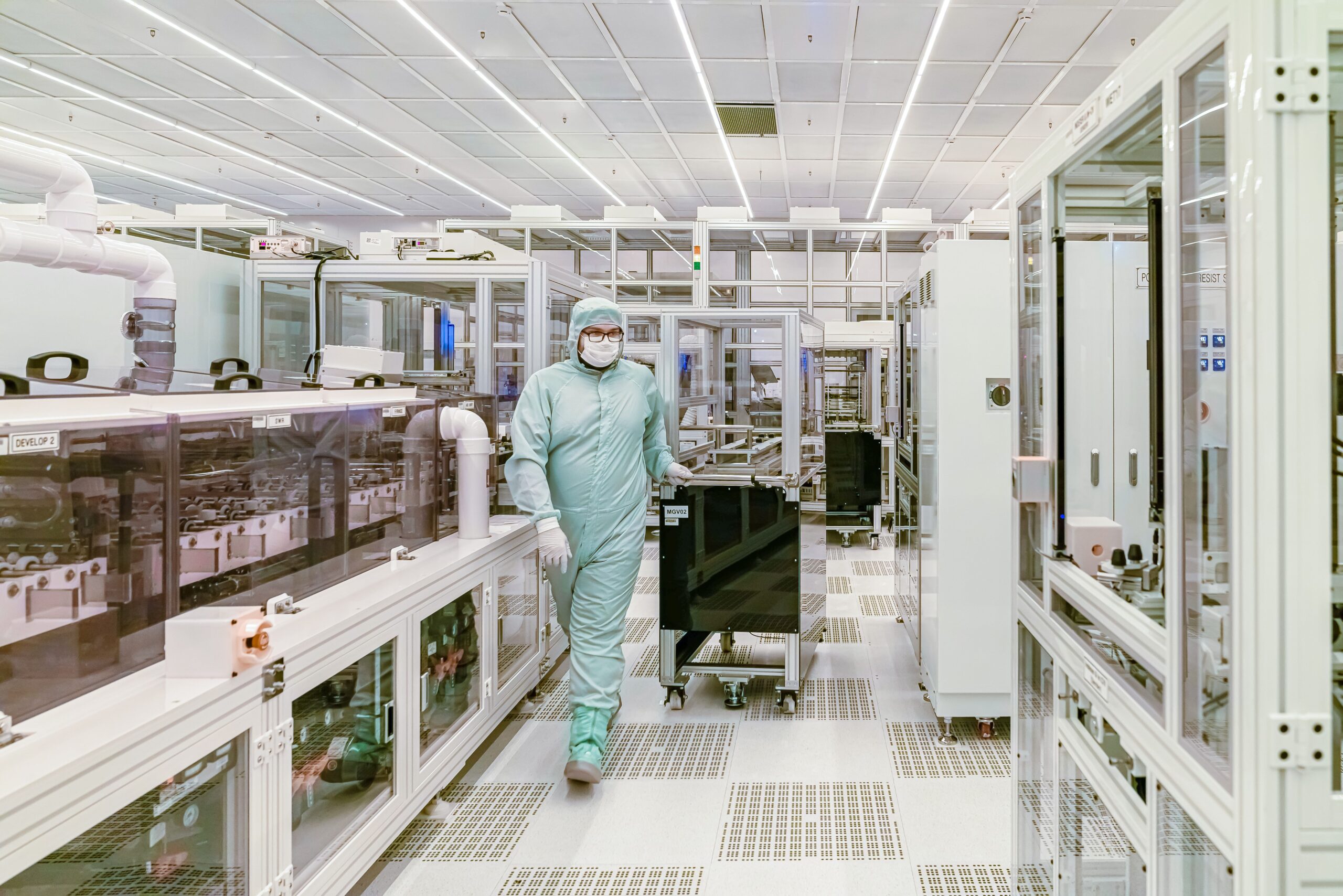
According to Bosch, its global semiconductor network covers approximately 40 locations involved in research, development, and manufacturing. The company has invested around €3 billion in its wafer fabrication facilities in Dresden and Reutlingen, Germany.
In the United States, approximately $2 billion is being directed towards converting the Roseville plant in California to manufacture specialised silicon carbide chips. Bosch also plans to expand its semiconductor testing centre in Penang, Malaysia, by the middle of the next decade.
The group holds a 10% stake in European Semiconductor Manufacturing Company, the Dresden joint venture developing additional semiconductor capacity. These investments show that its chip operations already depend on manufacturing, engineering, and testing activities distributed across several countries.
Robotics creates different semiconductor requirements
Bosch identifies robotics as a potential source of growth because automated equipment requires sensors, controllers, and power electronics capable of operating reliably in physical environments.
Humanoid robots illustrate the range of components involved. A machine may use cameras and other sensors to interpret its surroundings, specialist electronics to control movement, and power devices to manage electricity supplied to motors and other equipment.
Although artificial intelligence can help a robot plan or interpret actions, those decisions still have to be translated into electrical signals and physical movement. Components designed for sensing, control, and efficient power conversion consequently remain necessary even as software becomes more capable.
Bosch says its semiconductors are already used in humanoid robotics and intends to pursue further applications. That establishes existing exposure to the market, but it does not quantify future orders or demonstrate that robotics will become a major contributor to the proposed €5 billion sales target.
Demand forecasts also depend on the commercial adoption of robots outside controlled demonstrations. Manufacturers will need to achieve dependable operation, acceptable equipment costs, and sufficient productivity benefits before deploying larger fleets across industrial and service environments.
For semiconductor suppliers, successful adoption could create recurring demand for components, although different robot designs may require substantially different combinations of sensing, computing, and power-management technologies.
European manufacturing faces commercial tests
The restructuring arrives as European governments and industry groups seek to strengthen regional semiconductor capabilities. Manufacturing investments are often justified by the need for supply resilience, but sustainable production still depends on competitive technology and customers willing to commit to orders.
Bosch’s established position in automotive and industrial markets gives it relationships with buyers whose products depend on specialised electronic components. Expanding beyond those customers could improve the utilisation of manufacturing assets and reduce dependence on individual end markets.
Nevertheless, the foundry strategy will involve competition from established semiconductor manufacturers and specialist suppliers. Customers will assess production yields, reliability, pricing, delivery schedules, and the cost of adapting their designs to Bosch’s processes.
The company’s €5 billion revenue ambition also remains a target rather than a contracted order book. Its achievement will depend on demand in existing markets, the commercial success of additional products, and the extent to which external customers adopt its manufacturing services.
Bosch has until January 2028 to establish the new operating structure. The subsequent measure of its performance will be whether the division translates existing technical capabilities and manufacturing investments into sustained semiconductor sales across a broader customer base.