

Summary
- Cambridge's IonQ Quantum Innovation Centre has opened at the Ray Dolby Centre, following a strategic partnership announced in March 2026.
- Nine research projects have received funding, covering quantum hardware, computing algorithms, networks and potential applications across science and industry.
- A 256-qubit Superion machine is due by summer 2027, alongside planned networking infrastructure; the opening does not establish those installations are complete.
The University of Cambridge and quantum technology company IonQ have opened their Quantum Innovation Centre and selected nine research projects for funding, establishing the first operational stage of a partnership whose largest planned computing installation remains scheduled for 2027.
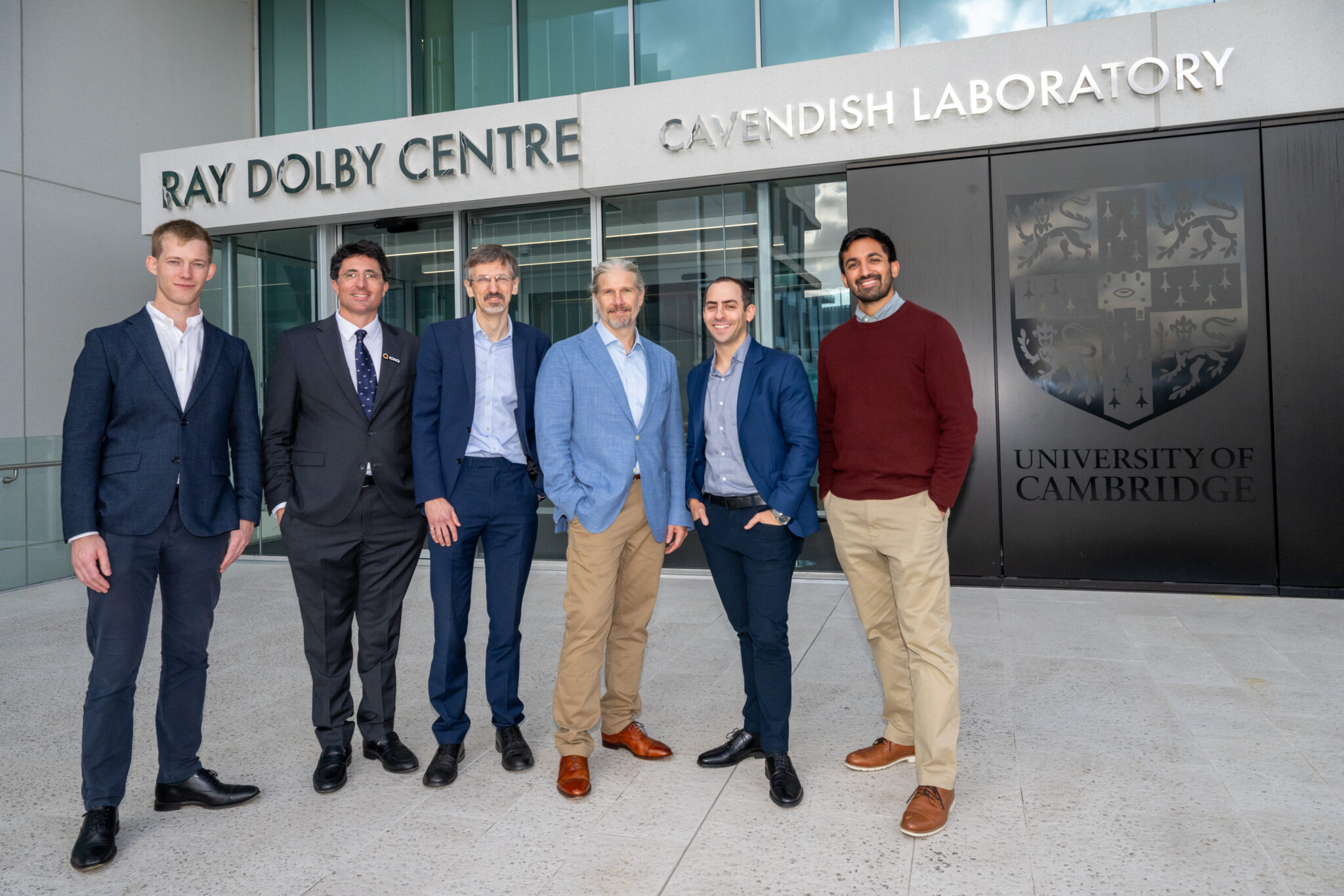
The centre is based at the Ray Dolby Centre, home of the Cavendish Laboratory, and brings together researchers from physics, engineering, computer science, medicine and business. Its inaugural awards cover quantum computing, networking, sensing, security and possible applications in scientific and commercial problems.
Announced on 15 October, the opening follows the ten-year strategic partnership established in March 2026. It provides a physical base and funded programme for collaboration, but does not mean that all the hardware described in the original agreement has been installed.
IonQ’s planned 256-qubit Superion quantum computer is due at Cambridge by summer 2027. The companies also intend to deploy on-campus quantum networking equipment, with further development taking place through research projects and access to existing computing resources.
Research funding spans multiple disciplines
The nine projects were chosen by a joint steering committee containing scientific and business representatives from the university and IonQ. They combine work on the components needed to build quantum systems with research into problems that may eventually benefit from their computational capabilities.
One project will investigate whether quantum computing methods can improve simulations involving neutrinos and the formation of cosmic structures. The research addresses computationally demanding problems in astrophysics, but the award does not establish that a quantum computer has already produced better predictions than existing methods.
Another programme concerns chemical simulations using trapped-ion quantum hardware. Researchers will explore how representations of electrons, error correction and instructions executed by the hardware can be developed together, rather than treated as unrelated parts of a computational problem.
That approach is relevant because useful simulations require more than a theoretical algorithm. The calculations must be expressed in a form that the available machine can execute with sufficient reliability to produce meaningful results.
Cambridge researchers are also examining portfolio optimisation, using quantum hardware to test methods for balancing expected financial returns and risk. The project will compare quantum approaches with conventional methods using financial data.
Such comparisons are necessary before claims of practical advantage can be made. Financial optimisation is already supported by extensive mathematical and computing techniques, so a new method needs to demonstrate measurable benefits under realistic operating conditions.
Researchers at the Milner Therapeutics Institute will investigate the use of quantum walks to explore biological networks for potential cancer drug targets. Their project aims to move from computational research towards identifying targets that could be assessed experimentally.
The announcement does not report the discovery of a new cancer medicine or a validated clinical benefit. The research remains exploratory, with subsequent scientific and experimental work required to determine whether promising computational findings lead to useful results.
A further engineering project will test quantum methods for analysing how structures respond to uncertain loads, including vibration, wind and other forces. The intention is to investigate whether particular calculations can be performed more efficiently, rather than present an already established advantage in structural design.
Hardware research addresses scaling difficulties
Several awards address the technical limitations that must be overcome before quantum systems can support more demanding applications.
IonQ develops trapped-ion quantum computers, using electrically charged atoms whose quantum states are controlled and measured through carefully engineered systems. The approach requires precise manipulation of the ions and reliable measurement of information produced during calculations.
One Cambridge project will develop microscopic optical cavities using patterned mirrors intended to capture light emitted by trapped ions more efficiently. Improved light collection could support more effective readout and future optical connections between quantum processors.
The project proposes chip-manufacturing techniques that could allow many such structures to be arranged in arrays. Whether those techniques can achieve the consistency and performance needed for larger systems will be a subject of the research itself.
Other projects focus on quantum memories using defects in diamond. These systems are being investigated as potential components of networks that store and exchange quantum information between different devices.
One programme will study integrated photonic structures for tin-related quantum states in diamond, while another will examine methods of fabricating arrays of solid-state quantum memories with greater precision.
Quantum networks present challenges involving the preservation of information, optical connections and interfaces between different physical systems. Research into these components could support future distributed computing, communications or sensing applications, although the awarded projects do not establish that a large-scale network has already been demonstrated.
A 256-qubit machine remains a future milestone
The centre is expected to host IonQ’s Superion 256-qubit system, but the university specifies summer 2027 as the planned deployment date.
That distinction separates the opening of a research organisation from the installation and commissioning of its largest announced computing resource. Researchers may undertake preparatory work and use remotely available systems before the planned equipment reaches Cambridge.
The number of qubits provides one description of a quantum computer’s architecture, but it cannot independently demonstrate the usefulness of the machine. Computational performance also depends on the reliability of operations, the handling of errors and the resources needed to complete particular algorithms.
The planned Cambridge system will be part of a wider research environment rather than a stand-alone guarantee of commercial quantum advantage. Its eventual contribution will depend on the problems investigated and the evidence produced when researchers run their experiments.
Techopia recently reported on ORCA Computing’s photonic system in a London data centre, which uses a different technology architecture. Comparing such approaches requires more than counting qubits or describing where a machine is installed.
Networking expands the partnership’s scope
IonQ also plans an on-campus entanglement-distribution network consisting of two Quantum Networking Data Centres and three Quantum Networking Nodes.
The partners expect the programme to support work on quantum memory, frequency conversion and the existing Cambridge-to-Bristol quantum network. These activities aim to develop components capable of connecting quantum systems, but the announcement does not certify the full proposed campus network as operational.
Innovate UK is involved through an arrangement intended to provide access and computing time for the National Quantum Computing Centre over three years, extending the collaboration beyond the university’s immediate research teams.
The centre’s funding also supports academic positions, postdoctoral researchers and doctoral training. Researchers from different departments will work with IonQ specialists while developing potential applications and examining the underlying technology.
Cambridge Judge Business School is participating through research into how the availability of a quantum computer shapes scientific questions and the development of the technology itself. This adds a study of commercial and institutional adoption to the hardware and application projects.
The opening creates a location, a funded portfolio and a framework for collaboration, but the eventual technical and commercial outcomes remain dependent on research results.
The next milestones will include progress from the nine projects and delivery of the planned computing and networking equipment. Cambridge’s centre is now open; the more demanding test of its capabilities will come as that research infrastructure is installed, used and evaluated.


