

Summary
- Global Switch says its Paris campus has been selected for one of Europe’s largest Nvidia Blackwell deployments, although the customer has not been named.
- The installation will be majority liquid-cooled inside a DGX-Ready facility as higher-density AI systems place greater demands on power and thermal infrastructure.
- The project adds to France’s AI-compute expansion while showing how established urban data-centre campuses are being adapted for much denser workloads.
A major Nvidia Blackwell deployment is heading into an established Paris data-centre campus, as the infrastructure supporting artificial intelligence moves beyond adding more servers and towards rebuilding the power, cooling, and connectivity assumptions inside existing facilities.
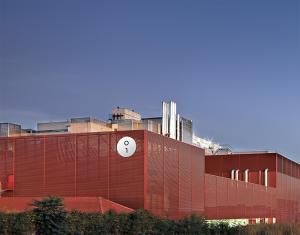
Global Switch says its Paris data centre has been selected to host what it describes as one of Europe’s largest deployments of Nvidia’s Blackwell architecture. The company has not identified the customer or disclosed the number of GPUs involved, leaving the physical scale of the installation less precise than the headline claim.
What is clear is that the deployment will use a high-density environment and will be majority liquid-cooled, rather than relying entirely on conventional air cooling. It will sit inside Global Switch’s Nvidia DGX-Ready Paris campus, where the operator already markets infrastructure for AI, high-performance computing, and enterprise workloads.
The choice of an existing carrier-neutral facility rather than a newly built AI campus also shows how the European compute build-out is taking several forms at once. Alongside very large greenfield developments, operators are adapting established metropolitan data centres where power, fibre connectivity, cloud access, and customers are already concentrated.
AI density changes the engineering problem
Blackwell-class systems compress far more computing capacity into individual racks than traditional enterprise infrastructure, which in turn concentrates electricity consumption and heat. Although the economics of AI infrastructure are usually discussed through the price and availability of accelerators, those processors cannot be deployed at useful density unless the surrounding electrical and thermal systems can support them.
Liquid cooling is becoming more prominent for precisely that reason. Moving heat away from densely packed processors through liquid rather than relying solely on large volumes of air can support higher rack densities, but it also changes facility design, maintenance, plumbing, monitoring, and the equipment operators must support around a customer’s compute installation.
Global Switch’s Paris site already comprises several facilities in Clichy-Levallois, close to La Défense, with the company listing Paris East, West, North, and South as separate buildings across the campus. Those facilities provide the dense carrier and cloud connectivity that makes an established metropolitan location attractive even as electricity availability becomes harder to secure.
Global Switch has also acknowledged that power constraints are beginning to emerge in Paris as digital-infrastructure demand rises. That qualification is important because accelerator availability and data-centre floor space do not by themselves create AI capacity; operators also need enough electricity at the right location and a way of removing the resulting heat reliably.
Paris is becoming a test of existing capacity
France has made domestic AI infrastructure part of its wider technology strategy, while cloud providers, model developers, and infrastructure operators have announced new compute capacity around Paris and elsewhere in the country. Yet the presence of Nvidia hardware inside France does not by itself make the entire technology stack sovereign, particularly when critical accelerators and software originate with a US supplier.
Instead, projects such as the Global Switch deployment increase the amount of computing capacity physically available within the French and European market. That can affect where organisations process sensitive workloads, how far data must travel, which connectivity routes are available, and whether companies have alternatives to consuming every large AI workload through remote hyperscale regions.
The distinction between physical location and technological sovereignty is likely to become more important as European governments pursue both greater compute capacity and reduced dependence on non-European suppliers. A data centre can be locally operated, powered, connected, and governed while still depending heavily on processors, networking hardware, software frameworks, and supply chains controlled elsewhere.
At the infrastructure layer, however, established facilities have an advantage that new AI projects cannot replicate quickly: functioning grid connections and mature network ecosystems. Global Switch’s ability to place denser compute into an existing Paris campus helps explain why older data-centre assets are being re-engineered rather than simply displaced by the newest generation of purpose-built facilities.
Waste heat joins the infrastructure plan
The Paris campus is also being connected more closely to the surrounding physical economy. Global Switch has agreed a heat-offtake project intended to feed waste heat from its data centre into the district-heating network in Levallois-Perret from 2027, with a similar project planned for Clichy.
Such schemes do not erase the electricity consumed by AI infrastructure, and their effectiveness depends heavily on local heating networks, temperatures, distance, and year-round demand. They do, however, show how dense urban data centres are increasingly being treated as energy infrastructure as well as computing infrastructure.
That relationship will become harder to ignore as AI racks consume more power and release more concentrated heat. The commercial value of a metropolitan data-centre site will depend increasingly on several systems working together — electricity supply, cooling, fibre, building design, grid constraints, and, where practical, productive use of waste heat.
Global Switch’s unnamed Blackwell customer will ultimately determine how much compute the Paris deployment represents, so the company’s description of it as one of Europe’s largest should remain a supplier claim until further capacity figures emerge. Even without those numbers, the installation shows where part of Europe’s AI build-out is heading: into existing urban infrastructure that now has to carry workloads far denser than those for which much of it was originally designed.


