

Summary
- The JRC campus combines laboratories across six areas including quantum, borders, crisis management, defence, and nuclear security.
- Frontex, Europol, eu-LISA, the European Defence Agency, national authorities, and researchers are expected to participate.
- Its effectiveness will depend on whether shared testing produces faster validation and more interoperable operational technology.
Europe’s fragmented security technology landscape is gaining a shared testing centre, with the European Commission’s Joint Research Centre opening a campus in Ispra intended to connect laboratory research with the agencies expected eventually to use the resulting systems.
The Security Research and Innovation Campus launched on 10 September and brings together existing JRC laboratories across six areas: space, connectivity and quantum; border management; crisis management; defence; internal security; and nuclear security.
Frontex, Europol, eu-LISA, the European Defence Agency, national authorities, and research organisations are expected to participate, while the Commission says practitioners will gain access to specialist facilities, training, and collaboration arrangements. The goal is to involve operational users earlier, before technical decisions have hardened into systems that prove difficult to procure or integrate.
That organisational step addresses an engineering problem as much as a policy one. European security authorities operate different networks, data environments, communications systems, legal frameworks, and equipment, so technologies validated for one organisation can still encounter expensive integration work somewhere else.
Testing moves closer to deployment
The JRC describes the campus as part of an effort to connect research with operational requirements, while the wider concept links experimentation, testing, evaluation, validation, procurement, deployment, and feedback from users.
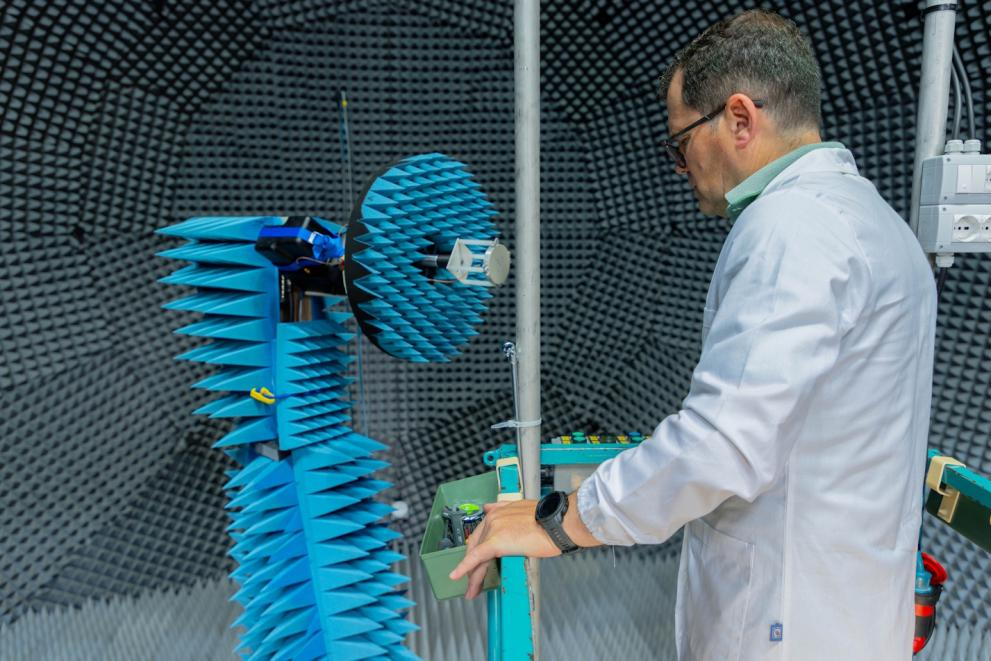
Facilities at Ispra already cover technologies including wireless communications, navigation, sensing, and security research. Bringing agencies into those laboratories can help expose problems before a supplier reaches formal procurement, particularly where interoperability or environmental conditions are difficult to reproduce cheaply.
Shared facilities can also reduce duplicated investment. Specialist laboratories are expensive to maintain, and individual agencies may need them only intermittently, while common testing could give smaller authorities access to equipment they would never justify purchasing themselves.
Whether that produces common technical requirements is a separate question. Member states retain different security priorities, procurement structures, and national rules, and a shared laboratory cannot compel them to buy the same system or accept identical standards.
However, common testing can at least reveal incompatibilities earlier. A secure communications product can be examined against more than one operational environment, while border systems, identity technologies, and sensors can encounter practitioners before their design is complete.
Security technology increasingly crosses categories
The six-pillar structure also reflects how difficult it has become to separate civilian, policing, defence, and infrastructure technology cleanly. Satellite navigation, secure communications, quantum systems, cybersecurity, sensing, and data analysis can serve ordinary public services while also carrying defence or law-enforcement applications.
That overlap has increased pressure on Europe to retain technical capability within trusted supply chains. Dependence on outside suppliers may be manageable for ordinary software but becomes more sensitive where systems handle classified information, critical infrastructure, borders, or defence operations.
The campus forms part of the EU’s ProtectEU internal security strategy and is intended to work with Horizon Europe security research and other European investment programmes. That places testing infrastructure alongside funding and procurement as another part of the attempt to build strategic capability inside Europe.
Still, laboratories have never been Europe’s principal shortage. The region has extensive universities, research organisations, national centres, and EU programmes, while commercialisation frequently slows later when a technology needs certification, a procurement route, or a first operational customer.
Bringing buyers and practitioners into development earlier can reduce that gap, although it does not eliminate the time required for security certification or public purchasing. In sensitive sectors, slow deployment is sometimes the price of checking whether a system works safely and whether dependencies introduced by it are acceptable.
The measure will be deployment, not participation
It would therefore be easy for the campus to become another successful European network measured through workshops, institutional membership, and research activity. Its more demanding test will be whether participating agencies begin validating technologies against common operational problems and whether suppliers can carry those results into procurement.
Smaller technology businesses stand to benefit if a credible JRC test can replace several rounds of duplicative evaluation, while governments could gain if common methods reveal security weaknesses before contracts are signed. Both outcomes require agencies to trust results produced through shared facilities rather than repeating the work nationally.
The Commission also wants the initiative to shorten innovation cycles, which means the flow of information has to work in both directions. Researchers need to know what operational users require, while agencies need enough technical involvement to understand which emerging technologies are mature enough to pursue.
The physical location at Ispra cannot resolve Europe’s institutional fragmentation by itself, but it gives that fragmentation somewhere to encounter the same equipment and test methods. If common laboratory work begins shaping requirements before tenders are written, the campus could become part of the route from European security research into actual systems. If agencies continue to test and procure largely in isolation, it will remain a useful research asset without becoming the operational bridge Brussels intends.


