

Summary
- 3i Infrastructure has completed an approximately €263 million investment in Lefdal Mine Datacenter, with the wider 3i-managed investor group controlling 90% of the operator.
- The underground Norwegian campus combines hydroelectric power, fjord cooling, and capacity aimed at high performance and data intensive computing.
- The transaction adds to a Nordic market where AI demand is concentrating institutional capital around electricity, cooling, connectivity, and expandable sites.
3i Infrastructure has completed an approximately €263 million investment in Norway’s Lefdal Mine Datacenter, adding another sizeable institutional owner to a Nordic infrastructure market being reshaped by artificial intelligence and high performance computing.
The London-listed infrastructure investor completed its initial acquisition on 28 August, after agreeing the transaction in March, while a further stake acquired from an existing minority investor closed on 2 September. Following the transactions, 3i manages 90% of Lefdal Mine Datacenter’s equity: 3i Infrastructure owns just over 45%, third-party co-investors managed by 3i hold approximately another 45%, and an existing shareholder retains 10%.
3i Infrastructure has also committed a further €19 million of available funding, matched by the third-party co-investors. The completed investment is lower than the roughly €300 million figure indicated when the transaction was first announced, reflecting the final ownership and co-investment structure rather than a separate €300 million purchase.
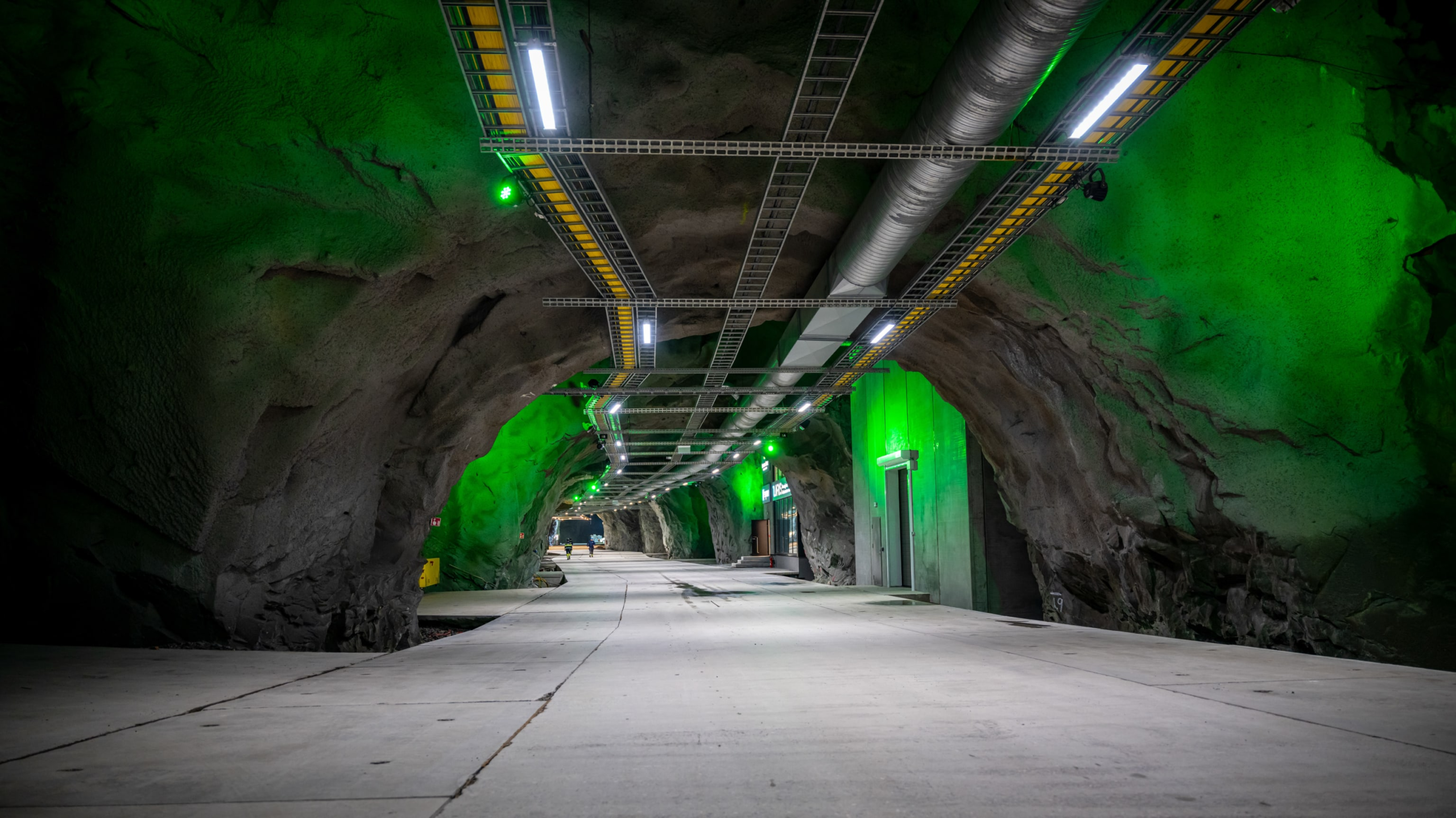
Lefdal operates an underground data centre campus on Norway’s west coast, built inside a former mine and supplied with renewable hydroelectric power. When 3i announced the acquisition, it said the site had 37MW of operational capacity and another 43MW contracted and under construction, with further expansion possible inside the existing facility.
AI infrastructure becomes an asset class contest
Nordic data centres have long attracted customers through renewable electricity, cooler climates, and access to land, but the AI investment cycle is increasing the value of sites where those advantages can be combined with dependable grid capacity and rapid expansion. Larger computing clusters require more than accelerators because each new deployment adds demand for electricity, cooling, networking, storage, and high density physical infrastructure.
Lefdal’s design turns some of those requirements into structural advantages. The former mine provides large underground halls, while a closed-loop seawater system uses water from a nearby fjord for cooling. 3i argues that the combination can improve energy efficiency and structural economics, although returns will still depend heavily on power costs, utilisation, customer commitments, and the pace at which new capacity is brought online.
The transaction follows a wider influx of institutional capital into Nordic computing infrastructure. Techopia recently examined the $4 billion acquisition of Nordic data centre operator atNorth by CPP Investments and Equinix, another deal placing long-duration infrastructure capital behind sites serving AI, cloud, and high performance computing workloads.
The transactions differ in scale and structure, but both show how the economics of artificial intelligence extend beyond technology vendors. Pension-backed investors, infrastructure funds, energy companies, and specialist operators are competing around assets whose value increasingly depends on securing electricity and delivering computing capacity over periods measured in decades rather than software release cycles.
That capital intensity also changes the risk. Data centres can offer long contracts and high switching costs because customers make substantial investments in equipment and site-specific infrastructure, yet growth assumptions increasingly depend on an AI market where demand forecasts have risen sharply. Building too slowly risks losing customers that need capacity immediately, while building ahead of durable demand can leave expensive property and power commitments underused.
Power availability sets the pace
Data centre expansion is already colliding with grid constraints in several European markets, pushing developers towards regions where electricity can be secured with greater certainty. Nordic countries have benefited from strong renewable resources, although new computing demand is now competing more visibly with industrial electrification, manufacturing, transport, and other uses of low carbon power.
Norway adds a political complication because data centres consume a noticeable amount of electricity while supporting fewer permanent jobs than many heavy industrial projects. As AI capacity expands, policymakers have to weigh tax revenue, digital infrastructure, and inward investment against grid availability and the opportunity cost of allocating renewable generation to computing.
Operators consequently emphasise efficiency alongside raw megawatts. Lefdal’s underground structure and fjord cooling provide a distinctive operating model, while long-term customer contracts can give owners confidence to finance expansion before the full cost of new capacity has been recovered. Efficient cooling, however, does not remove the underlying electricity demand created by dense accelerator clusters.
The capital structure reflects those long horizons. Rather than owning the entire 90% stake directly, 3i Infrastructure is investing alongside third-party capital managed by the same group, spreading exposure while retaining a large economic interest and providing additional funding for growth.
As more financial capital enters the market, competition for credible sites will increasingly turn on assets that cannot be created quickly: grid connections, renewable power access, fibre routes, planning permissions, cooling resources, and enough physical space to expand. Processor supply remains important, but processors without power or connectivity do not produce useful computing capacity.
Lefdal’s new ownership therefore reflects a wider change in the infrastructure surrounding AI. The investment case depends on customers continuing to demand more compute, while the scarce asset underneath that growth is becoming the combination of electricity, cooling, connectivity, and permitted capacity required to turn hardware into an operating data centre.


