

Summary
- UnlikelyAI has appointed Rakesh Harji as chief operating officer and Graham French as chief technology officer.
- The London company is trying to scale a neurosymbolic AI platform built around explainability, auditability, and regulated-sector adoption.
- The appointments reflect the enterprise AI market’s shift from capability claims towards trust, verification, and production deployment.
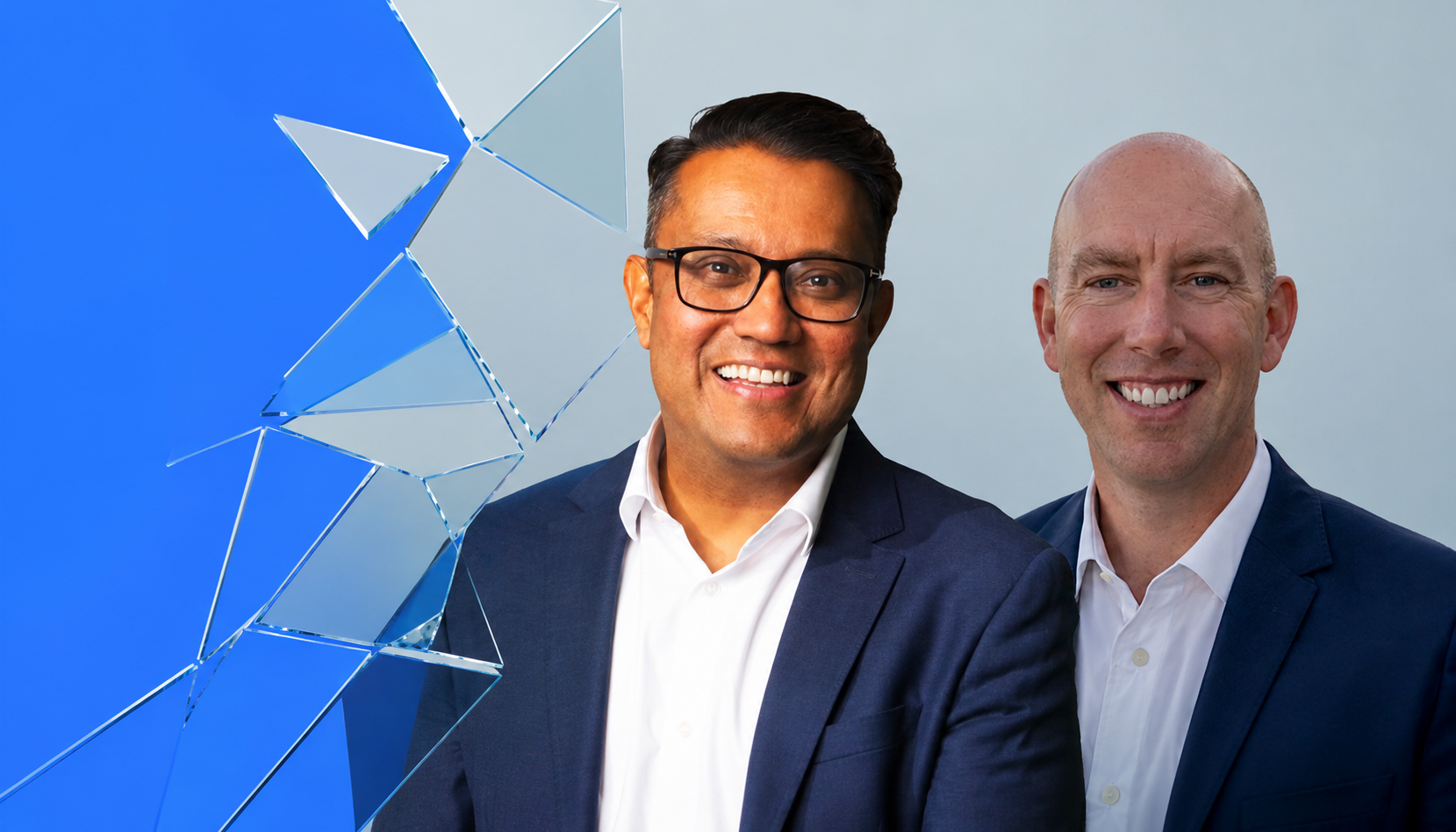
UnlikelyAI has appointed Rakesh Harji as chief operating officer and Graham French as chief technology officer as the London company tries to move its explainable AI platform into broader enterprise deployment.
Harji joins after roles at Lawhive and Zilch, where he spent almost seven years as chief operating officer and helped scale the fintech from its earliest stage to a reported $2.2 billion valuation. French joins after serving as chief product and technology officer at Ada Health, and previously held senior engineering roles at Amazon, Prime Video, Amazon MGM Studios, and Meta. He was also part of the founding team at Amazon Cambridge that built Alexa’s original question-answering system.
The appointments are significant for the company because UnlikelyAI is working in one of the more difficult areas of enterprise AI: systems that can be inspected, explained, and trusted in regulated or high stakes environments. The company uses a neurosymbolic approach, combining large language model techniques with symbolic reasoning methods intended to improve accuracy, auditability, and explainability.
That market is becoming more crowded and more demanding. Many organisations have now tested generative AI tools and found that fluent output is not the same as reliable operational software. In regulated sectors, hallucinations, opaque reasoning, weak audit trails, and unclear accountability can stop projects before they reach production.
Trust becomes a deployment problem
UnlikelyAI says it has demonstrated its approach in production, including a pilot with SBS Insurance Services that achieved 99% precision, and has worked with Lloyds Banking Group on customer experience in financial services. Those examples point towards sectors where explainability has commercial value: insurance, banking, healthcare, legal services, and other fields where incorrect outputs can create financial, legal, regulatory, or safety consequences.
The new roles divide the scaling problem into two parts. French’s task is technical: turning UnlikelyAI’s platform into something enterprises can trial, inspect, and deploy without requiring bespoke engineering at every step. Harji’s task is commercial and operational: building the repeatable processes, customer access, and organisational discipline needed to sell into large companies.
Enterprise AI failures are often organisational rather than purely technical. A model may work in a demonstration but fail to satisfy risk, compliance, security, data governance, procurement, and change management requirements. A platform that claims to be trustworthy still has to prove how it handles evidence, reasoning, audit trails, monitoring, user control, and integration with existing systems.
Harji said: “The conversation for enterprises has fundamentally changed, and it’s no longer about whether AI is capable, but whether it can be trusted, explained and held to account.” French made a similar point from the technical side, saying he had spent his career building AI “in places where being wrong is expensive.”
The phrase “hallucination-free” should still be treated carefully. No serious enterprise buyer should accept it as a slogan without evidence of performance in specific domains, under specific conditions, and with clear limits. The more credible claim is that neurosymbolic systems may reduce certain failure modes and make reasoning more inspectable than purely generative approaches.
UnlikelyAI’s next test is whether that distinction translates into adoption. Enterprises want AI systems that help with productivity, decision support, and customer service, but the sectors most willing to pay for trust are also the slowest to deploy unproven technology. Harji and French have been hired to close the gap between technical promise and repeatable enterprise use.


