Summary
- London-based PhysicsX has raised a $300m Series C led by Temasek, valuing the company at about $2.4bn.
- Its software uses AI to accelerate physics simulation and design exploration across aerospace, defence, semiconductors, automotive, energy, materials, and data centres.
- The round is a strong UK enterprise AI story because it points to productivity gains inside engineering and industrial design, not consumer-facing generative AI.
PhysicsX has raised $300m in Series C funding to expand its AI platform for industrial engineering, placing one of the UK’s most prominent enterprise AI startups deeper into the design and simulation workflows of advanced manufacturers.
The round was led by Temasek, with new investment from M&G Investments and Intrepid Growth Partners. Existing investors, including Applied Materials, Atomico, General Catalyst, July Fund, NGP, Nvidia, Radius, and Siemens, also participated. PhysicsX said the financing values the company at approximately $2.4bn.
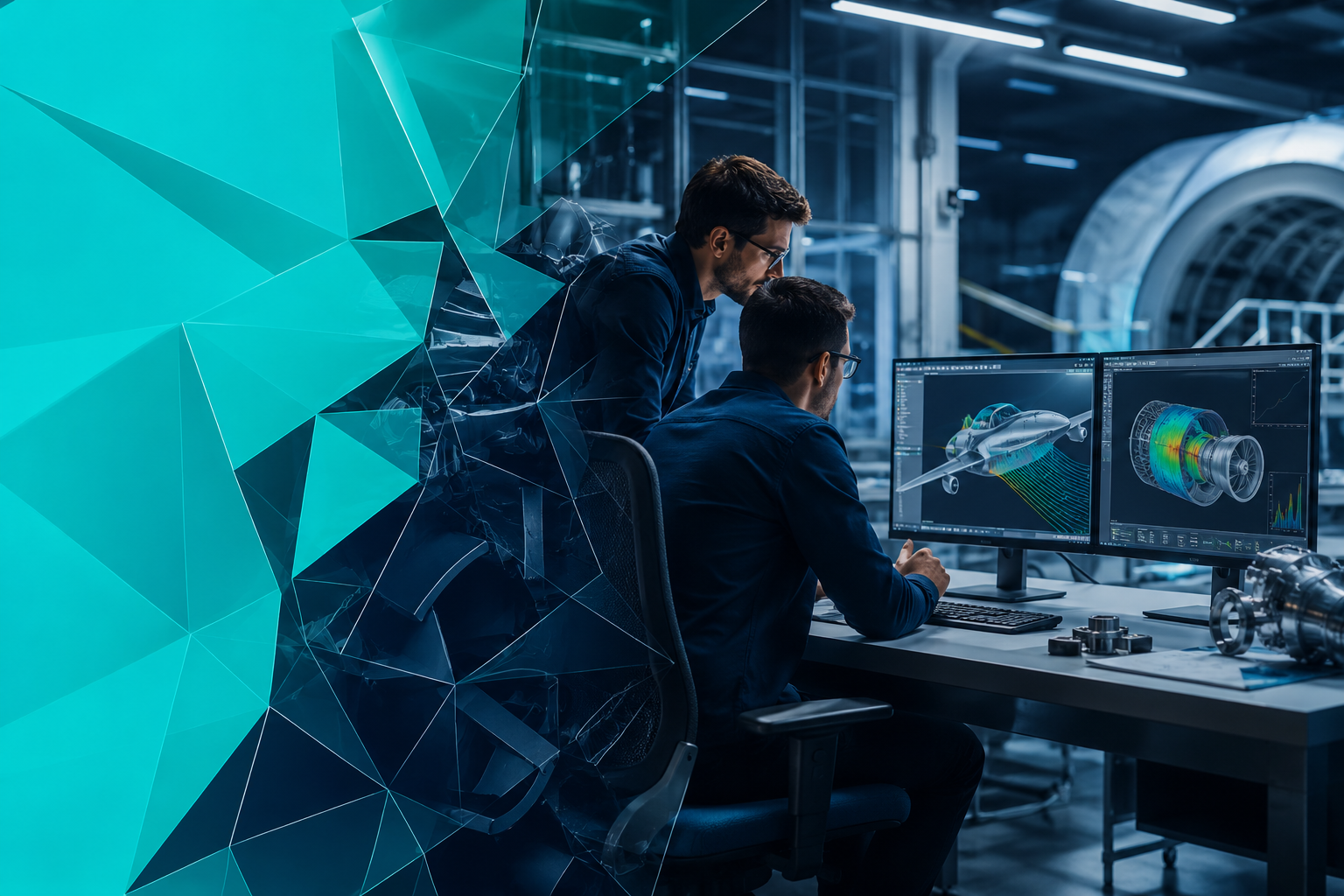
The London-based company builds physics AI software that helps engineers simulate and explore designs faster than traditional tools allow. It says its models can predict physical behaviour in seconds rather than hours or days, giving engineering teams a way to assess more design variants and carry physics insight across the product lifecycle, from early design and manufacturing through to real-time digital twins in operation.
The company’s platform is already deployed across aerospace and defence, semiconductors, industrial machinery, automotive, energy, and materials. PhysicsX said recognised revenue has doubled year on year, booked revenue has tripled, customer count has more than doubled, and headcount has grown to more than 300 people in the past year.
The company sits in a different part of the AI market from chatbot adoption, office productivity, or speculative model releases. Its target is the engineering bottleneck inside industries where design cycles are long, simulations are computationally expensive, and performance improvements carry direct economic value. In aerospace, batteries, chips, energy systems, and data-centre infrastructure, shaving time from design exploration can affect cost, safety, efficiency, and speed to market.
Traditional simulation is powerful but slow. Engineers often have to choose which variables to test because each run consumes time and compute. Physics AI changes that equation if it can approximate physical behaviour accurately enough to help teams explore many more possibilities before committing to deeper validation. The goal is not to replace engineering judgement, but to give engineers a wider design space and faster feedback.
The investor base points to the industrial relevance of the technology. Siemens brings manufacturing and industrial software context. Nvidia’s involvement reflects the compute layer behind AI simulation. Applied Materials gives the company semiconductor-sector exposure. Temasek’s lead position underlines how industrial AI has become a capital-intensive global category rather than a narrow UK software niche.
The funding also lands as infrastructure demands are becoming more complex. AI, electrification, defence, climate technology, and advanced manufacturing are all increasing the need for better design tools. Data-centre operators need improved cooling, power, and layout design. Semiconductor firms need faster modelling of physical processes. Aerospace and defence companies need to develop complex systems under tighter cost and security constraints. Energy companies need simulation to support grid, generation, and storage decisions.
Adoption will not be frictionless. Industrial customers move carefully because simulation tools are embedded in regulated, safety-critical, and high-cost workflows. AI-generated approximations need validation, auditability, and integration with existing engineering environments. If a model is wrong in marketing software, the failure may be embarrassing. If it is wrong in aerospace, energy, or semiconductor manufacturing, the consequences can be expensive or dangerous.
PhysicsX’s expansion tests whether AI can move from software assistance into the core of industrial decision-making. The opportunity is large because engineering productivity has become a strategic issue for Europe. Countries want more advanced manufacturing, more sovereign industrial capacity, better defence production, and faster climate infrastructure buildout. Those goals depend on tools that reduce development cycles without weakening reliability.
The funding gives PhysicsX more capital to expand globally and develop larger pre-trained physics models. It also gives the UK AI sector a more substantial reference point: technically deep, industrially relevant software tied to productivity gains in sectors that build, power, move, and defend the real economy.