Summary
- Glesys and Trevian Asset Management have agreed to establish Campus Oulu, an AI-ready data centre campus in Finland.
- The first phase is expected to support about 8MW of IT load from autumn 2026, with long-term expansion potential of up to 300MW.
- The project shows Nordic markets using power access, cooling conditions, and regional technology ecosystems to compete for AI infrastructure.
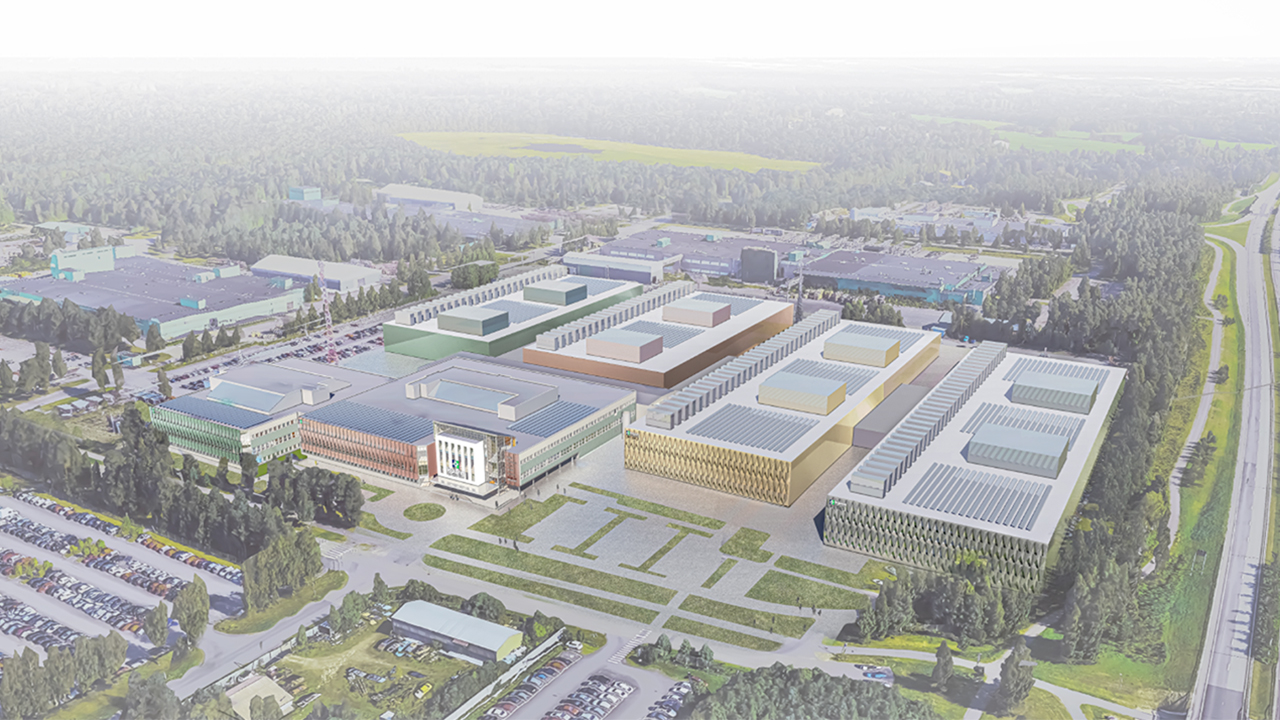
Glesys has signed an agreement with Trevian Asset Management to establish Campus Oulu, a new AI-ready data centre campus in Finland with long-term expansion potential of up to 300MW.
The first deployment phase is expected to be ready for service in autumn 2026, supporting an initial IT load of about 8MW. Glesys says significant infrastructure and power connectivity are already in place, while the campus is being planned as a modular development for high-performance computing and AI workloads.
The facility is designed for liquid-cooled environments and will operate on green electricity from day one. Discussions are also under way on using surplus heat within local energy systems, which would help connect the site to regional energy planning rather than treating it as a standalone power consumer.
Oulu was selected because of its position in Nordic technology and research ecosystems, particularly in ICT, AI, and edge computing, as well as Glesys’s existing operational presence in the region. The company already runs data centre facilities and cloud infrastructure across Falkenberg, Stockholm, Helsinki, Pori, Tampere, and Oulu.
AI infrastructure demand is now moving beyond the established hyperscale corridors. High-density racks, liquid cooling, reliable power, grid access, and resilient fibre connectivity are reshaping the data centre map. Nordic markets can compete where renewable energy, cooler climates, industrial land, and mature engineering ecosystems come together.
Those advantages still have to survive delivery. Data centre projects face grid constraints, permitting delays, construction costs, supply-chain pressure, and local scrutiny over power use. Staged expansion can reduce the risk of stranded capacity, but operators still need customers willing to commit to high-performance workloads before sites scale materially.
Campus Oulu also shows that AI infrastructure is not solely a hyperscaler story. Regional and European providers are trying to serve customers that need GPU hosting, dedicated infrastructure, sovereign cloud services, colocation, and clearer jurisdictional control. As AI moves from experiments into operating systems, some organisations will look for deployment options beyond full dependence on global cloud platforms.
For Glesys, the campus extends its Nordic infrastructure platform into heavier AI and high-performance computing territory. For Trevian, it fits a broader infrastructure investment strategy in which digital infrastructure is linked to long-term demand for compute, connectivity, and energy-efficient capacity.
Finland’s appeal comes from more than climate and power. Oulu has a technology base, research links, and existing infrastructure that may help the campus attract workloads requiring both performance and operational trust. The link between data centres and regional economic development is becoming more direct as compute capacity starts to influence where AI-intensive companies can build and operate.
The first test will be customer demand for the initial 8MW phase. The second will be whether the campus can scale without hitting the same grid and permitting bottlenecks affecting more crowded data centre hubs. If it can, northern Finland will become a more visible part of Europe’s AI infrastructure map.