

Summary
- Nebius AI cloud revenue reached $574.9 million in the second quarter, up 514% year on year.
- Group revenue rose to $582.3 million while adjusted EBITDA reached $236.2 million, although continuing operations remained loss-making.
- The figures put commercial evidence behind Europe’s costly expansion of specialist AI compute capacity.
Nebius has reported a sharp acceleration in its AI cloud business, with second-quarter revenue reaching $574.9 million as the Amsterdam-headquartered company turns a rapid build-out of computing capacity into a sizeable infrastructure operation.
Revenue from the core AI cloud business increased 514% from the same quarter last year, while Nebius Group revenue reached $582.3 million, up 454%. Group adjusted EBITDA was $236.2 million, compared with a $21 million adjusted loss a year earlier, although the company still recorded a $190.4 million net loss from continuing operations.
Nebius also put annualised run-rate revenue for the AI cloud business at $3 billion and said the operation generated an adjusted EBITDA margin of 50% during the quarter. The company expects more than $9 billion of customer prepayments during 2026, illustrating both contracted demand and the unusual financing dynamics of a market where costly hardware and electrical capacity often have to be secured before revenue can be delivered.
The results provide a commercial reference point for Europe’s AI infrastructure build-out, which has frequently been described through planned megawatts, government programmes, and future data-centre campuses. Nebius is beginning to show what the economics look like when that capacity moves into active customer use.
Compute growth turns into an industrial balance sheet
AI cloud providers sit between software and infrastructure economics. They sell computing capacity through cloud-style services, but expansion depends on land, power contracts, data-centre construction, networking, cooling, and expensive accelerators, tying revenue growth much more closely to physical deployment than it would be for a conventional software company.
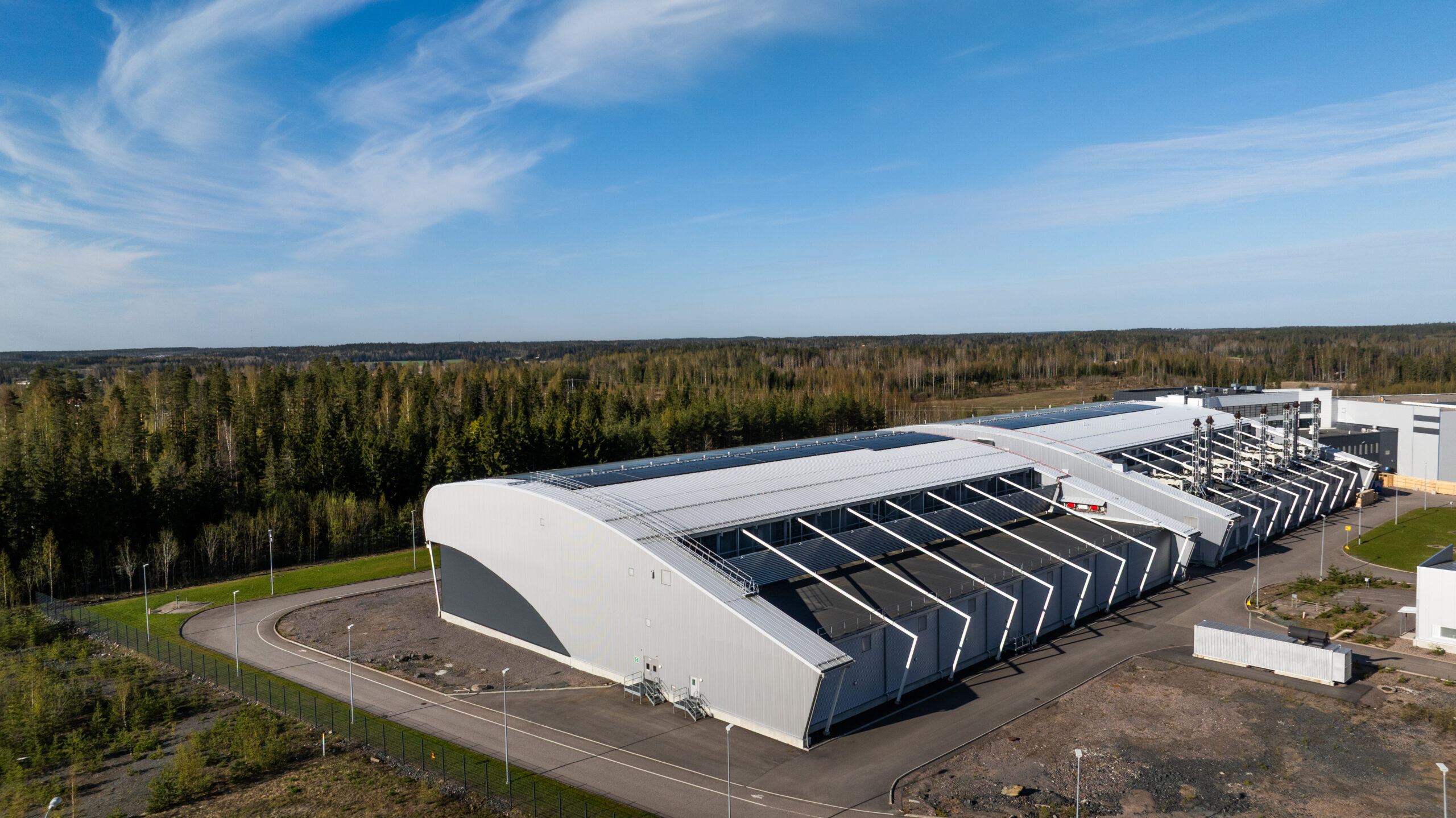
Nebius has been expanding that footprint aggressively. It has announced a 310MW AI factory in Lappeenranta, Finland, alongside its existing operation at Mäntsälä and a 240MW project near Lille in France, while its wider plans encompass a mixture of owned sites and colocated capacity.
That expansion sits inside a broader European effort to increase access to advanced computing, which is running into constraints around electricity, grid connections, land, and construction. The EU’s attempt to turn its compute gap into a building programme has consequently made infrastructure capacity part of industrial policy as well as cloud competition.
The latest revenue figures suggest that demand is materialising rapidly, although they do not remove the execution risks attached to the supply side. Data centres have to open on schedule, accelerator supply has to remain available, utilisation has to stay high enough to support returns, and customers have to keep paying premium prices for computing as newer chip generations reach the market.
Nebius said customer economics improved during the quarter, with deals in its core AI cloud business averaging more than $20 million of revenue per megawatt. The metric links cloud sales directly with the scarce physical resource underneath them: energised capacity. If power and data-centre space remain constrained, extracting more revenue from each available megawatt becomes almost as important as adding new sites.
The European cloud market is being redrawn
Specialist AI cloud operators are also changing a European market historically dominated by large US hyperscalers and a fragmented group of regional infrastructure companies. Nebius does not need to reproduce the full product breadth of Amazon Web Services, Microsoft Azure, or Google Cloud to compete for AI workloads; it needs accelerators, high-speed networking, reliable software, and sufficient geographic capacity to serve customers whose requirements are increasingly measured in clusters rather than ordinary virtual machines.
That creates room for specialist providers, although it also exposes them to a demanding capital cycle. Data-centre buildings may operate for decades, while the accelerators inside them move through much shorter generations, leaving operators to recover enormous upfront spending before customer preferences or hardware economics change.
Nebius’s second-quarter figures show the upside when that cycle begins to work. Revenue growth has outpaced operating-expense growth, adjusted losses have narrowed, and the core AI cloud business is now producing substantial adjusted EBITDA.
The continuing net loss and financing requirements nevertheless show why headline revenue cannot be separated from the balance-sheet demands of expanding the network. AI infrastructure is a growth market, but it is also an industrial one, with capital commitments made years before the useful life of every component becomes clear.
Europe has spent much of the AI boom debating whether it owns enough models, chips, and cloud infrastructure. Nebius is now offering another measure: how much customers will pay for European-headquartered AI capacity once it is available. The next constraint is delivering enough powered and equipped infrastructure to keep revenue growing without allowing the capital required to outrun it.


