Summary
- Deutsche Telekom says its 10,000-GPU Munich Industrial AI Cloud is fully utilised only months after commercial launch.
- The operator is discussing additional Nvidia capacity while considering participation in the EU’s planned AI gigafactory programme.
- European sovereign compute now faces a commercial capacity test alongside familiar constraints around power, hardware, and customer demand.
Deutsche Telekom has run out of spare capacity at its Munich Industrial AI Cloud only months after putting the facility into operation, prompting discussions with Nvidia about adding more graphics processors as the German telecoms group considers whether to participate in the European Union’s much larger AI gigafactory programme.
The capacity pressure emerged alongside Deutsche Telekom’s second-quarter results, which showed adjusted earnings before interest, tax, depreciation, and amortisation after leases reaching €11.8 billion. The company also expanded its 2026 share buyback programme by €3 billion to as much as €5 billion, although its infrastructure decisions provide a more durable indication of how European AI investment is moving from policy commitments into physical capacity.
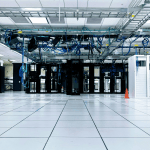
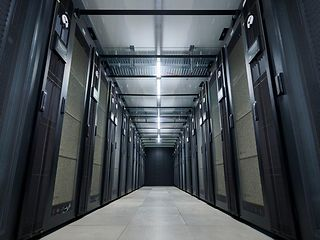
Opened commercially in February, the Munich Industrial AI Cloud was built for manufacturers, research organisations, public bodies, and other customers seeking high-performance computing under German and European data rules. The facility runs close to 10,000 Nvidia Blackwell GPUs, provides around 0.5 exaflops of computing performance, and includes about 20 petabytes of storage, with Deutsche Telekom previously estimating that it increased Germany’s available AI computing capacity by roughly half.
Chief executive Tim Höttges said demand remained very strong and that the facility was fully utilised, while talks were under way with Nvidia over additional hardware. Full utilisation says little on its own about profitability, customer concentration, contract duration, or how continuously the GPUs are being used, but it does establish that the first tranche of capacity has found buyers more quickly than the wider European debate over sovereign compute might suggest.
Capacity becomes the next sovereignty test
European AI infrastructure policy has concentrated heavily on dependence upon US hyperscalers and imported accelerator hardware, yet the constraint is becoming increasingly physical. Chips have to be financed and secured, data centres require power and cooling, network capacity has to reach them, and customers must be willing to pay for locally operated compute when global alternatives remain readily available.
Deutsche Telekom has tried to make sovereignty a commercial characteristic rather than a purely political one. Its Munich cloud combines Nvidia hardware with T-Systems services and software relationships involving companies including SAP and Siemens, while workloads cited by the operator range from industrial simulation and robotics to supply-chain software and legal AI.
The operator has also been extending its broader T Cloud proposition as a European-hosted alternative for organisations that place particular weight on jurisdiction, control, and data residency. Those considerations can influence regulated procurement, although customers still have to compare price, software availability, model choice, performance, and contractual flexibility with what the large global cloud providers already offer.
Additional computing capacity also cannot be separated from electricity infrastructure. As Europe’s AI ambitions run into grid constraints, the availability of generation, connections, and cooling capacity is beginning to determine where data-centre projects can realistically proceed. Deutsche Telekom designed the Munich facility around renewable electricity, energy-efficient operation, and heat reuse, but future facilities are likely to be large enough for grid access and planning to become competitive factors in their own right.
The European Commission’s AI gigafactory programme would increase the scale considerably. Deutsche Telekom is assessing participation after Höttges said the programme’s structure had become clearer, although the company has not made a final commitment. Brussels envisages facilities substantially larger than the Munich deployment, backed by public and private capital as it attempts to increase Europe’s access to advanced AI computing infrastructure.
Such a project creates a different commercial test from filling an existing 10,000-GPU site. Building substantially more capacity requires confidence that corporate, public-sector, and research workloads will persist after the initial shortage of accelerator access eases, while customers will need reasons to prefer European infrastructure beyond a general preference for sovereignty.
Deutsche Telekom is better placed than many prospective European compute providers to make that argument because it already owns telecoms infrastructure, operates enterprise cloud services, and sells into large corporate and public-sector accounts. At the same time, the use of Nvidia hardware illustrates the limits of the sovereignty claim: a European-operated AI cloud can control location, governance, and service delivery while remaining dependent on US-designed accelerators and software ecosystems.
That dependence does not make locally operated infrastructure irrelevant, since jurisdiction, access control, data residency, and contractual accountability remain meaningful in regulated sectors. It does, however, make European AI sovereignty a question of degree rather than a clean separation from global technology supply chains.
With Munich already full, Deutsche Telekom now has to decide how far ahead of confirmed long-term demand it is prepared to build. Adding more Nvidia hardware would extend the current model incrementally, whereas joining the gigafactory programme would commit the operator much more deeply to Europe’s effort to treat AI compute as strategic industrial infrastructure.