Summary
- Samsung plans customised, on-premises Mistral deployments across semiconductor engineering and manufacturing.
- Intended applications include defect detection, equipment optimisation, manufacturing precision, and yield-related work.
- Samsung has also led Mistral’s latest funding round, linking investment with a direct industrial deployment relationship.
Mistral AI’s ambitions as a European model provider are moving into semiconductor manufacturing, where Samsung Electronics plans to deploy customised, on-premises versions of the French company’s technology across engineering and production operations.
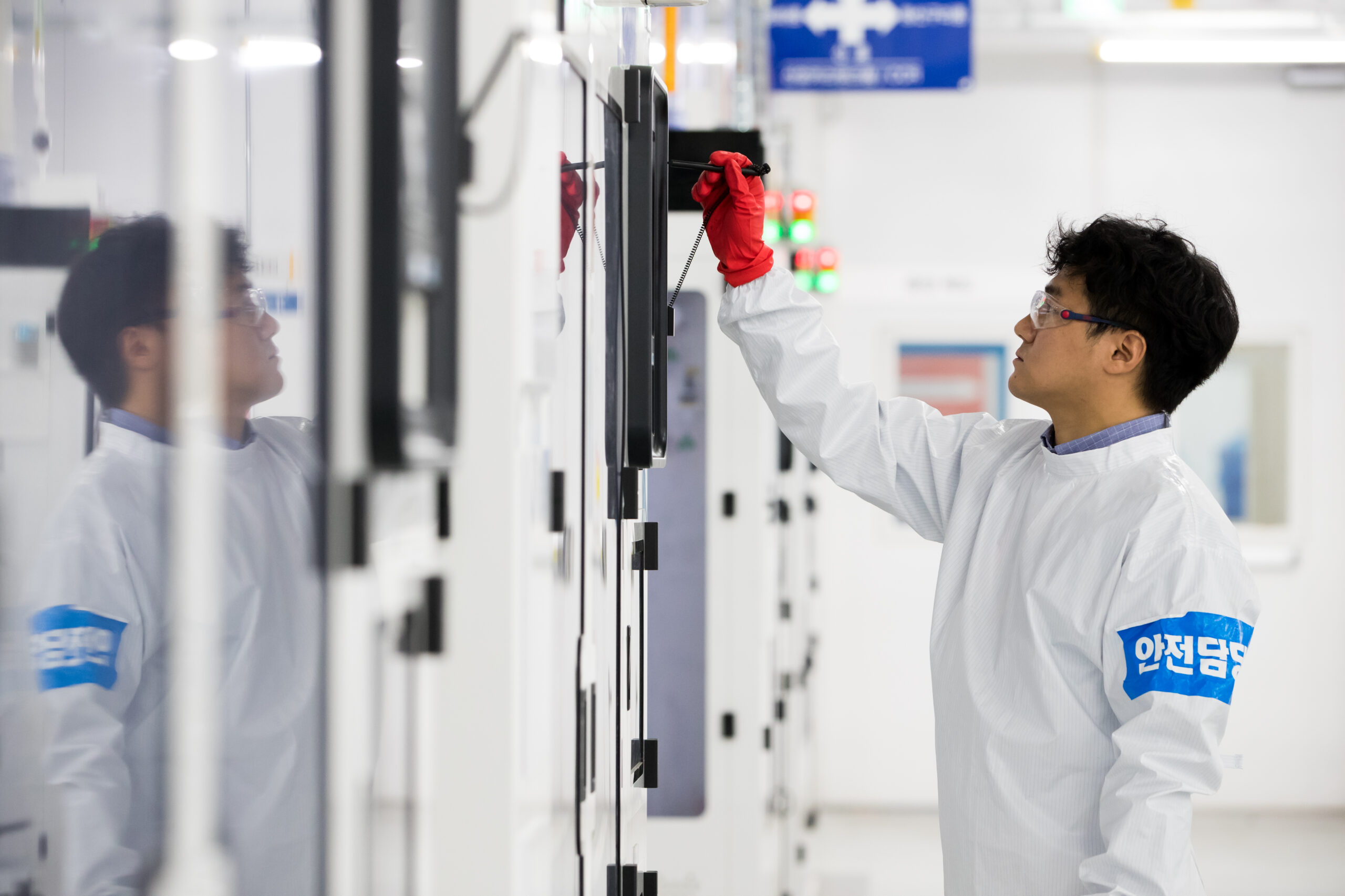
The partnership announced during a France-South Korea state summit in Paris on 9 September includes Mistral Large and other services adapted for Samsung’s semiconductor infrastructure. Samsung identifies defect detection and equipment optimisation among the intended applications, alongside broader efforts around manufacturing precision and yield.
The Korean company has also led Mistral’s latest funding round, making the relationship both financial and operational. Yet the factory deployment is the more useful test of Mistral’s enterprise proposition because semiconductor production places models inside workflows where reliability, data control, and measurable engineering performance carry greater weight than fluent generated text.
Samsung has not disclosed production benchmarks or a timetable showing when the systems will influence live manufacturing decisions. Improvements in yield, precision, or development speed should therefore remain objectives rather than established outcomes.
Industrial AI has less room for plausible mistakes
Semiconductor fabs generate huge volumes of process, equipment, inspection, and quality data, while small manufacturing variations can affect the value of an entire wafer. AI systems operating in that setting have to work with specialised information and fit existing engineering workflows rather than functioning as standalone assistants.
Defect detection provides an obvious example. Models can help identify patterns across inspection data that are difficult to spot manually, although an algorithm that produces false positives can waste engineering time while one that misses meaningful defects can allow expensive problems to continue through production.
Equipment optimisation imposes a similar standard. Suggestions become valuable only when they improve measurable outcomes without destabilising processes that are already managed to extremely tight tolerances.
Samsung’s emphasis on on-premises deployment reflects the sensitivity of the underlying information. Chip manufacturing data can expose process knowledge, equipment behaviour, production performance, and intellectual property that a manufacturer has little reason to send into a public model service.
Keeping models within controlled infrastructure does not eliminate security or governance risk, but it gives Samsung greater authority over where information is processed and how access is managed. That architecture is likely to remain important for sectors where the data surrounding an AI system can be more commercially valuable than the model itself.
European sovereignty meets a global supply chain
Mistral has become central to European discussion about retaining an independent AI industry, yet commercial scale requires customers far beyond Europe. Samsung sits at the centre of a global semiconductor ecosystem that supplies the hardware required for the AI boom itself.
The partnership therefore produces a useful circular relationship. AI companies consume extraordinary amounts of advanced semiconductor capacity, while chipmakers increasingly use AI to improve the design, operation, and manufacture of the chips required by those models.
Mistral’s latest €3 billion financing has already highlighted the capital intensity of Europe’s sovereign-AI ambitions. Samsung’s participation shows how strategic investors can also become customers and deployment partners, giving the French company access to operational problems that are difficult to reproduce inside an AI laboratory.
That relationship also complicates the notion of technological sovereignty. Mistral can remain a European company while its models are developed, financed, hosted, and deployed through international supply chains. Independence therefore depends less on economic isolation than on retaining enough control over intellectual property, infrastructure choices, and strategic decision-making to avoid becoming interchangeable within somebody else’s platform.
Factories will provide the harder benchmark
The enterprise AI market is gradually moving beyond the period when deployment could be measured through licences or employee access. Industrial customers can ask whether a system reduces defects, improves throughput, cuts downtime, shortens engineering cycles, or raises yield.
Those outcomes are harder to achieve and easier to measure than broad claims about productivity. Semiconductor manufacturing is particularly useful because Samsung already has extensive automation, statistical process control, and specialised software, meaning Mistral has to improve a sophisticated environment rather than digitise an undeveloped one.
The agreement also reinforces the market for hybrid deployment models. Cloud-based AI will remain convenient for many tasks, but sensitive engineering, health, defence, and financial workloads create demand for systems that can run within infrastructure selected and controlled by the customer.
Mistral has made deployment flexibility part of its commercial pitch, and Samsung gives that approach a prominent industrial proving ground. Yet the partnership will ultimately be judged on evidence not disclosed at launch: which workloads reach production, how accurately the models perform, how engineers use their recommendations, and whether the resulting gains justify the cost of operating them.
European AI sovereignty has often been debated through model rankings, investment rounds, and compute capacity. Samsung’s fabs offer a less forgiving measure. If Mistral can improve physical manufacturing processes while meeting the data-control requirements of a semiconductor company, its value will be demonstrated in production rather than in another benchmark table.