

Summary
- Madrid 2 will provide 56MW across about 24,000 square metres and is scheduled to open in 2029.
- Full capacity is not expected until 2032, taking Global Switch’s Madrid campus to a combined 70MW.
- The long delivery horizon shows how current compute demand is driving capital commitments across several future technology cycles.
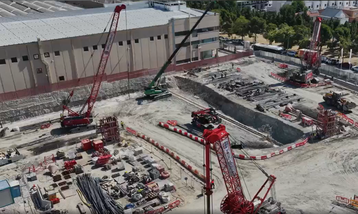
Global Switch has started construction of a 56MW datacentre in Madrid, committing capital to a facility that is not expected to open until 2029 and will take another three years after that to reach full capacity.
Madrid 2 will provide around 24,000 square metres of colocation space beside the company’s existing Madrid 1 facility on Calle Yécora. The new building is intended to support AI, cloud and high-performance computing workloads, while Spanish contractor EIGO Construcciones is handling the build.
Once the second facility is fully delivered, Global Switch’s Madrid campus will reach 70MW, combining the new capacity with 14MW at Madrid 1. Those figures place the project among the more substantial additions to Spain’s datacentre market, although the staged timetable is as revealing as the headline megawatt figure.
A facility beginning construction in 2026 and filling in 2032 requires assumptions about enterprise infrastructure demand several hardware generations into the future. Cloud services, AI training and inference are providing much of the current impetus, but electrical and mechanical systems still have to remain useful as rack densities, accelerator designs and cooling methods change before the final phases are occupied.
AI demand becomes a construction schedule
Higher-density computing is altering the way operators plan power distribution and cooling, while customers increasingly expect buildings to accommodate both conventional enterprise estates and accelerator-heavy infrastructure. Operators therefore have to create enough flexibility to serve equipment that may not yet exist commercially when the first design decisions are made.
Madrid offers Global Switch an established base from which to make that commitment. Its existing campus already provides connectivity, operational staff and customer relationships, while Spain has attracted more cloud and datacentre investment as operators expand beyond the long-dominant London, Frankfurt, Amsterdam and Paris markets.
The same expansion increases competition for electrical capacity. A nominal 56MW development only becomes commercially valuable when the grid can deliver the required power on schedule, and large facilities have to co-ordinate utility connections, substations and reinforcement work with construction programmes that already stretch over several years.
Phasing reduces some of the risk because capacity can be brought into service as customers commit rather than completing an entire campus before demand materialises. It also means the 56MW should not be read as a block of supply arriving in 2029; the project will accumulate capacity across the period to 2032.
Not every megawatt is equal
The European datacentre pipeline now contains proposals measured in hundreds of megawatts, particularly around AI infrastructure, although projects sit at very different stages of maturity. A facility where construction has begun carries greater evidential weight than land advertised for a possible campus, just as an energised building carries more weight than one still dependent on future grid works.
Madrid 2 has crossed one of those thresholds by entering construction, but customer utilisation will ultimately decide whether Global Switch’s long-range capacity planning was well judged. Enterprise cloud migration can continue even if the current pace of AI investment changes, while new high-density workloads could consume substantially more power if demand develops as operators expect.
Madrid’s wider prospects will also depend on infrastructure outside individual datacentres. Fibre routes, reliable electricity, skilled engineering labour and a sufficiently deep local supplier base all help determine whether a city becomes a durable European compute hub rather than simply hosting a collection of isolated facilities.
Global Switch is now building against demand it expects to exist well into the next decade. As the campus fills in stages, Madrid 2 will provide a useful measure of whether today’s enthusiasm for European AI and cloud capacity translates into the sustained customer load needed to justify infrastructure planned six years ahead.


