

Summary
- SoftBank has invested $200 million in Swiss construction-robotics company Gravis Robotics through a Series A round.
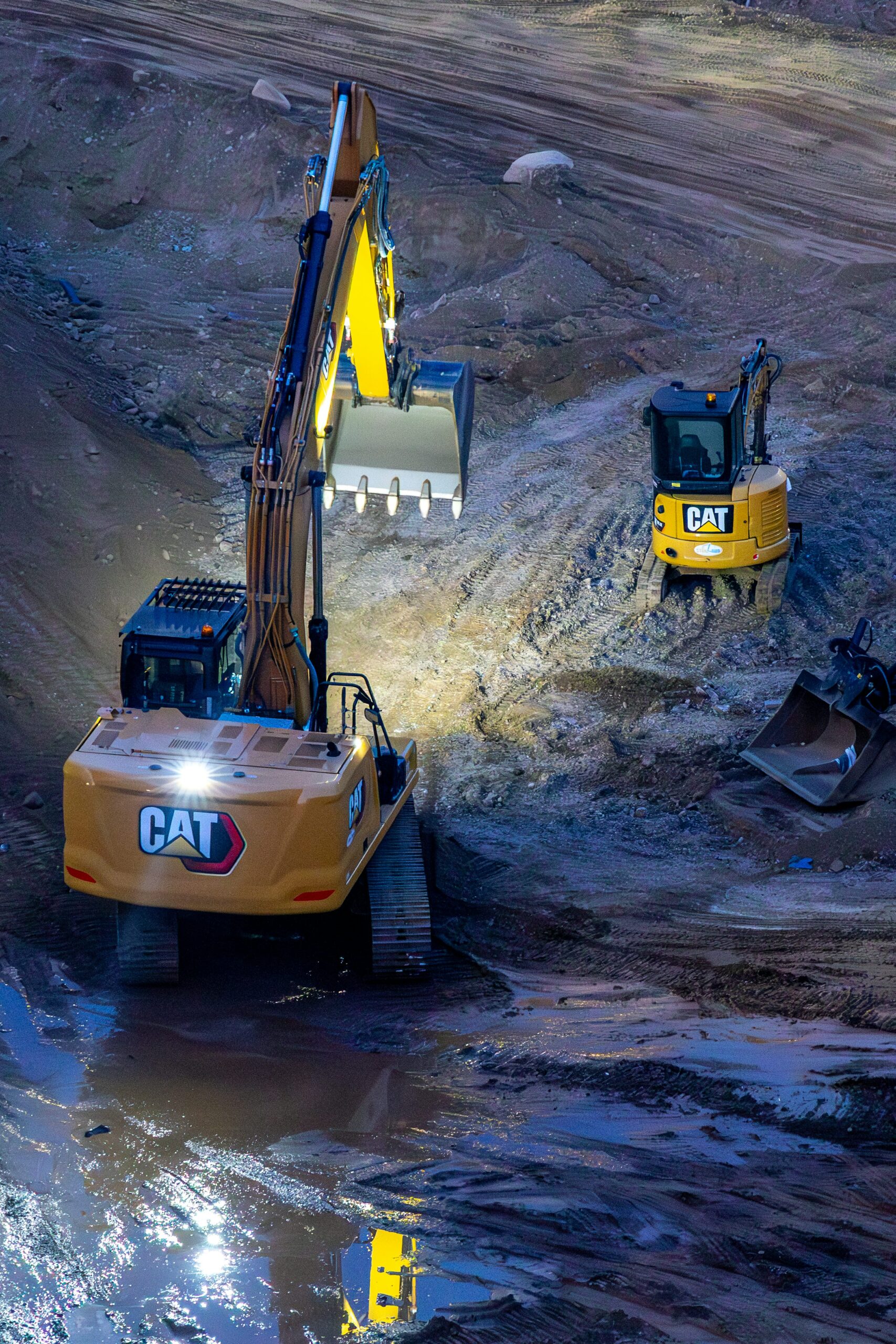
- Gravis retrofits existing excavators and loaders using sensors, edge computing, and autonomous-control hardware.
- Commercial adoption will depend on safety, integration, reliability, and whether autonomous machinery produces measurable improvements in equipment utilisation.
Autonomous machinery is moving further into construction after Swiss robotics company Gravis Robotics raised $200 million in a Series A round from SoftBank, giving the company fresh capital to expand technology that retrofits existing excavators and other heavy equipment rather than requiring contractors to replace entire fleets.
Founded in 2022 as a spinout from ETH Zurich, Gravis combines sensors, onboard computing, control software, and machine interfaces in its Gravis Rack system, which can be fitted to equipment from multiple manufacturers. The company says the technology is already deployed across four continents and can support both assisted operation and greater levels of autonomy.
SoftBank is the sole investor in the round, which Gravis describes as the largest Series A yet raised in construction robotics. The company intends to use the funding to expand internationally, hire engineers and commercial staff, and put its retrofit system onto a wider range of construction machinery.
The model is commercially significant because construction equipment is unusually expensive and long-lived. Contractors and equipment owners cannot treat an autonomy upgrade like a normal software refresh, so a system capable of adding sensing and control to machines already on site lowers one of the largest barriers to adoption.
Physical AI leaves controlled environments
Industrial automation has traditionally worked best inside factories, where machines operate in known locations, lighting is predictable, tasks can be tightly specified, and safety zones are easier to enforce. Construction sites are the opposite: ground conditions change, people and vehicles move unpredictably, machine configurations vary, and the work itself reshapes the environment as it progresses.
That makes excavation and earthmoving a demanding test for so-called physical AI. An autonomous machine has to understand terrain, recognise obstacles, control hydraulic systems, and respond to changing loads while remaining inside a safety envelope that can be trusted by site managers and operators.
Gravis says its technology has produced productivity improvements of up to 30% on some deployments, although site-level gains will vary with the task, machine, operator involvement, and the amount of work that can be standardised. The more important commercial question is whether those improvements survive ordinary project conditions rather than controlled demonstrations.
Retrofit systems also introduce integration work. Construction fleets often contain machines from several manufacturers and generations, while maintenance, telematics, operator training, and safety procedures are already built around existing equipment. A robotics layer has to fit into that environment without making downtime, servicing, or liability harder to manage.
Construction becomes an AI infrastructure problem
The funding arrives as investors broaden their AI exposure beyond models and data centres into robotics and physical infrastructure. SoftBank has been expanding its interest in robotics, automation, and AI infrastructure, while construction remains a sector where labour shortages, productivity pressure, and project delays create a strong incentive to automate repetitive or difficult tasks.
Yet the economics differ sharply from software. Each machine deployment involves hardware, installation, site commissioning, safety validation, support, and maintenance, which means growth depends on operational execution as much as software capability. Scaling from dozens of machines to large fleets requires a service model that can keep equipment working in environments where an hour of downtime can be expensive.
Autonomy also changes the role of skilled operators rather than simply removing them. Remote supervision and assisted control can allow one experienced worker to oversee more equipment or reduce time spent on repetitive digging, but contractors still need people who understand machine behaviour, ground conditions, and how to intervene safely when the system encounters something outside its operating assumptions.
For Gravis, the $200 million round provides enough capital to test whether a retrofit approach can become a repeatable product across different machine brands and job types. Construction companies will judge the technology less by the novelty of autonomous excavators than by equipment utilisation, safety performance, uptime, and whether the system produces measurable gains on projects where margins are already tight.


