Summary
- e2e-assure has launched an updated Cumulo AI SOC platform for IT and operational technology environments.
- The platform combines local large language models, digital twins, live threat intelligence, compliance dashboards, and human analyst oversight.
- The story connects cyber resilience, AI security operations, UK data sovereignty, critical infrastructure, and GCHQ’s push for machine speed cyber defence.
e2e-assure has launched an updated version of Cumulo, its AI security operations centre platform for organisations securing both IT and operational technology environments.
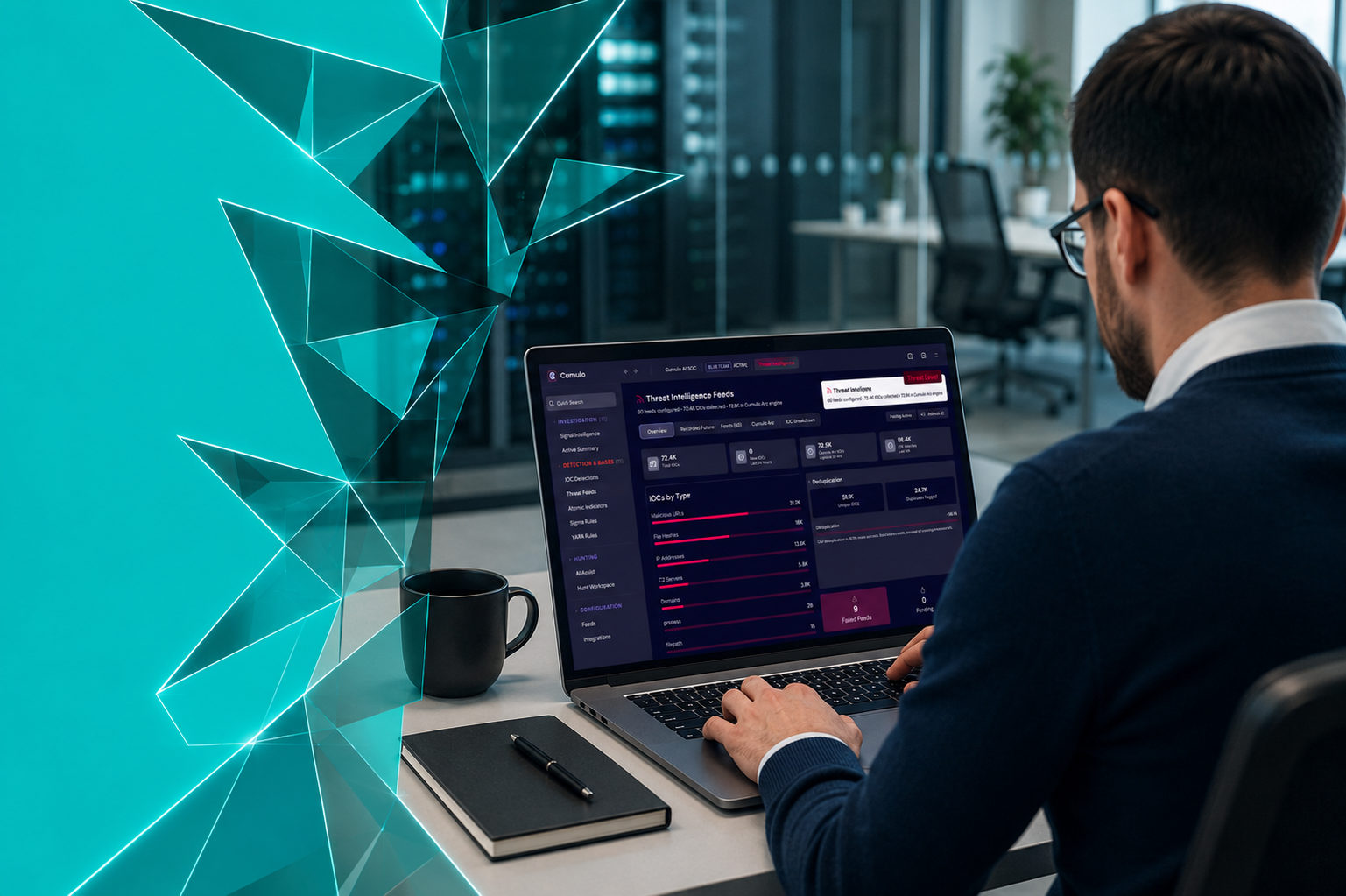
The Abingdon based SOC as a service provider says Cumulo is a UK sovereign, AI led platform designed to help organisations defend against faster and more autonomous threats. The platform combines live threat intelligence, customer dedicated local large language models, digital twin technology, layered AI analysis, compliance dashboards, and human oversight from UK security cleared analysts.
The launch follows GCHQ’s recent call for a national cyber defence capability using agentic AI for machine speed cyber defence. In her annual lecture, GCHQ director Anne Keast-Butler said cyber security is a critical priority for businesses and described a blueprint for a national capability that would put agentic AI into cyber defence.
e2e-assure says Cumulo keeps the SIEM as the evidence grade system of record, with AI running as a parallel capability on top. The company says the platform applies new threat intelligence quickly as detection rules, maintains digital twins of customer environments through passive discovery across IT and OT systems, and uses customer controlled local models to support context aware reasoning without sending sensitive operational knowledge to external cloud AI services.
The company’s product page describes Standard and Enterprise tiers. Enterprise adds unified IT and OT monitoring, digital twin and attack simulation capabilities, dedicated GPU and local LLM infrastructure, custom model training for predictive analysis, and live compliance dashboards.
Sovereignty enters cyber operations
AI security operations are moving quickly because conventional SOC models are under strain. Security teams already face alert volumes that exceed human capacity, while attackers are using automation to accelerate reconnaissance, exploitation, and evasion. AI can help triage alerts, correlate signals, summarise investigations, and identify patterns, but buyers are wary of hallucination, data leakage, and excessive automation.
e2e-assure’s positioning is built around those concerns. It emphasises human oversight, UK cleared analysts, local inference, an anti hallucination layer, and deterministic evidence from existing security systems. That framing is commercially important for critical national infrastructure, defence suppliers, utilities, manufacturing, healthcare, telecommunications, and government organisations where cloud dependency and data residency are operational issues rather than abstract compliance language.
The OT angle strengthens the product’s relevance. Operational technology environments, including industrial control systems and critical infrastructure assets, are difficult to test aggressively because outages can affect physical processes. Digital twins and passive discovery may allow safer simulation and risk identification, although buyers will need evidence that models of operational estates are accurate enough to support decisions.
Compliance pressure is also shaping the market. Cumulo references continuous assessment against frameworks including NCSC CAF, NIS2, ISO 27001, PCI DSS, DORA, and IEC 62443. Organisations are under pressure not only to detect threats but to prove resilience, governance, and control to boards, regulators, customers, and insurers.
The trust test will be demanding. Security teams will ask how AI outputs are validated, how local models are updated, how sensitive data is handled, what happens during connectivity failures, and where responsibility sits if automated analysis is wrong. Claims about zero day SOC capability should be scrutinised carefully, because fast application of new intelligence is useful but does not remove uncertainty around novel threats.
Cumulo shows where UK cyber operations are heading. AI is being pulled into the SOC as a response to speed, volume, skills shortages, and infrastructure risk. The companies that gain trust will be those that combine machine speed analysis with sovereignty, evidence, and accountable human judgement.