

Team Techopia
-

Pandektes wants to become the data layer beneath legal AI
Copenhagen legal technology company Pandektes has raised €13.5 million to expand across Europe and North America while opening more of its structured legal data to other software through APIs.
-

KIT turns AI governance into institutional infrastructure
Karlsruhe Institute of Technology has adopted an institution-wide AI strategy spanning research, teaching, administration and infrastructure, combining rules for responsible use with investment in sovereign computing capacity.
-

RobCo’s $1bn valuation puts physical AI on the factory floor
Munich robotics company RobCo has surpassed a $1 billion valuation after a transaction combining new investment with employee share sales, as investors place larger bets on AI systems designed to operate inside factories.
-
Iberia’s AI infrastructure case runs across three cities
A DE-CIX commissioned study argues that Madrid, Barcelona and Lisbon are becoming a distributed AI infrastructure market, supported by subsea connectivity, low intercity latency and a data centre pipeline approaching 9GW.
-
The Ryder Cup becomes a test bed for autonomous IT
HPE will deploy Wi-Fi 7, autonomous network operations and a Private Cloud AI backed intelligence centre across the 2027 Ryder Cup, using a temporary global event to test technology intended for permanent enterprise environments.
-

Siemens takes industrial AI through the IT channel
Siemens and TD SYNNEX are building a global distribution framework spanning industrial automation, software, AI, cybersecurity and infrastructure as the boundary between enterprise IT and operational technology continues to erode.
-
Aleph Alpha opens the weights on sovereign AI
Aleph Alpha has released Kolibri, a 78-billion-parameter German and English language model with openly available weights and customer controlled deployment, giving European AI sovereignty a more concrete technical form.
-
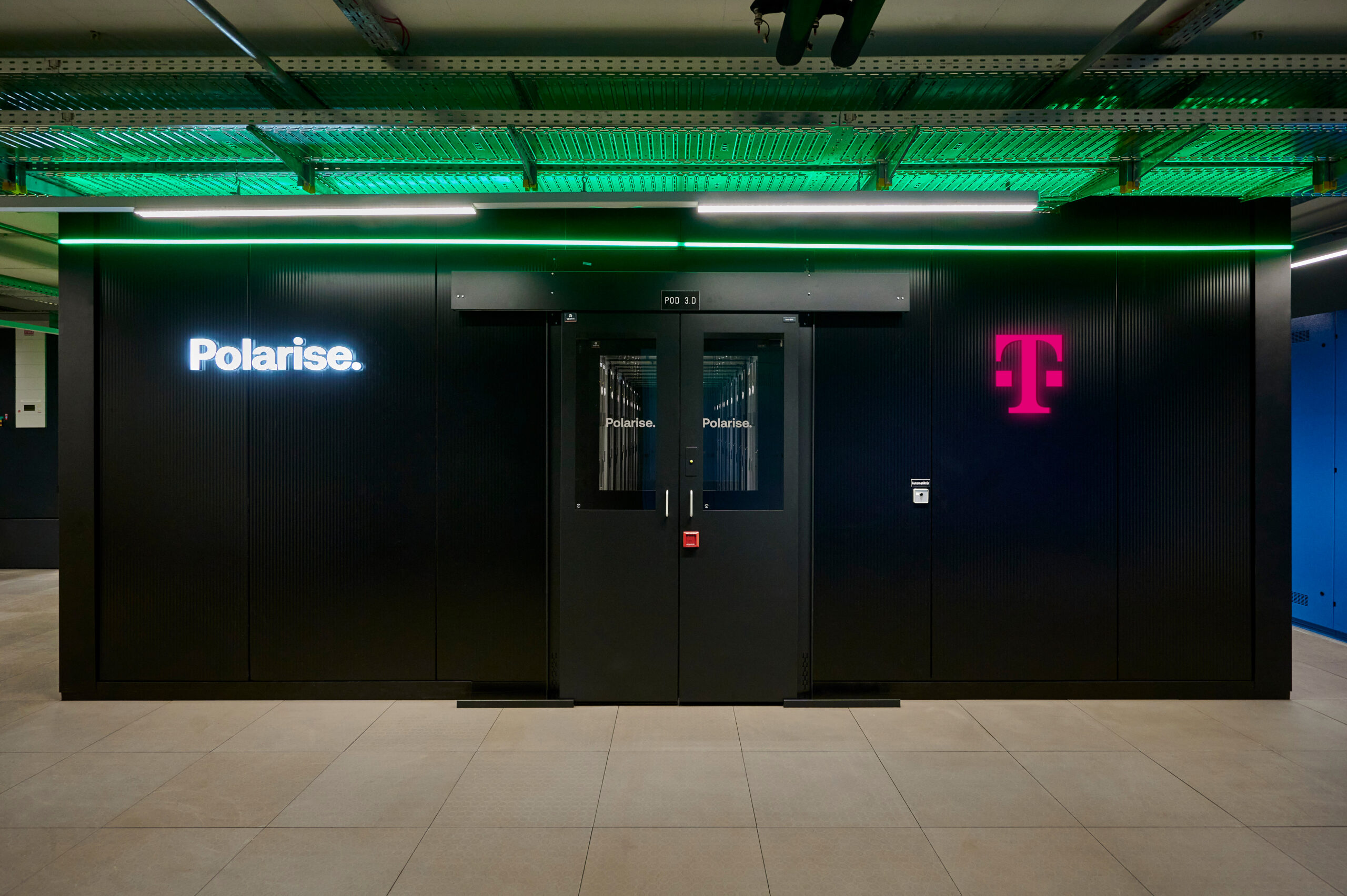
Deutsche Telekom puts a price on enterprise AI
Deutsche Telekom expects AI and automation to reduce indirect costs by about €2.5 billion by 2030 while generating roughly €800 million of non-US enterprise AI revenue, shifting its AI narrative towards measurable financial outcomes.
-

Norway draws boundaries around AI glasses
Norway plans temporary restrictions on AI glasses in selected public places while an expert group develops longer term rules for wearable technology, moving privacy regulation into the physical spaces where recording takes place.
-

Schneider pays $22.6bn to close the industrial data loop
Schneider Electric has agreed to buy engineering software company PTC for $22.6 billion, extending its industrial software strategy from operational and energy data into the systems used to design and manage products.


