Summary
- Orbitworks plans an initial 50-satellite expansion combining optical, radar, other sensors, connectivity, and onboard compute.
- Mistral AI models are expected to process observations in orbit so relevant events can be transmitted quickly.
- The first ten satellites are in production in Abu Dhabi, with the first AI satellite due for launch in October.
A $1 billion satellite programme involving French and Emirati technology companies plans to shift more artificial-intelligence processing into orbit, allowing spacecraft to analyse observations before deciding what information deserves scarce communications capacity back to Earth.
Orbitworks, established by Marlan Space and Loft Orbital, announced the Altair-Next Gen programme in Paris on 9 September. The initial plan covers 50 satellites combining optical, radar, and other sensors with onboard computing and persistent connectivity.
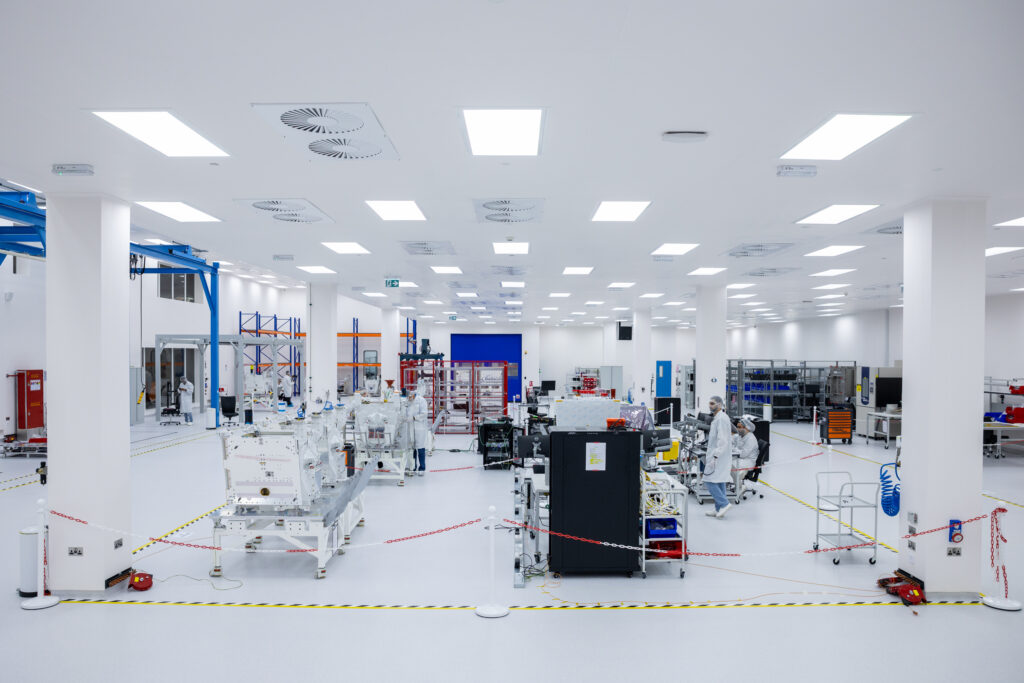
Mistral AI is joining the project to supply models intended to run aboard the constellation, while the infrastructure is being marketed to French, other European, UAE, and commercial customers. The first ten satellites are already in production in Abu Dhabi, with the first AI-enabled spacecraft expected to launch in October.
The programme remains at an early stage, and the partners have not published customer pricing, operational performance, or independent evidence showing how quickly onboard processing will deliver useful alerts. Even so, its architecture reflects a broader shift in satellite computing from sending everything down for analysis towards deciding more at the edge.
Space acquires an edge-computing problem
Earth-observation satellites traditionally capture information and transmit it towards ground stations, where large computing systems process imagery into useful products. That remains appropriate for many applications, but communications bandwidth and orbital opportunities can create delays when users need to identify events quickly.
If a spacecraft can recognise a relevant change before transmission, it can send an alert or smaller processed dataset rather than every raw image surrounding it. Wildfire detection, maritime activity, infrastructure monitoring, flooding, and other time-sensitive applications can potentially benefit when analysis occurs nearer the sensor.
The architecture resembles terrestrial edge computing, where industrial systems process information near machines because sending every sensor reading into a remote cloud is inefficient or too slow. Space introduces harsher constraints: power is limited, communications can be intermittent, hardware cannot easily be repaired, and radiation affects electronics.
Models therefore need to be smaller and more predictable than workloads casually deployed in a conventional data centre. An algorithm also has to justify consuming power and compute aboard a spacecraft whose primary mission depends on limited physical resources.
Sovereignty no longer means owning every component
The Altair programme also illustrates the complexity of European technological sovereignty. Manufacturing takes place in Abu Dhabi, Loft Orbital contributes space infrastructure and operations, Mistral brings French AI capability, and other international suppliers contribute sensors and services.
France nevertheless expects to secure dedicated capacity through the constellation, following an earlier arrangement involving national space agency CNES. Rather than owning the whole satellite stack, a government can purchase controlled access to sensing and processing capacity supplied through a multinational infrastructure platform.
That model can reduce the capital required to create new capability because manufacturing and launch costs are spread across several customers. It also introduces dependency questions familiar from cloud computing: who owns the infrastructure, who can prioritise access, where data is processed, and what happens if geopolitical or commercial relationships change?
Those questions become more sensitive when Earth-observation systems serve both civilian and strategic applications. The same sensing infrastructure can support agriculture, emergency response, infrastructure maintenance, border monitoring, maritime surveillance, or defence, depending on who controls tasking and how quickly information is delivered.
Onboard models become part of mission assurance
Adding AI changes the trust boundary because the satellite is no longer merely capturing information. A model that chooses which observation is sufficiently significant to transmit is performing part of the analytical judgement previously left to systems on the ground.
If that model misses an event, the user may never receive the underlying image quickly enough to discover the mistake. Operators consequently need ways to validate model performance, update software safely, and decide which observations should still be retained regardless of an automated classification.
Those operational details will become more important than the language of “agentic AI in space” used around the launch. Satellites are expensive, long-lived physical assets, so AI capability has to coexist with mission reliability rather than change at the pace of a consumer cloud service.
Orbitworks says Loft Orbital already has experience operating AI payloads, which reduces some technical uncertainty, although a 50-satellite commercial and sovereign constellation represents a larger operational commitment than experimental missions.
The economics also remain anchored in manufacturing and launch. Onboard inference may reduce bandwidth and latency, but it cannot eliminate launch schedules, hardware failures, orbital regulation, replenishment costs, or the capital required to put dozens of functioning machines into space.
If Altair-Next Gen works as planned, its more durable contribution may be architectural rather than spectacular. Satellites would increasingly transmit decisions and alerts alongside raw observations, turning orbital infrastructure into another edge-computing environment. The commercial test is whether processing data before it reaches Earth creates enough speed, bandwidth savings, or analytical value to justify placing more intelligence aboard hardware that must keep working long after launch.