Summary
- Vertiv will add about 22,000 square metres of manufacturing space at Nové Mesto nad Váhom over 18 to 24 months.
- The expansion covers power, switchgear, thermal management, and liquid-cooling equipment for AI and high-performance computing.
- Data-centre investment is pushing AI spending into European industrial supply chains as operators require denser power and cooling systems.
Vertiv is adding roughly 22,000 square metres of manufacturing capacity to its Nové Mesto nad Váhom campus in Slovakia, expanding European production of the power and cooling equipment required to turn large AI-compute plans into operating data centres.
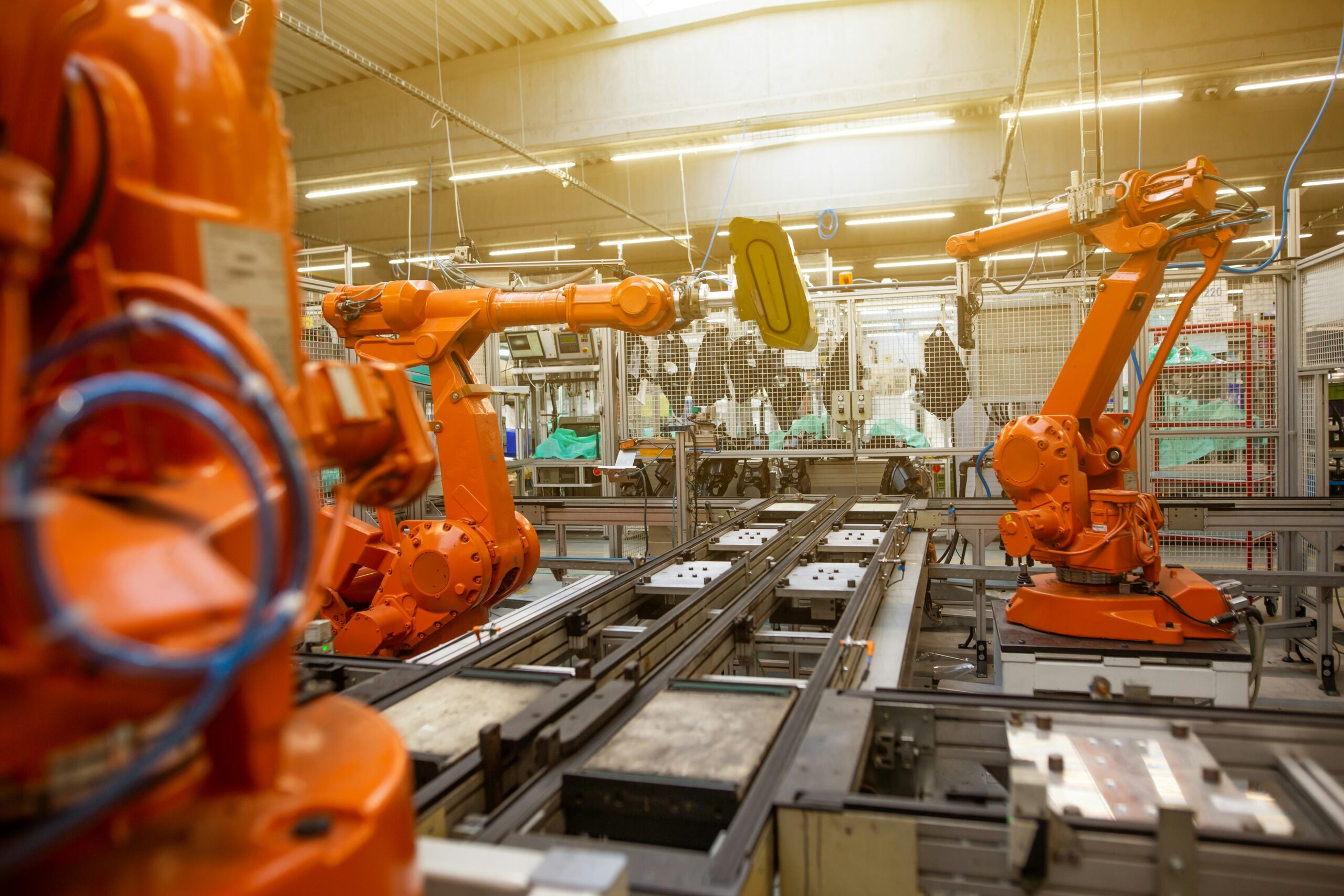
The project will be carried out over the next 18 to 24 months and increase output of power systems, switchgear, thermal-management equipment, and advanced liquid-cooling technology for high-density artificial-intelligence and high-performance-computing deployments. Vertiv says the Slovakian operation will become a more integrated manufacturing and technology campus, bringing engineering and production closer together as customers push for faster delivery.
The company has not disclosed the value of the investment, although the additional space is substantial and follows manufacturing expansions elsewhere in Europe and internationally. Vertiv has invested across sites in Ireland, Italy, Croatia, Malaysia, Mexico, and the United States as data-centre operators and cloud companies expand the physical infrastructure beneath AI services.
That buildout is changing the economics of a sector that was already capital-intensive before generative AI increased rack densities and power requirements. VIRTUS has secured £2.45 billion for further UK and continental European data-centre development, while operators across the Nordics and mainland Europe are competing for electricity connections, suitable land, cooling capacity, construction labour, and specialist equipment.
AI spending reaches the factory floor
Much of the infrastructure debate has concentrated on graphics processors and electricity, yet a compute cluster cannot operate without the electrical and thermal systems surrounding the servers. Power must be converted and distributed reliably, backup systems have to absorb failures, and the heat created by dense computing equipment has to be removed continuously.
Higher-density AI hardware makes those requirements harder to meet with conventional air cooling alone. Liquid systems can carry heat away from processors more efficiently, although introducing them into existing facilities changes pipework, fluid management, maintenance procedures, leak detection, and the design of supporting mechanical infrastructure.
The transition has already created a new market around fluid-management and cooling engineering, with infrastructure suppliers, industrial manufacturers, and data-centre specialists trying to capture a larger share of spending that previously sat outside the most visible parts of the technology stack.
Vertiv’s Slovak expansion shows that some of this investment is reaching European manufacturing rather than remaining concentrated among US chip and cloud companies. Nové Mesto nad Váhom already produces AC and DC power equipment and thermal-management systems, making it an established industrial operation rather than a new assembly site created solely for the current AI cycle.
Bringing more engineering and production into one campus can shorten the gap between a customer’s data-centre design and delivery of customised electrical or thermal systems. That becomes more useful as AI facilities diverge from standard server halls, because rack densities, cooling configurations, power topology, and deployment schedules increasingly vary between projects.
Supply chains set deployment speed
Infrastructure vendors increasingly talk about reducing the period between ordering AI capacity and putting it into productive use. The underlying constraint is straightforward: GPUs that have been purchased but cannot be energised or cooled are expensive inventory rather than useful computing capacity.
That puts pressure on manufacturers to increase output before orders arrive, while avoiding excessive capacity if infrastructure spending slows. Equipment such as switchgear and cooling systems has its own component supply chains and manufacturing lead times, so a shortage in apparently mundane electrical hardware can delay an entire facility even when servers are available.
Europe also faces a geographic problem. Large projects are spreading beyond established clusters as grid capacity, planning rules, land availability, and electricity costs constrain development in traditional markets, increasing the value of regional manufacturing and distribution capable of serving several countries without relying on longer global supply routes.
Vertiv’s expansion will not resolve the power constraints holding back many European AI projects, nor does additional factory capacity guarantee demand at the pace currently assumed by infrastructure developers. It does, however, show how spending on AI is becoming embedded in a wider industrial chain of electrical equipment, thermal systems, manufacturing, engineering, and construction.
The most visible AI companies may still sit at the software and semiconductor layers, but the pace at which Europe can deploy new compute will increasingly be set by less celebrated equipment that has to be manufactured, delivered, installed, and kept running. Slovakia’s role in that chain is becoming materially larger.