Summary
- Genesis AI has raised $500m in Series A financing co-led by Premji Invest, Khosla Ventures and Eclipse.
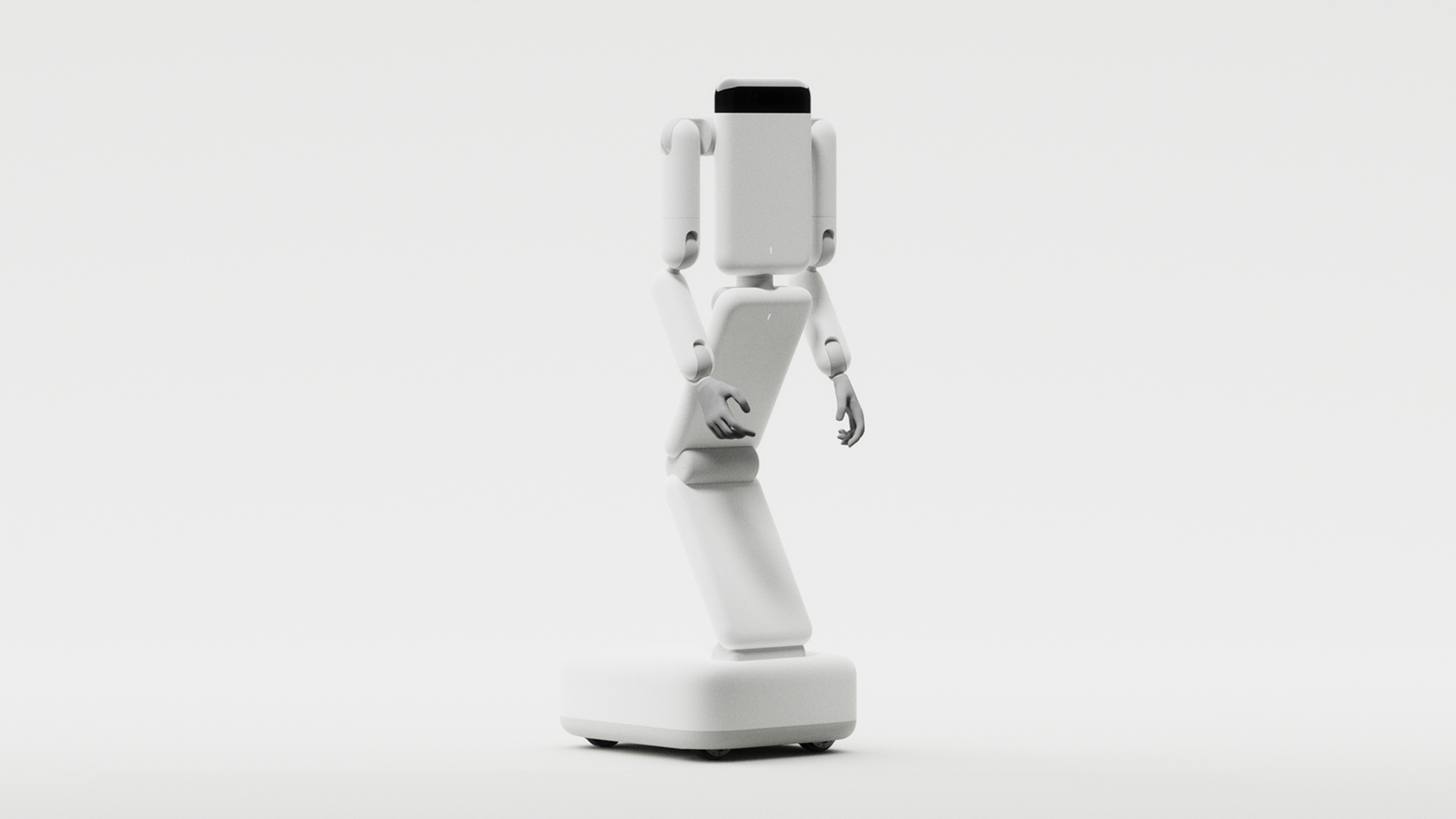
- Its Eno platform combines the GENE foundation model, robotic hands, human demonstration data and the Genesis World simulation system.
- Manufacturing, logistics and laboratories are the initial target markets, with wider deployment and production expansion planned.
French-American robotics developer Genesis AI has raised $500 million to expand production of its Eno robot and develop artificial intelligence capable of performing complex physical tasks in industrial environments.
The Series A investment values the business at $3.5 billion after the financing and was co-led by Premji Invest, Khosla Ventures and Eclipse. Other participants include Bpifrance, NVIDIA, AMD Ventures, Samsung Next and several institutional and individual technology investors.
Genesis intends to use the capital to expand data collection, train its robotics foundation model, recruit engineers and prepare Eno for wider deployment. Manufacturing, logistics and laboratories are its initial target markets, with healthcare, hospitality and consumer applications positioned as longer-term opportunities.
The investment follows the company’s development of an integrated robotics system combining physical hardware, human movement data, simulation and AI models. Its commercial prospects will depend on whether those components can deliver reliable operation across varied tasks without requiring extensive human intervention.
Physical manipulation remains difficult to automate
Industrial robots have become established in manufacturing and logistics, particularly where tasks can be repeated within controlled environments. Equipment designed for welding, assembly or materials handling can perform specified movements accurately when workstations and materials remain sufficiently consistent.
However, many physical activities remain difficult to automate because they involve objects that vary in shape, weight, position or resistance. A machine may need to adjust its grip, maintain balance and respond to contact in ways that are straightforward for an experienced human worker but demanding for conventional robotic systems.
Genesis has made dexterous manipulation central to its development programme. The company has designed a robotic hand intended to reproduce a broad range of human hand movements, alongside a data collection glove that records people performing physical tasks.
The system uses a corresponding arrangement between the human hand, the recording glove and the robotic hand. Genesis says this allows human demonstrations to be translated more directly into training information that can inform a robot’s movements.
Demonstration data can help teach machines activities that are difficult to specify through fixed programming instructions. Yet examples collected from people cannot account for every variation encountered in a working facility, making the ability to recognise unfamiliar conditions and recover from mistakes equally important.
Even apparently simple handling tasks can involve difficult decisions. A robot retrieving a component from a container may need to identify the correct item, account for neighbouring objects, adjust its grip and place it accurately without damaging equipment or interrupting another process.
Completing these operations once is different from maintaining an acceptable success rate over hundreds of repetitions. Industrial customers will assess reliability, cycle times, intervention requirements and maintenance costs alongside the range of movements a robot can demonstrate.
Hardware and AI are developed together
Genesis is developing much of its robotics technology internally, rather than treating physical equipment and AI software as separate products.
Its GENE foundation model is designed to control physical actions, while Genesis World provides simulated environments in which skills can be trained and evaluated before being tested on real equipment. Eno supplies the physical platform through which those capabilities are intended to operate.
The company argues that developing the components together allows information from physical tests to influence subsequent changes to models, simulations and hardware.
Simulation provides a relatively efficient way to examine many possible conditions without repeatedly setting up physical experiments. Developers can vary object placement, movement sequences and environmental characteristics while recording how an AI system responds.
Nevertheless, a simulated environment cannot reproduce every material property or physical interaction. Friction, component wear, unexpected contact and changing lighting can all affect behaviour when a robot moves into production.
Training systems must therefore account for differences between simulated performance and operational conditions. Where those differences are substantial, a model may perform well in demonstrations while struggling with equipment or objects it has not encountered previously.
Genesis intends to use deployment information to improve its models. This approach could allow the system to learn from recurring difficulties, provided that its evaluation processes distinguish successful recovery from inappropriate behaviour.
Safety introduces an additional requirement. A general-purpose robot operating near employees must recognise when continuing an action could create a risk and respond appropriately, even if that prevents it from completing the assigned task.
Eno moves towards industrial customers
Genesis says it is increasing production of Eno, which has been designed around practical capability rather than reproducing every feature of human appearance.
Industrial customers may be interested in adaptable robots where conventional automation is expensive to install or difficult to reconfigure. Facilities handling varied products, small production batches or changing workflows can require flexibility that fixed-purpose machinery does not always provide.
However, the economics of deployment depend on more than versatility. Customers must account for the purchase or leasing cost, software integration, training, supervision, power consumption and the support required to maintain continuous operation.
Existing industrial systems may also constrain adoption. Robots need to communicate with warehouse management, manufacturing execution and safety systems, while operators require clear procedures for assigning work and responding to faults.
Where a machine cannot perform a task reliably, employees may need to intervene, reducing the productivity benefit that automation was intended to deliver.
Genesis has identified its initial industrial markets but has not published comprehensive independently verified figures covering customer fleet sizes, operating hours, failure rates or the costs of sustained deployment.
Investor observations about demonstrations provide an indication of technical progress, although they are not a substitute for measured performance in ordinary commercial operations.
Financing supports a costly development model
Building general-purpose robots requires substantial investment in mechanical engineering, manufacturing, computing infrastructure and real-world testing.
Unlike a software company distributing an application through existing devices, a robotics developer must establish physical production capacity, manage component supply chains and support equipment after installation.
The $500 million round gives Genesis resources to pursue those activities while continuing to develop its underlying AI systems. Investors associated with computing and semiconductor businesses may also bring relevant expertise, although their participation does not establish commercial success.
The company’s valuation reflects expectations about the market opportunity rather than a demonstrated return from its current deployments.
Genesis is entering a robotics market attracting substantial investment from established industrial automation suppliers and newer AI-focused developers. Germany’s Agile Robots has also secured major funding for manufacturing expansion, illustrating the capital being committed to competing approaches.
These businesses may differ in hardware design and software architecture, but industrial customers will ultimately compare their ability to complete useful work safely and economically.
Genesis has assembled a technical system intended to improve through repeated training and deployment. The next evidence of commercial progress will come from sustained customer operations, where task completion rates, reliability and implementation costs can be measured against existing alternatives.