Summary
- Government Office for Science advisers identify no established framework for estimating future UK data centre requirements and no national guidance specifically addressing siting.
- The assessment proposes mapping data centres alongside electricity and fibre infrastructure, while highlighting grid connection delays and local planning considerations.
- The document examines energy, water, cooling, and public acceptance but represents scientific advice rather than agreed government policy.
The UK lacks national planning guidance specifically addressing data centre locations, while uncertainty over future computing demand makes it difficult to establish where new infrastructure should be developed, according to scientific advice published by the Government Office for Science.
The assessment, published on 12 November, examines the factors influencing data centre siting, including electricity connections, fibre networks, latency, information sensitivity, environmental requirements, and public acceptance. It identifies the absence of an established framework for forecasting how much domestic computing capacity the UK will need.
The document summarises a roundtable chaired by Government Chief Scientific Adviser Professor Dame Angela McLean on 20 February 2026. Participants included representatives from academia and industry, among them Amazon Web Services, Pure Data Centres Group, techUK, and BCS, the Chartered Institute for IT.
The findings represent the views of those participants rather than agreed government policy. They do not introduce new planning requirements or commit ministers to implementing the proposals, although they provide a framework for considering the infrastructure needed to support future digital services.
Computing demand cannot follow one national forecast
The advisers found no obvious method for calculating the UK’s future requirement for domestic data centre capacity. Demand will depend on the pace of AI adoption, the country’s commercial activities, the distribution of digital services, and policy decisions affecting data sovereignty and regulation.
Different types of computing also create different infrastructure requirements. Training a large AI model generally involves substantial processing capacity but may tolerate greater delays in data transmission, while applications using a model to process information can have more demanding latency requirements depending on their purpose.
Some workloads can operate effectively in large facilities located considerable distances from their users. Others require processing closer to where information is generated or consumed, particularly where applications depend on rapid responses or transfer substantial volumes of data.
Financial services, transport, and agriculture were among the examples considered by the roundtable. Certain applications involving images or time-sensitive information may benefit from local processing, while other activities can be distributed across more distant infrastructure.
Information sensitivity creates another constraint. Public services and regulated industries may need to consider where information is stored and processed, particularly where confidentiality, legal obligations, or operational resilience affect the suitability of overseas infrastructure.
Those requirements cannot necessarily be translated into a single national capacity figure. The location and purpose of individual facilities influence whether they can serve particular applications, while demand may change as technology and commercial arrangements develop.
The advisers suggested that some additional capacity could be necessary to accommodate uncertainty and improve resilience. Such overprovisioning, however, would involve financial and infrastructure costs, especially where facilities require substantial electricity connections.
Mapping would connect sites with infrastructure
The assessment identifies a lack of national planning guidance specifically for data centre siting. Clearer arrangements could help developers and communities understand how proposed facilities should be assessed alongside other infrastructure and local development priorities.
Participants recommended creating an interactive map showing data centre locations together with fibre routes, power lines, and other relevant infrastructure. The proposed resource would cover facilities ranging from large centralised sites to smaller locations supporting more localised computing.
Such mapping could help establish where new capacity is technically feasible and where development would require additional investment in electricity or communications networks.
A suitable building site does not automatically provide access to the power and connectivity required by its intended computing equipment. Equally, a location with available electricity may be commercially unsuitable if it cannot obtain the necessary network connections within an acceptable timescale.
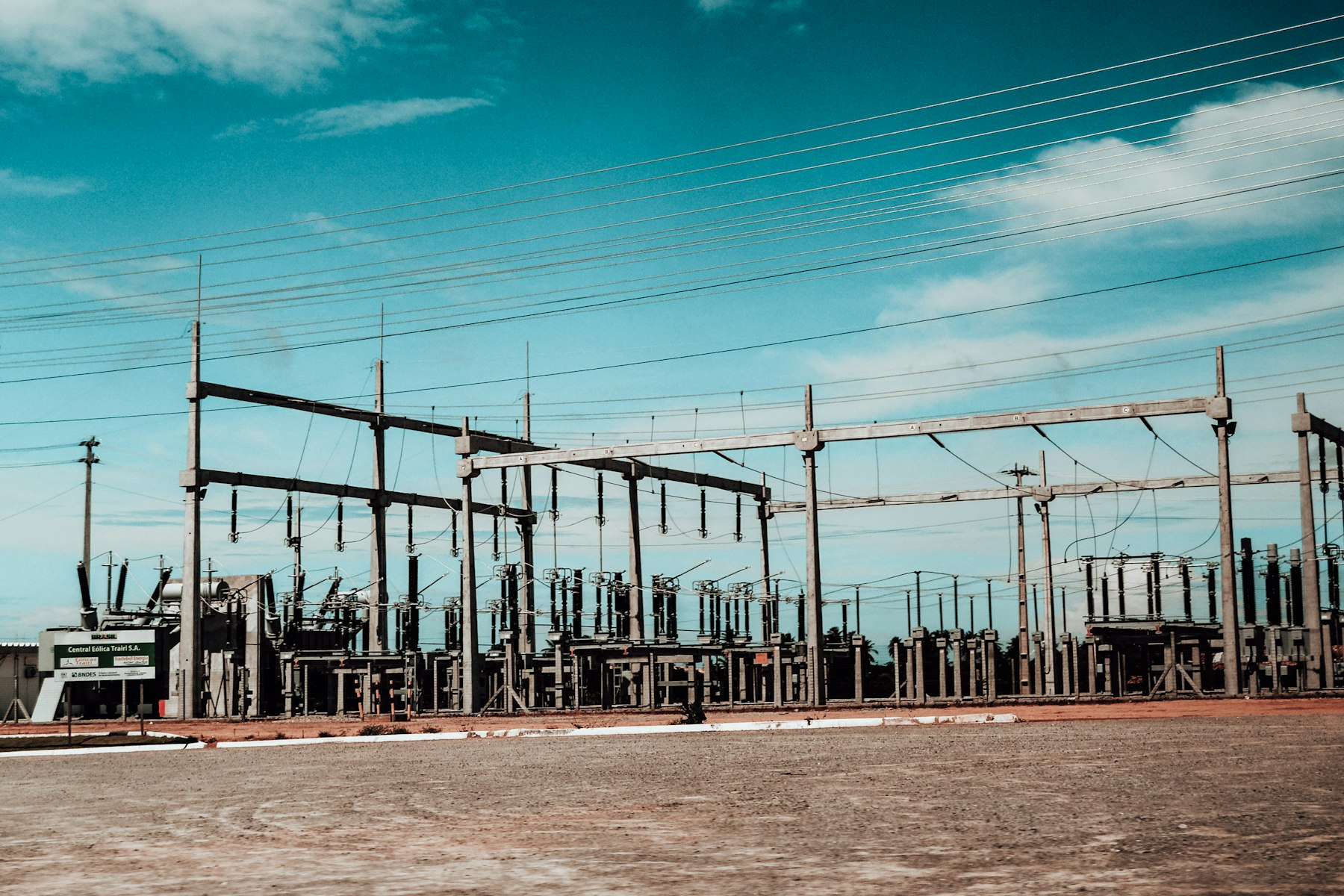
Grid connection delays were identified as a significant obstacle. The assessment warns that prolonged waits for electricity infrastructure could undermine the UK’s digital growth objectives by preventing new data centre capacity from becoming operational when required.
Participants considered whether changes to arrangements for connecting new electricity generation could reduce delays. That suggestion remains part of the roundtable’s advice and should not be interpreted as a government decision to alter grid connection rules.
Electricity allocation also affects competing demands from housing, industry, transport, and other development. Faster connections for data centres would need to be considered within the wider requirements of the energy system rather than as a self-contained infrastructure problem.
Cooling involves choices between water and power
The assessment does not regard water availability as a major general limitation on UK data centre siting, noting that the country’s relatively cool climate allows operators to use cooling systems that require little or no water during substantial parts of the year.
However, the choice of cooling technology introduces a trade-off. Systems designed to reduce water consumption can require more electricity, meaning an improvement in one resource measure may increase demand elsewhere.
Individual site conditions also matter. Local water availability, flood exposure, future temperatures, and the design of the facility can influence which cooling arrangements are practical.
The assessment therefore does not establish that water use can be disregarded in every planning application. Rather, it suggests that the UK has options for cooling facilities without the levels of water consumption associated with some data centre designs in warmer climates.
Carbon emissions create further considerations because the electricity available to a facility is influenced by its location and the surrounding generation and transmission infrastructure. The advisers suggested examining incentives for developing data centres near renewable or other low-carbon electricity sources.
Such arrangements could improve access to suitable energy supplies, although the environmental outcome would depend on the electricity actually consumed and the wider operation of the network.
The assessment also considers opportunities to reuse waste heat from computing equipment. Potential applications include heating greenhouses, supporting food preparation, or supplying other nearby processes requiring heat.
Those opportunities depend heavily on location. A data centre situated far from suitable users may have limited practical scope for heat recovery, particularly where an area lacks district heating infrastructure.
Public acceptance becomes a planning consideration
The advisers identified public confidence as an important factor in future data centre development. Large facilities can require extensive land, while smaller distributed sites may be located closer to residential and commercial areas.
Both arrangements introduce different local concerns. A large development in a rural location may affect the surrounding landscape, while a smaller urban facility may raise questions about construction, operational noise, or competing infrastructure demands.
Participants argued that developers and public authorities need to provide credible explanations of local benefits and the national requirement for computing infrastructure.
Claims about employment, economic activity, and protection from higher electricity costs should be supported by evidence. The assessment also warns that a lack of transparency around siting decisions can weaken public trust.
These considerations arise alongside existing planning challenges. Recent Techopia coverage of a proposed Wiltshire data centre illustrates how local developments can become subject to wider scrutiny over planning decisions and their consequences.
Scientific advice alone cannot determine how such competing interests should be resolved. Local planning authorities, infrastructure providers, developers, and national policymakers have different responsibilities, while individual proposals must be assessed within the relevant legal framework.
The Government Office for Science has not announced a timetable for adopting national siting guidance or creating the recommended infrastructure map. Its publication establishes the technical considerations raised by participants and the uncertainties they believe policymakers need to address.
As investment in AI and digital infrastructure continues, decisions about new data centres will depend not only on anticipated computing demand but also on the physical capacity, environmental conditions, and community circumstances of the locations proposed to accommodate it.