Summary
- England's NHS had 125 more CT and MRI scanners in March 2026 than two years earlier, with 107 of the additional machines located in community diagnostic centres.
- AI acceleration software has been installed on 54% of compatible MRI scanners, supporting an average 14% increase in scanning throughput.
- The NHS estimates that extending the technology across compatible machines could provide up to 162,000 additional MRI checks annually by 2029.
NHS England is using AI-assisted MRI technology alongside an expanding fleet of diagnostic scanners to increase the number of patients receiving examinations, with compatible machines reporting an average 14% improvement in scanning throughput.
New figures published on 3 November show that the NHS had 125 more CT and MRI scanners in March 2026 than two years earlier. Of those additional machines, 107 were installed in community diagnostic centres, which are intended to provide tests outside major hospital settings.
The centres completed nearly 2.2 million CT and MRI examinations during the 12 months to March 2026, approximately one million more than during the equivalent period ending in March 2024. The increase reflects expanded physical scanning capacity and service activity, rather than the effect of AI software alone.
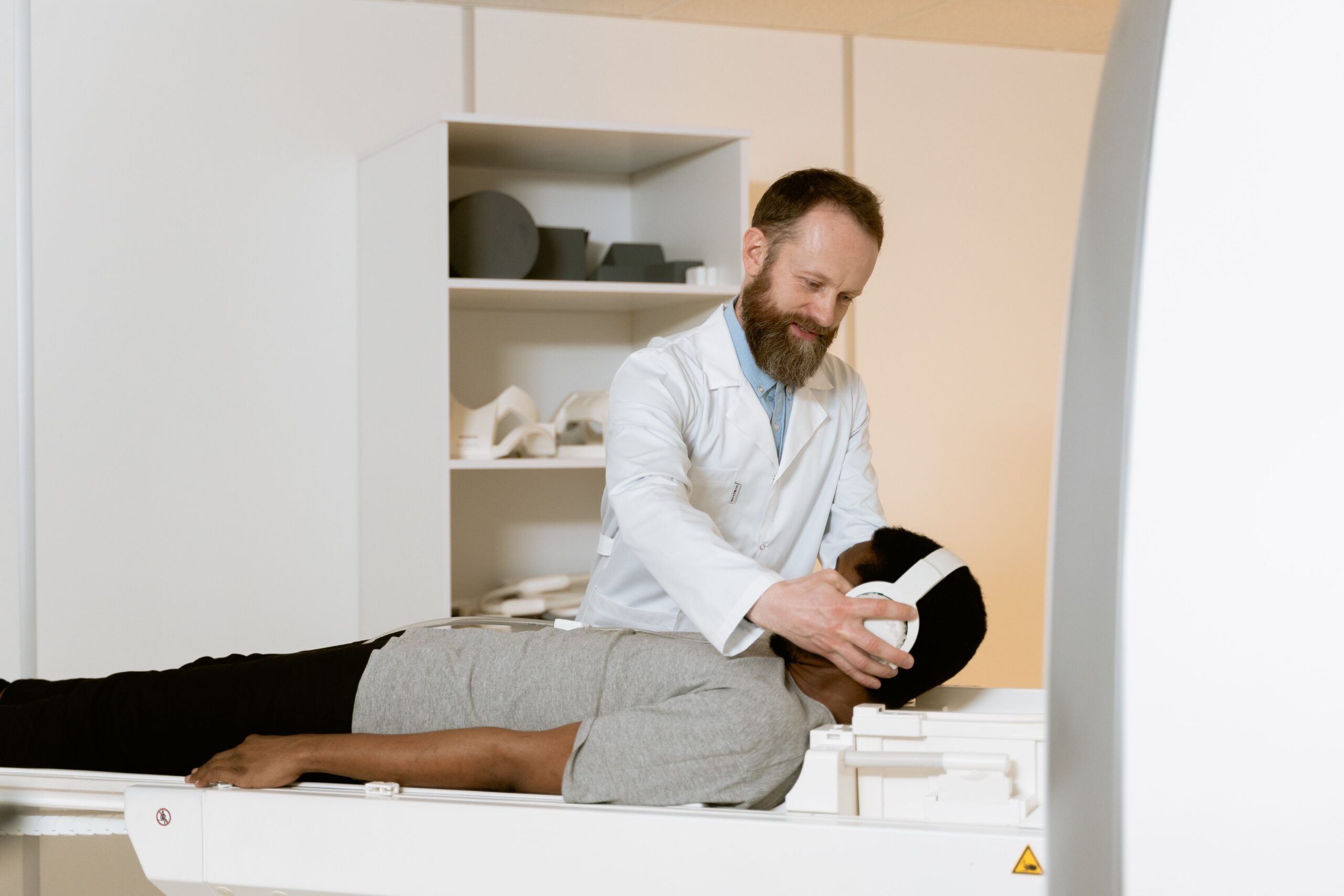
AI acceleration software has separately been installed on 54% of compatible NHS MRI scanners. By reducing the amount of data needed to reconstruct diagnostic images, the technology can shorten suitable examinations and create opportunities for additional appointments using existing equipment.
Reconstruction software reduces acquisition time
Magnetic resonance imaging uses magnetic fields and radiofrequency signals to collect measurements from the body. Those measurements are processed to create detailed images that clinicians can use to investigate tissue and organ structures.
The time required for an examination depends on the body area being investigated, the sequences needed, and the patient’s clinical circumstances. Some scans take approximately 15 minutes, while others require an hour or longer.
Image reconstruction is an important part of the process. The scanner gathers information that software uses to produce images with sufficient detail for a clinician to assess the condition being investigated.
AI acceleration applies trained computational models during reconstruction, allowing certain images to be generated from fewer measurements than would otherwise be required. Where the method has been validated, reducing the acquisition work can shorten particular scanning sequences while maintaining the image quality needed for clinical interpretation.
The technology does not perform the same function as an AI system designed to identify a tumour or deliver a diagnosis. Radiographers continue to operate the equipment, while radiologists and other qualified clinicians assess the resulting images.
Its reported benefit concerns the efficiency of producing diagnostic images rather than replacing clinical judgement.
The NHS states that AI-equipped, compatible scanners have supported an average 14% improvement in throughput. That figure should not be interpreted as a 14% reduction in every patient’s examination time because different types of scan involve different preparation and imaging requirements.
Nor does it establish that every department has increased completed appointments by the same amount. Available staff, examination schedules, and the types of patients referred all influence how additional technical capacity is used.
Software extends the use of existing equipment
New scanners require substantial investment and suitable facilities. MRI equipment also needs specialist installation, maintenance, safety procedures, and appropriately trained staff.
Software improvements offer another route to expanding services because they can increase the number of examinations undertaken on machines already in operation, provided the hardware supports the relevant reconstruction technology.
The government estimates that full deployment across compatible NHS MRI equipment could create capacity for up to 162,000 additional examinations each year. Every NHS trust is expected to have the opportunity to upgrade compatible machines by 2029.
This projection is separate from the approximately one million additional annual CT and MRI examinations associated with the wider diagnostic expansion programme.
Combining those figures into one AI-generated benefit would overstate the effect of reconstruction software. Additional scanners increase the availability of equipment, while AI acceleration changes how much suitable scanning work existing machines can perform.
The relationship between technical capacity and completed appointments also depends on how services are organised. A scanner may be able to complete more examinations during a shift, but the department must still prepare patients, manage safety checks, and ensure images are available for interpretation.
Some examinations require contrast agents or more extensive clinical preparation, meaning that reducing image acquisition time does not necessarily shorten every stage of the appointment.
Radiology reporting capacity is another consideration. Producing more images increases the amount of information that needs to be reviewed, particularly when additional examinations identify findings requiring further investigation.
The Royal College of Radiologists has welcomed the additional equipment and AI-enabled scanning while emphasising the need for sufficient staff to scan patients and interpret results safely.
Community centres change access to diagnostics
The majority of the additional machines have been installed in community diagnostic centres, allowing more examinations to take place away from traditional acute hospital departments.
These facilities can help separate planned diagnostic work from some of the competing pressures experienced in hospitals, where emergency demand and other clinical activities may influence the availability of appointments.
Providing examinations closer to where patients live may also reduce travel requirements, although the benefit depends on the locations of centres, local transport connections, and the services available at each site.
The Manchester and Trafford Community Diagnostic Centre, which officially opened on 29 October, represents a further £19.2 million investment in this approach.
Its role is to increase local access to diagnostic tests as the NHS seeks to identify serious conditions earlier and support more timely treatment.
Operating a distributed diagnostic service requires reliable information exchange between referral teams, scanning facilities, and the clinicians responsible for subsequent care.
Appointments must be booked, examination records maintained, and images made available to the appropriate specialists. Where tests take place outside the hospital providing treatment, those connections become especially important.
Electronic records and image management systems therefore remain part of the infrastructure needed to turn additional scanner capacity into effective patient care.
Higher activity meets persistent demand
NHS England reports that diagnostic activity has reached monthly records throughout 2026, although the diagnostic waiting list fell in only three of the five months following April.
That combination reflects the relationship between the number of examinations completed and the number of new referrals entering the system. Activity can increase substantially without producing a continuous reduction in the number of people waiting where demand remains high.
Earlier diagnosis can improve treatment options for some serious conditions, including cancers affecting the brain, breast, lungs, and other organs. However, scanning is one stage of a wider clinical pathway, which may also involve specialist consultations, laboratory testing, and subsequent treatment.
Increasing diagnostic throughput can reduce delays within that stage, but its effect on overall waiting times will depend on the availability of downstream services and the clinical needs of individual patients.
The use of AI also requires continued clinical assurance. Reconstruction software must be suitable for the equipment and examinations involved, with image quality monitored as technology and scanning protocols change.
Additional capacity is valuable where it preserves the information clinicians need while allowing more patients to be examined safely.
The NHS’s latest figures demonstrate progress through both equipment expansion and software deployment. Further upgrades to compatible MRI scanners could provide additional appointments through 2029, while the growth of community diagnostic centres offers another route to increasing access.
The operational results will be reflected in completed examinations, reporting capacity, waiting times, and the ability to connect faster scanning with timely clinical decisions.