

Summary
- Canada became EuroHPC's 39th participating state on 30 October.
- The partnership covers access to advanced computing, AI, and quantum resources, subject to programme arrangements.
- EuroHPC has procured 12 supercomputers and is implementing 19 AI Factories alongside 13 support antennas.
Canada has become the 39th participating state of the European High-Performance Computing Joint Undertaking (EuroHPC JU), expanding the European network that coordinates investment in supercomputing, artificial intelligence, and quantum computing infrastructure.
Membership was formalised at the EU–Canada Summit in Montréal on 30 October. It enables Canadian researchers and institutions to participate in EuroHPC activities and access relevant European computing resources under the undertaking’s established arrangements, strengthening scientific cooperation between Canada and participating European countries.
The agreement builds on several decades of research cooperation between the EU and Canada. The partners signed a scientific and technological cooperation agreement in 1996, while Canada became associated with Horizon Europe in 2024, giving researchers access to another framework for international collaboration.
EuroHPC pools European Union and national resources to procure advanced computing infrastructure and support the research, software, and specialist skills required to use it. Canada’s accession extends that funding and cooperation framework beyond Europe at a time when demand for computing capacity is increasing across scientific research and industrial AI development.
Access to shared computing infrastructure
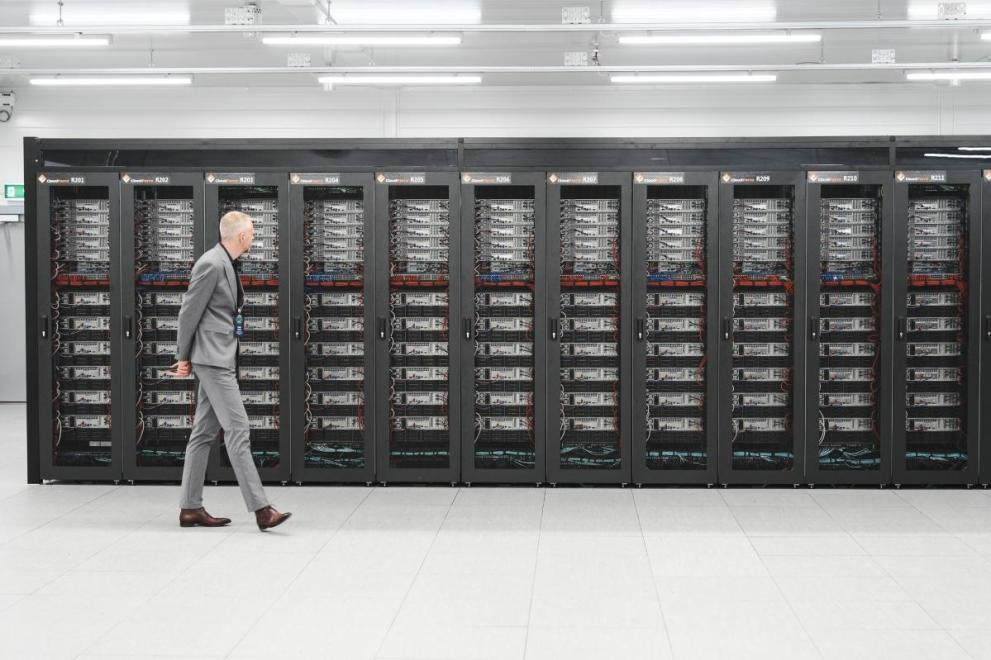
The undertaking has procured 12 supercomputers distributed across Europe, creating facilities capable of processing demanding scientific and engineering workloads. These systems support applications involving physical simulations, large datasets, and calculations that require considerably more computing capacity than conventional servers can provide.
Canadian scientists will be able to collaborate with European partners through projects involving high-performance computing, AI, and quantum technologies. Access will depend on the allocation mechanisms and conditions applicable to the facilities concerned, rather than constituting an unrestricted entitlement to computing capacity.
Researchers working on complex simulations may benefit from the ability to use specialist architectures or work alongside institutions with complementary expertise. Such collaborations can involve software development, preparation of research data, and the testing of computational methods in addition to time spent operating the machines.
For industrial organisations, supercomputing can help investigate engineering problems before physical prototypes are built. Applications include the modelling of materials, fluid dynamics, manufacturing processes, and environmental conditions, although the cost and technical complexity of preparing suitable workloads can restrict access for smaller companies.
EuroHPC’s activities address part of that problem by combining public infrastructure investment with programmes intended to make advanced computing resources usable by research organisations and businesses. The capacity and services available vary between programmes, and participation does not establish that every proposed industrial project will receive an allocation.
AI Factories extend the network
Alongside its supercomputers, EuroHPC is overseeing the implementation of 19 AI Factories. These facilities combine computing resources with services intended to help organisations develop, evaluate, and deploy AI applications, extending the programme beyond traditional scientific simulation.
The undertaking is also supporting 13 AI Factory Antennas, which provide additional entry points and tailored assistance for businesses and research organisations. Their role is to connect potential users with expertise and computing resources rather than replicate the scale of a major supercomputing facility at every location.
This distinction is particularly relevant to smaller technology companies. Developing a sophisticated AI application can require access to specialist processors, substantial storage, technical support, and expertise in preparing workloads, even when a business cannot justify purchasing its own large computing installation.
By pooling infrastructure and connecting users with support, EuroHPC provides a route for experimentation and development through publicly coordinated facilities. Commercial benefits will depend on whether participating organisations can turn that access into working applications, scientific results, or products suitable for customers.
Canada’s participation gives its research and technology communities another opportunity to work within this environment, while European organisations gain access to potential collaborators with expertise in AI, scientific computing, and related technologies.
Quantum technology develops alongside supercomputing
EuroHPC is also establishing a European quantum computing infrastructure that integrates different quantum technologies with existing supercomputers. Rather than treating quantum processors as direct substitutes for conventional machines, the programme supports environments in which researchers can investigate the capabilities of different computing approaches.
Quantum systems operate differently from conventional digital processors and remain subject to substantial engineering challenges. Researchers need to establish how particular problems can be represented, executed, and evaluated on available hardware before determining whether a quantum approach offers a practical advantage.
Integration with high-performance computing facilities can support that investigation because conventional computing remains necessary for preparing experiments, coordinating workflows, and analysing results. The ability to explore combined approaches is therefore a research opportunity, rather than evidence that quantum hardware can already outperform established systems across commercial workloads.
The joint undertaking’s wider mandate includes further investment in quantum infrastructure and the development of European expertise. Canadian participation broadens the network of institutions able to contribute research and collaborate on those activities, subject to the rules of individual programmes.
Strategic autonomy through international cooperation
EuroHPC forms part of Europe’s effort to maintain advanced computing capability through public investment and shared governance. Procuring infrastructure within Europe gives participating countries greater influence over the facilities available for scientific and industrial work, although hardware supply chains and research communities remain international.
Canada’s membership illustrates the distinction between controlling strategic infrastructure and conducting every associated activity within European borders. The undertaking can maintain a European operating and funding framework while cooperating with countries that contribute scientific expertise and additional research capacity.
The partnership also complements Canada’s participation in Horizon Europe, where research organisations have existing opportunities to collaborate across scientific disciplines. EuroHPC provides a more specialised framework focused on computing infrastructure and the capabilities needed to exploit it.
At the same summit, the EU and Canada signed a separate arrangement covering Destination Earth, the European climate modelling programme. That agreement concerns environmental simulation and climate risk research rather than the governance of EuroHPC, although both developments demonstrate how advanced computing is being used to support international scientific cooperation.
Canada’s accession is complete, while the projects and computing allocations that follow will be determined through the undertaking’s existing programmes. The resulting research collaborations and industrial applications will provide the evidence of how extensively the enlarged network is used.


