

Summary
- Most of a planned 22.5MW CoreWeave IT deployment at atNorth DEN01 is operating.
- Nvidia Blackwell hardware extends CoreWeave's European footprint to nine facilities across five countries.
- New global backbone links are planned from late 2026, and a Danish heat-reuse agreement has no published delivery figures.
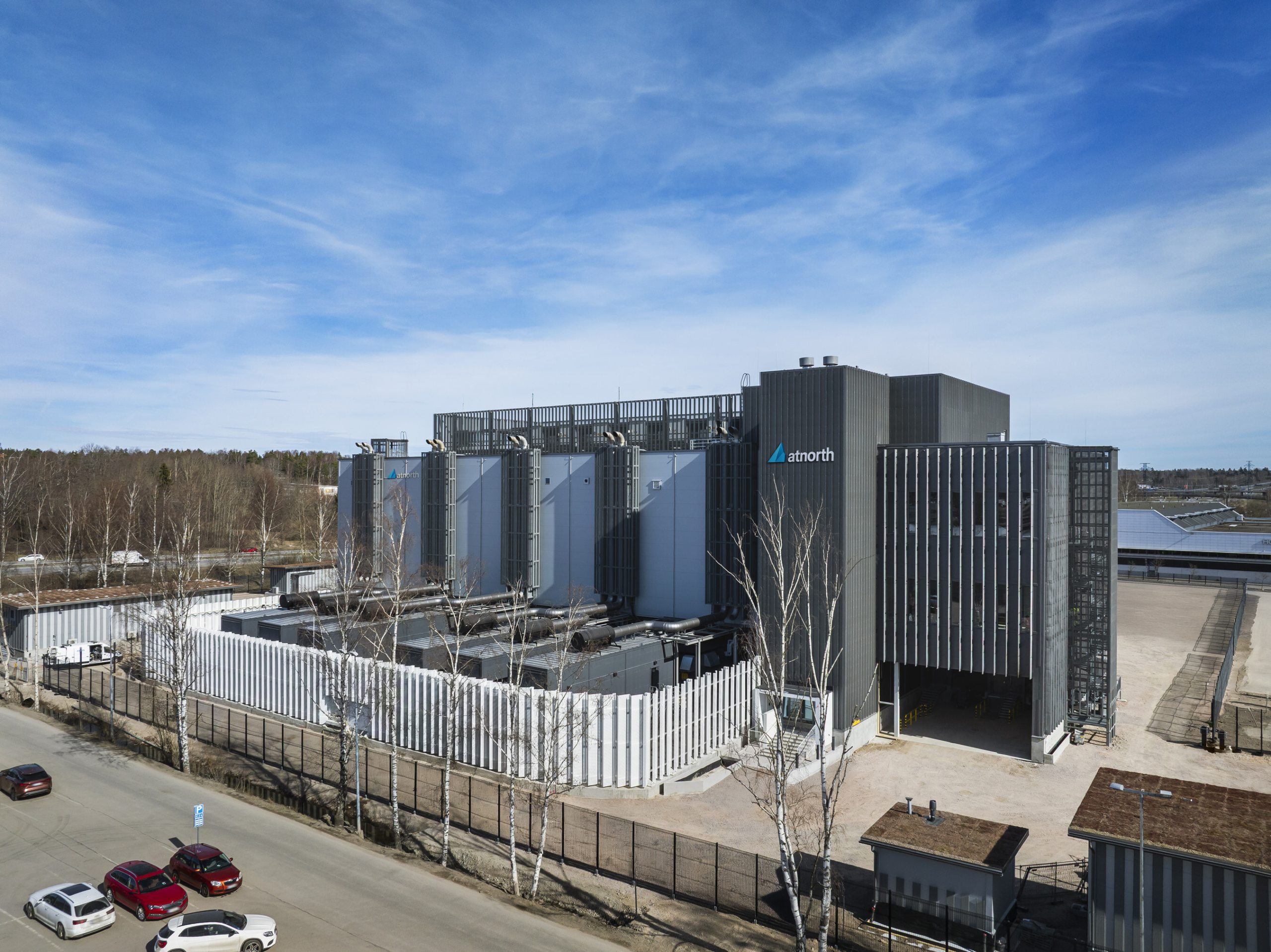
CoreWeave has commissioned most of the planned 22.5MW AI computing deployment at atNorth’s DEN01 facility near Copenhagen, bringing the company’s first Danish capacity into operation alongside plans for a wider international network.
The deployment includes Nvidia Blackwell systems connected by Quantum-X800 InfiniBand and extends CoreWeave’s European presence to nine data centres across five countries. The company has not specified the exact amount of IT capacity currently operational or the date when the remainder will be available.
CoreWeave is also planning new network points of presence across the Middle East and Asia Pacific, with the first additions scheduled for late 2026 and a wider backbone projected for mid-2027. The proposed connections are not equivalent to a fully deployed global network today.
How capacity turns into computing services
Data centre IT capacity refers to the electrical load allocated to computing equipment, rather than the number of processors operating or the revenue generated by the facility. Actual value depends on installed hardware, commissioning, customer contracts and equipment utilisation.
Blackwell accelerators are intended for intensive AI processing, but delivering useful performance also requires storage, communications and orchestration software. InfiniBand supports high-bandwidth interactions between processors that exchange data repeatedly during some workloads.
Even where equipment is available, different kinds of AI work generate different demands. Training a large model, fine-tuning a specialist system and running inference for customer applications can have distinct requirements for memory, networking and storage.
CoreWeave’s new networking plans aim to improve connectivity between regional infrastructure locations. The company describes multiple 400Gbps connections and redundant paths, alongside MACsec encryption for traffic carried across supported links.
These are design and rollout plans rather than measured customer throughput. The performance available to a particular workload will depend on route conditions, capacity allocation, source and destination systems and any restrictions imposed by the service.
European hosting with international dependencies
Facilities located in Europe may help customers reduce latency and address specific data-location requirements. However, the country in which a server stands does not by itself demonstrate compliance with all relevant contracts, data protection rules or national-security requirements.
Customers need to understand administrative access, subcontractors, incident handling and whether support or data transfers involve other countries. A global computing backbone could make such arrangements more complicated even while offering more regions for workloads.
CoreWeave reported 51 data centres and more than 1.5GW of active power worldwide at mid-year. Separately reported contracted power represents infrastructure capacity secured for potential expansion rather than machines already serving customers.
AI infrastructure requires large up-front commitments to land, equipment, power connections and cooling. Those commitments expose operators to timing risk where installations advance ahead of paying demand or where hardware prices and technical standards change.
Customer concentration can also matter because a small number of organisations may account for substantial computing use. Long-term commitments can provide revenue visibility, but they must be considered alongside energy costs and the practical ability to commission the service.
Heat reuse must be measured
The atNorth site has an agreement intended to direct surplus heat into a local district heating network. Such arrangements can provide environmental benefits where heat is captured at usable temperatures and displaces other energy sources.
The announcement does not state that heat recovery from CoreWeave’s new systems is already taking place or quantify the volume delivered. Seasonal heat demand, equipment operating load and the effectiveness of the exchange system would influence the actual results.
Electricity sourcing is another part of the assessment. A commitment to renewable electricity does not by itself capture the facility’s entire footprint, which also involves hardware manufacture, construction and cooling infrastructure.
The company announcement establishes an operating milestone at DEN01 and outlines planned network development. The remaining capacity commissioning, customer use and heat-delivery figures are still needed for a fuller evaluation.
Resilience also requires testing that redundant links avoid common points of failure. Backup routing may not protect a service if multiple connections share the same damaged infrastructure, or if applications cannot tolerate a change in latency.
Future disclosures should distinguish additional contracted power, genuinely operational IT capacity and customer utilisation. Treating those figures as interchangeable would make it difficult to evaluate both the company’s expansion pace and the economics of its facilities.
Network security has separate layers: encryption can protect traffic travelling over a link, while customer permissions and endpoint security determine who may access the systems at each end. A high-capacity backbone does not remove the need for those safeguards.
Heat reuse also involves commercial coordination beyond the data centre. The receiving heating network needs compatible connections and a viable agreement about supply reliability, while maintenance and fluctuating computing workloads can affect output.
Operators may ultimately need to publish performance by facility rather than only aggregate estate figures. Site-level data can show when capacity becomes productive and help distinguish a commissioned building from a fully utilised computing service.


