

Summary
- Gnomon Capital has acquired DC North, the Croatian data centre operator behind the 4MW “Croatian Fort-Knox” facility in Varaždin.
- The site is positioned at redundant optical crossroads linking Slovenia, Hungary, and Austria, and has been described as Croatia’s largest carrier-neutral data centre.
- The deal places regional European data-centre assets into sharper focus as demand for resilient cloud, AI, and sovereign infrastructure spreads beyond the largest western hubs.
DC North, the Croatian data centre operator behind the facility known as the “Croatian Fort-Knox”, has been acquired by Liechtenstein-based private investment firm Gnomon Capital.
The deal gives Gnomon control of the 4MW facility in Varaždin, north of Zagreb. Croatian court register records show that Cratis and Muraplast ceased as company members and Gnomon Capital became a member on 27 May, following the acquisition of the business shares in the data centre operator.
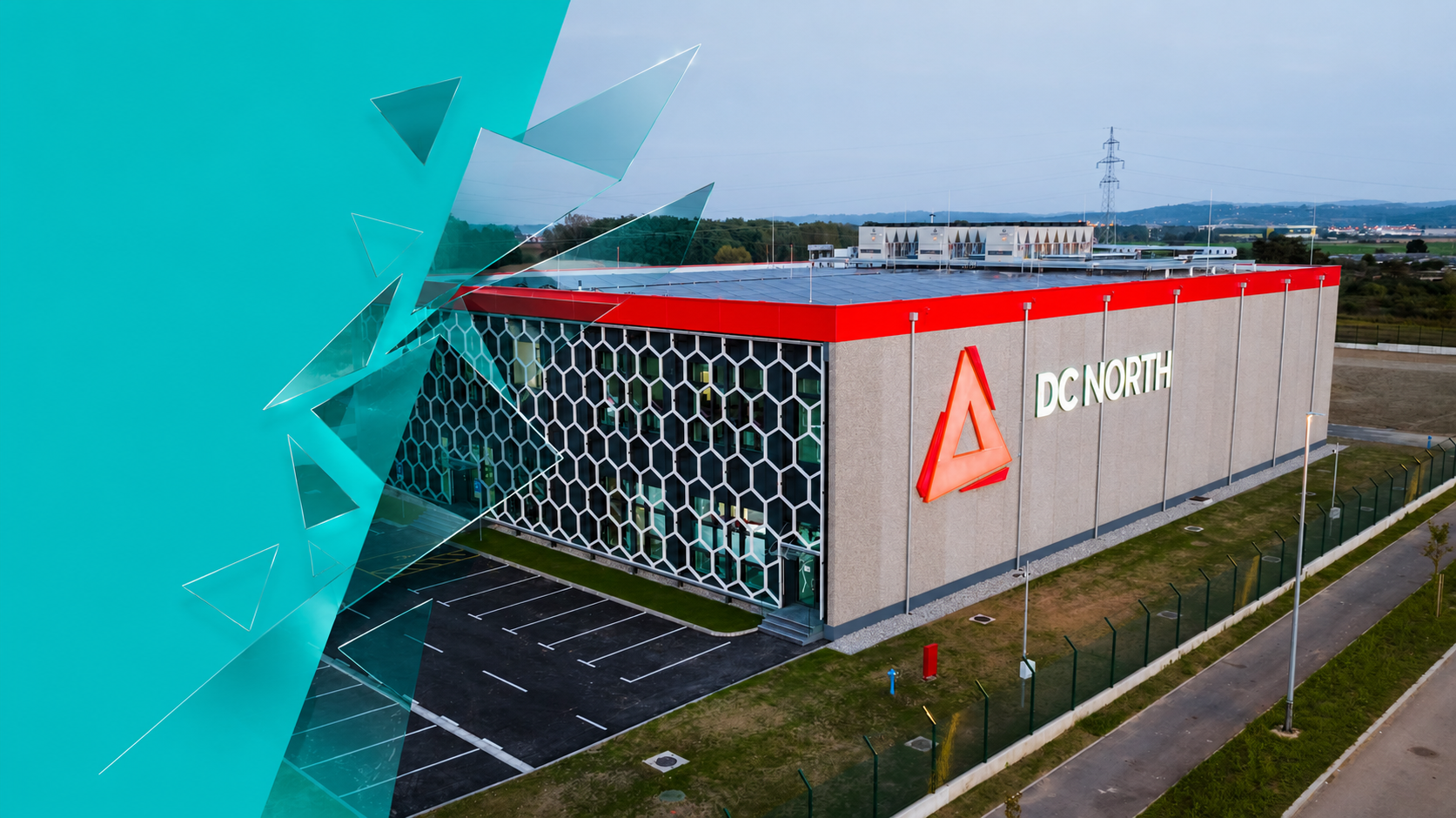
DC North was opened by Croatian cloud operator Cratis in November 2023 and has been described as the country’s largest carrier-neutral data centre. The site spans around 2,000 square metres of IT space, with six IT rooms and 104 racks in each room. It sits at the intersection of redundant optical routes connecting Slovenia, Hungary, and Austria, giving it a regional connectivity role beyond Croatia’s domestic market.
The facility’s security credentials are central to its identity. DC North has been marketed as being built to high physical-security standards and able to withstand earthquakes of up to magnitude nine on the Richter scale. At its opening, Croatia’s president, Zoran Milanović, framed data-centre services as a matter of national security, financial systems, personal property, and normal economic functioning.
The acquisition is not a hyperscale mega-project, which makes it a useful marker for a different part of Europe’s infrastructure market. Data-centre coverage is often dominated by London, Frankfurt, Amsterdam, Paris, Dublin, Madrid, and the Nordic power markets. Smaller regional facilities are now becoming more strategically interesting as businesses, governments, and cloud providers look for resilience, latency, geographic diversity, and national control over digital infrastructure.
Croatia sits in an increasingly relevant position. It connects western Europe with south-east Europe, has proximity to Balkan markets, and is being discussed more often as a digital infrastructure location. The country still has a far smaller data-centre market than western Europe’s main hubs, but AI, cloud, public-sector digitalisation, and regulated industry workloads are pushing infrastructure demand into a broader geography.
For private capital, regional data-centre assets offer a different proposition from the largest hyperscale campuses. They can support local cloud providers, managed service firms, public-sector workloads, enterprise disaster recovery, and connectivity-rich edge use cases. They may also become useful in sovereign-cloud strategies where governments and regulated industries want facilities under domestic or regional jurisdiction, even if some platforms and software layers come from global providers.
The risks are practical. Smaller markets do not automatically generate the customer demand needed to justify expansion. Power availability, cooling, network diversity, specialist skills, and customer concentration can decide whether a regional facility becomes a strategic node or a stranded asset. Private-equity ownership also changes the question from national capability to return profile, with investors looking for utilisation, expansion potential, and possible consolidation routes.
DC North’s location and security positioning give Gnomon a foothold in a part of Europe still underdeveloped compared with western data-centre corridors. If AI and cloud demand continue to spread through public administration, banking, telecoms, manufacturing, and logistics, regional facilities will be needed to support lower-latency services and more resilient architectures. The acquisition puts Croatia into that map with a more visible investor behind one of its most prominent digital infrastructure assets.


