

Summary
- Nvidia has made Isaac Lab 3.0 generally available and introduced Isaac OS, an open runtime designed to connect robotic AI, sensors, controls and physical hardware.
- New resources include more than 2,000 simulation-ready assets, the Human 1M dataset and reference workflows for robot training and evaluation.
- ABB Robotics, KUKA, NEURA Robotics and other European developers are using parts of the platform. Agile ONE SN is a research reference humanoid scheduled for early 2027, not a proven industrial deployment.
Nvidia has expanded its robotics development platform with a new runtime, generally available training software and simulation resources intended to help European manufacturers develop machines capable of performing more varied physical tasks.
Announced at GTC Berlin on 21 October, the additions include Isaac OS, Isaac Lab 3.0, datasets for robot training and reference workflows connecting simulation, AI models and physical hardware.
The company is also working with Munich-based Agile Robots on Agile ONE SN, a compact humanoid reference platform designed to give researchers a preconfigured system for developing and evaluating robot capabilities.
These developments connect several parts of the robotics engineering process, but their release statuses differ. Isaac Lab 3.0 is generally available, while Agile ONE SN is scheduled for early 2027 and some partner applications remain in development or evaluation.
Learning physical tasks requires more than a model
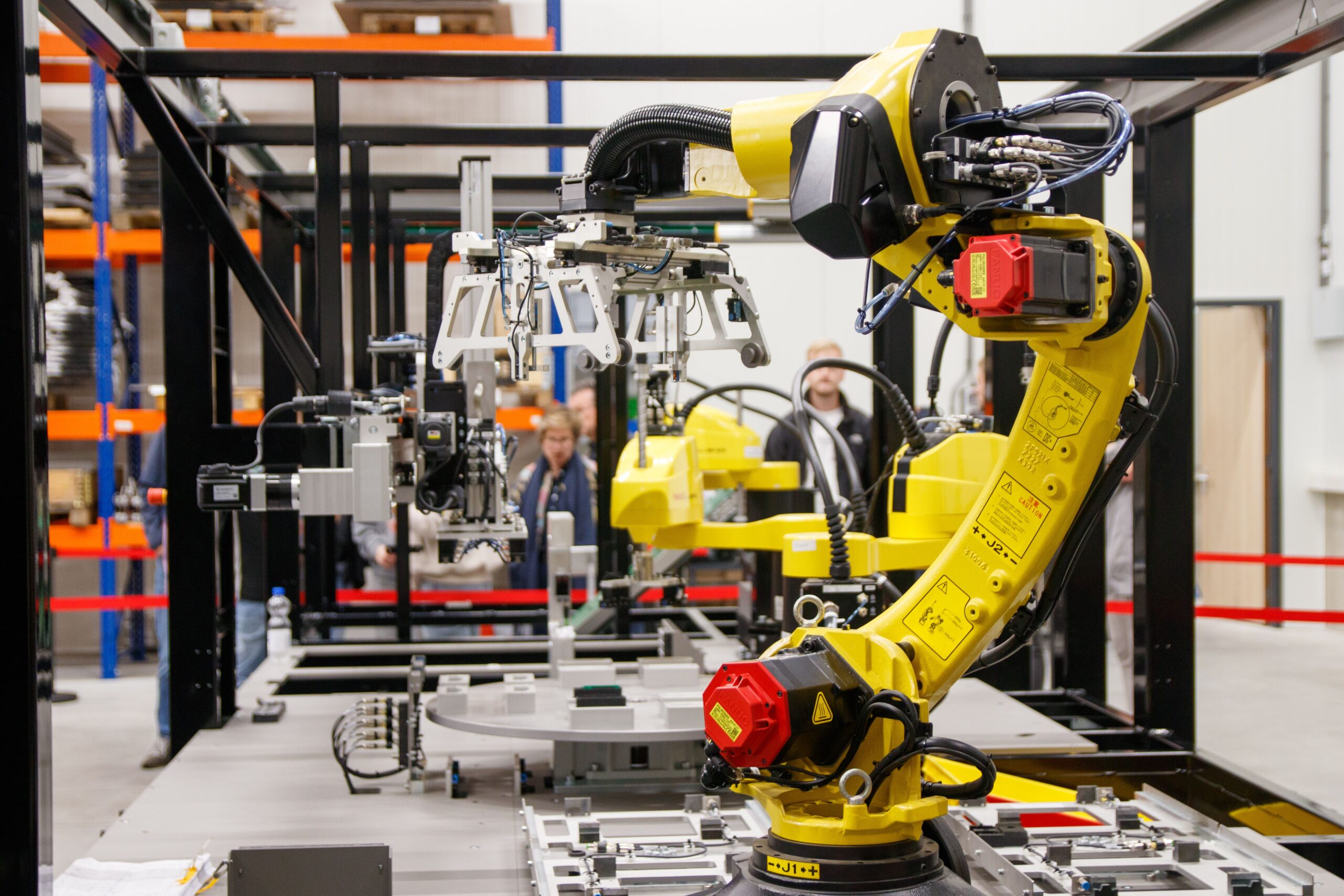
Industrial robots traditionally perform defined activities in environments designed to limit variation. A machine may repeatedly weld components, move materials or position equipment with considerable precision when the objects and surrounding process remain predictable.
Developing robots capable of responding to changing physical conditions introduces a different engineering problem. The system must interpret sensor information, determine appropriate movements and control mechanical components while accounting for objects that may not behave exactly as expected.
A model can generate a plausible instruction to grasp an object, but the robot must still apply suitable force, avoid collisions and respond when the object’s position or surface differs from its training examples.
Nvidia’s Isaac platform provides software used to develop these capabilities, including simulation environments, training frameworks and tools for transferring learned behaviours to physical machines.
Isaac Lab 3.0 extends that environment with support for training across multiple GPUs and using physics engines including Newton and Nvidia PhysX.
Physics simulation allows developers to test how virtual objects respond to movement, contact and forces, exposing robot policies to controlled variations before those policies are evaluated on real equipment.
Developers can change object positions, alter friction or introduce obstacles to determine how a robot responds. Such methods can reduce the amount of physical equipment time required for early experimentation.
However, simulated objects cannot capture every property of the physical world. Material behaviour, sensor noise, mechanical wear and unexpected interactions can cause a robot to behave differently when it encounters a real task.
Consequently, better simulation tools can support development without replacing the need for physical validation.
Isaac OS connects perception with movement
Isaac OS adds an open runtime framework built on Nvidia Holoscan, connecting AI software with sensors, control systems and robotic hardware.
The runtime is intended to support deterministic, real-time processing, which is important when a machine must interpret information and react within tightly constrained intervals.
A robot may need to adjust its movement as an object shifts or as another machine enters its working area. If sensor information is processed too slowly, the resulting command may reflect conditions that have already changed.
Predictable processing helps engineers understand how information moves through the system and whether the software can meet the timing requirements of the intended application.
Nvidia is also releasing reference workflows for DGX Station that support adapting GR00T models through reinforcement learning, developing manipulation skills and generating synthetic data through Cosmos world models.
These workflows bring together established software components that developers would otherwise need to integrate separately.
Reference configurations can reduce setup work and improve consistency between experiments, but they do not guarantee that the resulting robot policy can be deployed safely or economically.
Teams must still determine whether the trained behaviour remains reliable across the range of physical conditions expected during operation.
Datasets broaden the situations robots can encounter
Nvidia has introduced SimReady Central Library, which contains more than 2,000 simulation-ready assets associated with robots, industrial equipment and factory environments.
These assets can help developers create virtual settings with recognisable physical objects and components, reducing some of the work involved in preparing simulation scenes.
The company has also introduced Human 1M, a dataset containing examples of human activities captured through synchronised video and three-dimensional hand tracking.
Such information can support research into manipulation, movement and the relationships between observed activity and physical actions.
Although Nvidia makes related resources available through Hugging Face, access to the complete Human 1M dataset is restricted to Cosmos Coalition partners.
That distinction affects organisations evaluating whether they can reproduce a development workflow without joining a particular partnership programme.
Datasets also need to represent the activities a robot will eventually perform. Large collections of movement examples may support model development without adequately covering unusual industrial situations, unfamiliar equipment or the consequences of operating near people.
Developers must therefore examine both the breadth of training information and the reliability of performance outside the examples used during development.
European manufacturers use different parts of Isaac
ABB Robotics is integrating Nvidia Omniverse libraries with RobotStudio HyperReality, supporting the simulation and virtual commissioning of robotic systems before installation.
Virtual commissioning allows engineers to test proposed layouts and movements in a digital environment, potentially identifying problems before machinery is positioned on the factory floor.
KUKA is using Omniverse libraries within Visual Components FactoryLens to improve the visual representation of manufacturing simulations, while Sereact is using Isaac GR00T and Cosmos Transfer to develop goods handling capabilities through industrial robot arms.
NEURA Robotics is using Isaac Sim and Isaac Lab to generate synthetic training data and train skills for its Neuron AI model.
Techopia previously examined NEURA’s multimodal robotics model, including its use of vision, touch, hearing and memory. The latest Nvidia development concerns the wider development environment that NEURA and other companies can use to train and evaluate physical systems.
Humanoid is developing and validating robot behaviour using Nvidia computing, runtime and safety technologies ahead of intended industrial pilot programmes.
Hexagon Robotics is working on perception capabilities for its AEON platform, including localisation, mapping and the identification of object positions.
Toyota Material Handling Europe and SoftServe report that simulation involving Omniverse and Isaac Sim can reduce deployment time by up to 50% in selected autonomous material handling applications.
That figure is partner-reported and applies to the evaluated workflows, rather than establishing an average improvement across industrial robotics.
Reference humanoids address integration costs
Agile ONE SN combines a compact humanoid body with Nvidia Jetson Thor computing, Isaac GR00T software and tactile hands.
The reference platform is intended for research teams that want to test robot learning methods without assembling every hardware and software component independently.
Nvidia describes the machine as approximately 1.4 metres tall, with 31 degrees of freedom in the body, five-finger hands and a payload capacity of three kilograms per arm.
The hands provide tactile sensing and additional articulation for manipulation experiments. Cameras, lidar and motion sensors contribute information about the surrounding environment and the robot’s movement.
Safety integration with Nvidia Halos is planned, not established as a completed certification programme.
The company’s claim that preconfiguration can reduce setup from weeks to days concerns development preparation rather than the time required to teach a robot a commercially useful skill.
Agile ONE SN is scheduled to become available in early 2027, and its intended initial users are researchers rather than factories purchasing proven replacements for existing industrial equipment.
The platform’s appearance alongside Isaac Lab and Isaac OS illustrates Nvidia’s attempt to provide a more integrated development environment, but it does not demonstrate that humanoids can reliably perform unrestricted tasks in working factories.
Commercial deployment still requires validation
Industrial robotics systems must meet requirements involving safety, reliability and interaction with existing machinery.
Robots operating near people need appropriate safeguards against unexpected movements, while equipment handling materials must perform consistently enough to satisfy production requirements.
Nvidia’s Halos safety platform is being incorporated or evaluated by partners developing mobile robots and industrial systems, although individual applications still require their own assessment and, where applicable, certification.
For manufacturers, the economic comparison also depends on integration costs, maintenance, recovery from failures and the amount of productive work completed over time.
A general-purpose robot could become useful where processes change frequently, but a conventional machine may remain more economical for highly repetitive activities.
The October Isaac expansion makes more of the training, simulation and runtime infrastructure available to developers. Its commercial significance will depend on whether those tools reduce engineering effort and produce capabilities that remain dependable outside the environments in which they were trained.


