

Summary
- Nvidia and UW Medicine's Institute for Protein Design have released RFD4-Proteina, an open model that generates and refines candidate proteins for subsequent laboratory testing.
- Siemens Healthineers is exploring AI-assisted adaptive radiotherapy involving treatment planning, accelerated dose calculations and patient-specific simulation.
- European partners are developing scientific agents, clinical assistance tools and hospital digital twins. Computational results and planned applications do not establish improved patient outcomes.
Nvidia has expanded its healthcare AI technology into protein design, adaptive radiotherapy and laboratory automation, connecting specialised models with scientific and clinical activities that require extensive testing before their results can be trusted.
The company introduced RFD4-Proteina on 21 October, an open protein design model developed with the University of Washington’s Institute for Protein Design, alongside further collaborations involving Siemens Healthineers and organisations building software for research laboratories and hospitals.
The developments extend AI beyond clinical documentation and general administrative assistance into applications involving molecular structures, radiation treatment calculations and experimental processes. Such work depends on scientific accuracy and operational safeguards rather than the ability to produce convincing text.
Nvidia is providing models, computing infrastructure and development tools to partners at different stages of implementation. The announcement does not establish that all the resulting applications have completed clinical validation, obtained regulatory approval or improved patient outcomes in routine care.
Protein design moves from prediction towards experimentation
Proteins perform essential biological functions, from supporting chemical reactions to recognising particular molecules. Designing proteins with specified properties could support the development of medicines, diagnostic tests and industrial enzymes, although identifying a promising structure is only one stage of that process.
RFD4-Proteina combines programmable protein design with search capabilities, allowing researchers to generate candidate structures using molecular inputs, design constraints and objectives against which proposed designs can be evaluated.
The model can explore potential structures and refine candidates, reducing the number of possibilities researchers need to examine through more demanding methods. It builds on Nvidia’s BioNeMo platform, which provides tools for developing and applying AI models in biological research.
Nvidia says RFD4-Proteina achieved higher computational design success rates and generation throughput than evaluated baseline systems across four benchmark groups: protein binding, small-molecule binding, enzyme scaffolding and DNA binding.
Those results come from a research draft and concern computational evaluation. A model may identify a protein structure that satisfies a mathematical objective without establishing that the resulting molecule can be manufactured reliably or will perform the intended function in a biological experiment.
Laboratory testing remains necessary to determine whether candidate proteins are stable, sufficiently selective and effective under relevant conditions. Proteins intended for therapeutic use would require additional safety testing and clinical development before they could become medicines.
The open model is available through services and development environments including Hugging Face, Google Cloud, Databricks, Nebius and Amazon Bio Discovery, allowing researchers to incorporate it into existing scientific workflows.
Access to the model could reduce the work involved in constructing an AI design system from the beginning, although research organisations must still assess the costs of computing, experimental validation and specialist personnel.
Nvidia has not demonstrated that the release will produce a particular reduction in medicine development costs or the time required to bring a treatment to market.
Siemens Healthineers explores adaptive radiotherapy
In cancer treatment, Siemens Healthineers is working with Nvidia on applications intended to assist adaptive radiotherapy, where treatment plans are reviewed and adjusted to reflect changes in a patient’s anatomy or clinical circumstances.
Radiotherapy requires precise calculations to determine how radiation can be delivered to a treatment target while limiting exposure to surrounding healthy tissue. Planning involves imaging, specialist clinical judgement and computational methods that model how radiation interacts with the patient’s body.
Adaptive treatment introduces additional work because a plan may need to be reassessed during the treatment programme rather than being prepared once and followed without adjustment.
Siemens Healthineers is exploring Nvidia Nemotron models for agent-assisted planning, with the intention of helping clinical teams evaluate possible treatment configurations and refine recommendations.
The companies are also examining accelerated dose calculation for patient-specific simulation. Nvidia’s Holoscan platform could connect live information from sensors with computational models, supporting development of more responsive treatment processes.
These functions remain development work. The announcement does not establish that the combined system has been approved for clinical use or that it can independently determine an appropriate radiation treatment.
Siemens Healthineers’ Varian business already supplies cancer care technology, providing an established clinical and engineering environment for evaluating new applications. However, integrating AI into a recognised medical technology portfolio does not automatically validate every new function.
Radiotherapy applications must be assessed against demanding clinical requirements because errors in target identification, dose calculation or treatment delivery can have serious consequences.
Any future system would need procedures for evaluating the accuracy of recommendations, identifying unsuitable outputs and preserving the responsibility of qualified clinicians for treatment decisions.
Scientific agents connect models with laboratory equipment
Research software companies are also developing agents intended to coordinate activities that currently require scientists to work across several specialist applications.
Benchling is connecting agents with experimental records and research context, while Biolevate is combining biological information with scientific tools and reasoning across drug discovery workflows.
Boltz is developing models for molecular structure prediction and candidate evaluation, including a preview agent intended to help researchers plan workflows and interpret results.
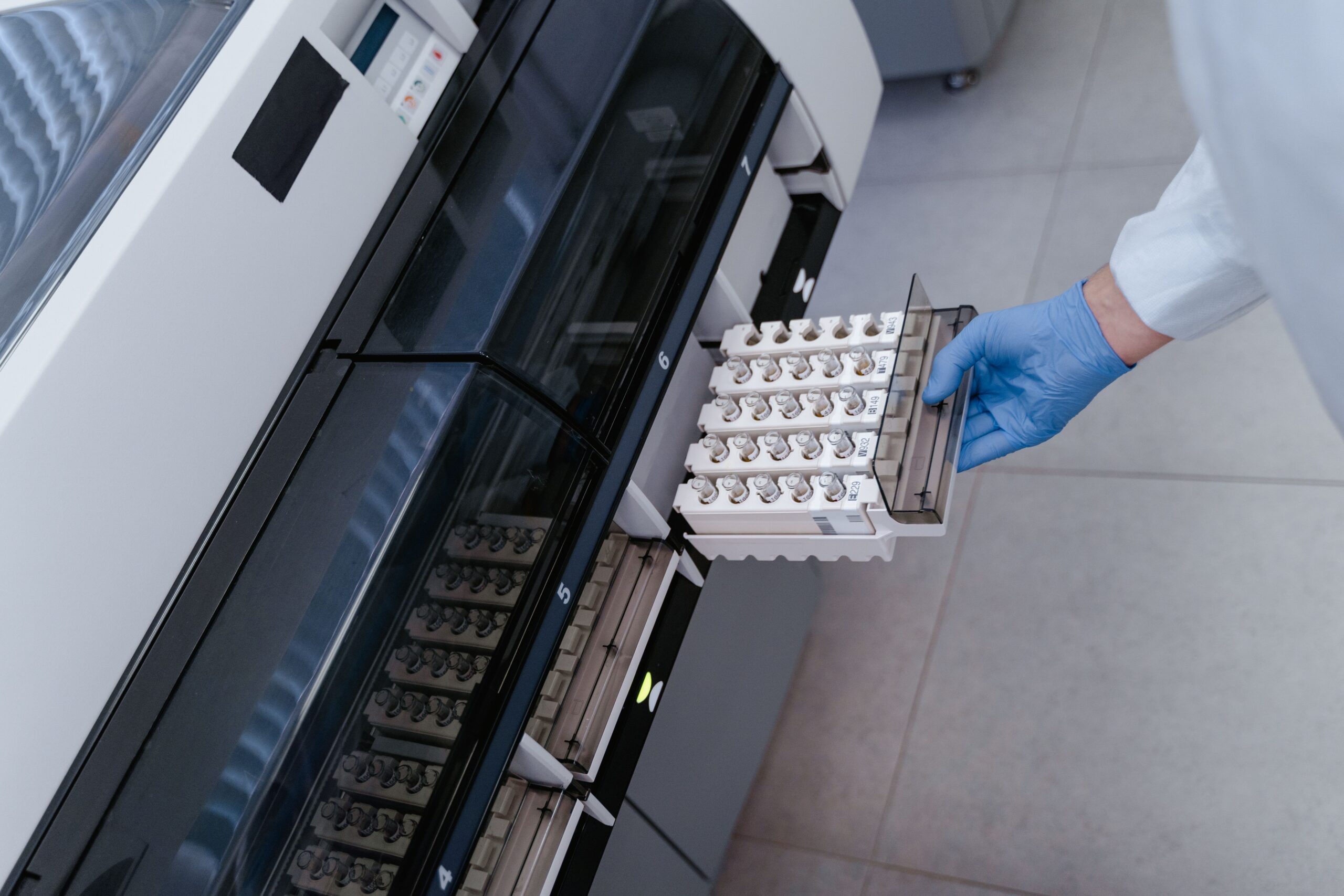
Automata is connecting AI agents with laboratory automation equipment, allowing supported processes to initiate experiments and capture structured results for further examination.
Danaher’s protein design foundry is developing a workflow involving Genedata and RFD4-Proteina, using experimental findings to inform subsequent design decisions.
These arrangements could reduce some of the administrative and computational effort between experiments, particularly where information must move repeatedly between different scientific systems.
However, an agent’s ability to select a tool or initiate an experiment does not establish that its scientific reasoning is correct. Research teams still need appropriate experimental controls, equipment calibration and procedures for reviewing unexpected findings.
Automated laboratory systems also require safeguards against incorrect instructions that could waste materials, damage equipment or generate misleading experimental results.
European healthcare providers test operational applications
Other European companies are developing Nvidia-supported applications intended to assist clinical administration, patient communication and hospital operations.
Avelios, Corti, Dedalus, Dawn Health and Sword are working with Nemotron technologies on applications that include clinical documentation, assistance for healthcare professionals and patient support.
PolyAI is developing multilingual patient communication with medical software provider Corilus, whose network covers more than 70,000 healthcare professionals across Belgium and France.
That network figure describes the reach of Corilus, not the number of clinicians already using the new PolyAI application.
Apian and VitVio are using Nvidia Cosmos and Omniverse technologies to develop digital representations of hospital operations. Such systems can help examine operational processes, but their accuracy depends on reliable information about facilities, equipment and activity.
Hospitals adopting these applications must also manage confidential information, software integration and the consequences of inaccurate outputs. Administrative assistance can create risks where generated material is inserted into clinical records or influences subsequent decisions.
Techopia previously examined Nvidia’s proposed investment in Doctolib, which concerns a particular European medical software provider. The latest programme covers distinct scientific models, treatment development and hospital operations.
The research tools and partnerships broaden the range of healthcare activities Nvidia technology can support, but commercial availability and clinical readiness remain specific to each application.
RFD4-Proteina is available for research, while Siemens Healthineers’ proposed treatment planning capabilities require further development and validation. The strongest evidence of future benefit will come from experimental results, clinical assessment and measured improvements in working healthcare environments.


