

Summary
- Nvidia's Factory Operations Blueprint, known as FOX, is now available in early access on GitHub, extending a reference architecture first introduced in May 2026.
- Siemens is integrating FOX-based agents into Intelligence Center X, with estimated potential cost savings of 20%. Its separate inspection work at Erlangen reduced calibration time by 40%, according to the companies.
- Nvidia has also made cuDSS generally available and expanded industrial simulation collaborations. The developer framework is not evidence of completed autonomous factory deployment.
Nvidia has opened early access to its Factory Operations Blueprint, giving industrial software developers a framework for connecting AI agents with production equipment, engineering information and the systems used to manage manufacturing operations.
The framework, known as FOX, is intended to support a factory manager agent that coordinates specialist software responsible for investigating faults, analysing inspection results, preparing reports and monitoring equipment.
The original blueprint was introduced in May 2026. Its availability through an early access programme on GitHub, announced at GTC Berlin on 21 October, allows developers to begin working with the framework while Nvidia and industrial technology partners expand its applications.
Siemens is integrating agents developed using FOX into Intelligence Center X, its system for coordinating industrial AI applications. The company estimates that the approach could produce cost savings of 20%, although the figure is a projection rather than an independently audited result across customer factories.
Factory agents depend on operational information
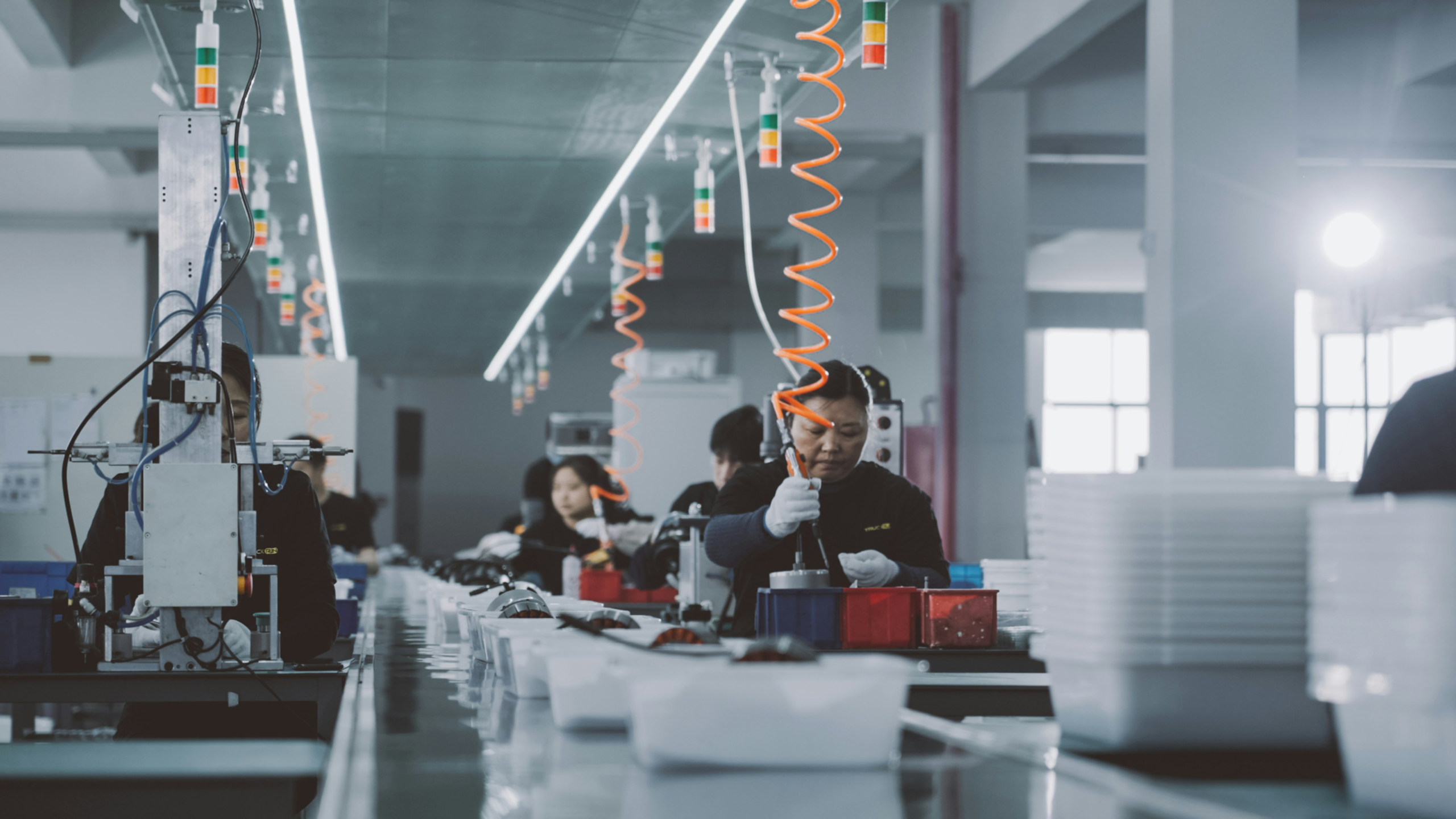
Manufacturing plants generate information through machines, inspection equipment, maintenance systems and software used to design and manage products.
Those records can help engineers identify why a production process has changed or why a manufactured component no longer meets its specification.
However, relevant information may be spread across systems that were introduced at different times and maintained by different departments.
A quality problem identified through camera inspection might require examination of equipment logs, component specifications, recent maintenance work and changes to the manufacturing process.
FOX is designed to connect those sources through agents capable of working on related parts of an investigation.
A factory manager agent could coordinate tasks between specialists examining visual inspection information, production records and engineering data, combining their findings into a proposed explanation or response.
The framework supports access to computer-aided design, product lifecycle management and simulation software, alongside conventional enterprise IT and operational technology systems.
It also allows developers to use models from Nvidia’s Cosmos and Nemotron families, with the possibility of connecting other suitable models.
These integrations provide a development architecture rather than a guarantee that the resulting agents understand every manufacturing environment.
An agent cannot reliably diagnose a machine fault when the relevant records are incomplete, incorrectly labelled or no longer reflect the equipment installed.
Industrial developers must therefore evaluate the quality of data connections as carefully as the performance of the AI models interpreting them.
Siemens connects agents with factory operations
Siemens is integrating FOX-based agents into Intelligence Center X, allowing the system to coordinate investigations and proposed responses across connected manufacturing information.
Nvidia says the approach could deliver estimated cost savings of 20%.
The announcement does not identify an independently audited deployment demonstrating that every participating factory can achieve that result.
Realised savings would depend on the processes automated, the quality of operational data and the work required to integrate the software with existing equipment.
Siemens is separately using Nvidia Cosmos Data Factory tools within Process Preparation X to generate defect images for the development of visual inspection systems.
At its Erlangen electronics factory, the companies report that the approach reduced inspection calibration time by 40%.
The two figures describe different activities. The 20% estimate relates to possible operational cost reductions from the agent-based approach, while the 40% result concerns a specific inspection preparation process.
The calibration result should not be presented as a 40% improvement in overall factory productivity or as evidence that FOX itself produced the same benefit.
Techopia previously examined Siemens’ application of AI to factory testing. The latest development adds developer access to the wider FOX architecture and additional industrial integration work.
New computing libraries support engineering simulations
Alongside factory operations, Nvidia is extending its engineering computing tools.
The company has made cuDSS generally available, providing GPU-accelerated calculations for sparse systems of equations used in scientific and industrial simulations.
These calculations appear in applications examining structural stress, fluid flow, electromagnetic behaviour and semiconductor devices.
Simulation software often needs to solve large mathematical problems repeatedly as engineers adjust a design or examine different operating conditions.
Accelerating suitable calculations can reduce the time required for some simulations, potentially allowing more alternatives to be evaluated before physical prototypes are built.
However, performance improvements depend on the structure of the calculations, the hardware involved and the proportion of an application that can use accelerated processing.
The availability of cuDSS does not establish that every engineering simulation will run faster by the same proportion.
Mercedes-Benz uses Siemens Simcenter STAR-CCM+ on Nvidia GPUs to evaluate vehicle aerodynamics, while Cadence is benchmarking automotive fluid dynamics workloads on accelerated computing infrastructure.
Autodesk is integrating Nvidia PhysicsNeMo and Warp technology into NavPack, connected with Autodesk Alias, to support simulation-informed design decisions.
These collaborations involve different software products and engineering disciplines. They are not instances of every partner deploying the FOX factory manager architecture.
Nvidia’s wider programme illustrates how AI models and accelerated numerical methods are being incorporated into established engineering applications, although each implementation requires its own assessment of performance and accuracy.
Digital twins connect design with physical equipment
Manufacturers are also using Nvidia’s Omniverse and Isaac software to create digital representations of production systems and robotic equipment.
Audi is developing simulation environments for battery production and working with Dassault Systèmes and Agile Robots on modelling mobile humanoids and factory logistics.
These systems allow engineers to test selected layouts, movements and operating conditions before making physical changes.
Simulation may reveal potential collisions, equipment placement problems or inefficient sequences that would be more expensive to discover after installation.
Yet a digital model remains an approximation whose usefulness depends on whether it accurately represents the relevant physical behaviour.
Industrial systems can include mechanical wear, material variation and unpredictable interactions with people or other equipment that are difficult to reproduce comprehensively.
Companies must therefore confirm that simulated improvements translate into acceptable results in working production environments.
Other developers are connecting engineering records with spatial representations of industrial facilities, allowing software to inspect equipment information and examine possible maintenance activities.
These applications share some underlying computing technologies but have different purposes from coordinating factory-wide AI agents.
Human oversight remains part of industrial control
Connecting agents with production information creates opportunities for faster investigations, particularly where engineers currently need to assemble evidence from several systems before diagnosing a problem.
Giving those agents authority to change equipment settings or initiate operational tasks introduces additional risks.
Incorrect changes can affect product quality, interrupt production or create unsafe conditions when machinery interacts with workers.
Manufacturers must therefore distinguish between an agent that can inspect records, one authorised to recommend actions and one permitted to execute a change.
Appropriate permissions, testing and escalation procedures will depend on the potential consequences of each activity.
The software must also operate within established industrial security arrangements, particularly where production systems contain commercially sensitive information or control equipment essential to business continuity.
FOX provides a framework through which developers can build and connect applications, but the underlying manufacturer or system integrator remains responsible for establishing safe operational boundaries.
Even a well-designed agent may provide an inaccurate recommendation if an equipment sensor fails or the information available to it does not represent the current state of a process.
Effective deployment therefore requires technical monitoring and procedures through which employees can review uncertain findings, reject inappropriate recommendations and investigate unexpected behaviour.
Nvidia’s October update establishes early access to the FOX framework and further industrial collaborations, alongside general availability of an engineering simulation library.
It does not establish that factories can immediately operate without human supervision or that the proposed cost savings have been demonstrated across European manufacturing.
The next evidence will come from developers integrating the framework with working industrial systems and measuring whether the resulting applications improve reliability, investigation time and operating costs without introducing unacceptable production risks.


