

Summary
- Bolt, Volkswagen Commercial Vehicles, Mercedes-Benz, Volvo Cars and Einride are developing autonomous mobility applications using Nvidia Hyperion or related software.
- Bolt plans to begin collecting driving data in Madrid during 2027, subject to regulatory approval, as part of a proposed European programme involving at least 25,000 future level 4-capable vehicles.
- Nvidia has introduced Halos SAFE to connect simulation, physical testing and operational monitoring into traceable safety evidence. The framework does not itself grant regulatory approval.
European vehicle manufacturers and mobility operators are extending their autonomous driving programmes using Nvidia technology, with new developments covering robotaxis, automated commercial vehicles and systems designed to validate driving safety before deployment.
Bolt has selected Nvidia’s Alpamayo software for a proposed European robotaxi service, while Volkswagen Commercial Vehicles, Mercedes-Benz, Volvo Cars and Einride are developing separate applications using the company’s Hyperion computing platform.
The programmes were outlined on 21 October at GTC Berlin, where Nvidia also introduced Halos SAFE, a framework connecting simulation, hardware testing, road trials and operational monitoring to help developers assemble evidence about autonomous vehicle performance.
The manufacturers are at different stages of development. Their involvement does not establish that the proposed vehicles have received all necessary regulatory approvals or that the planned services are commercially available across Europe.
Bolt plans a European robotaxi programme
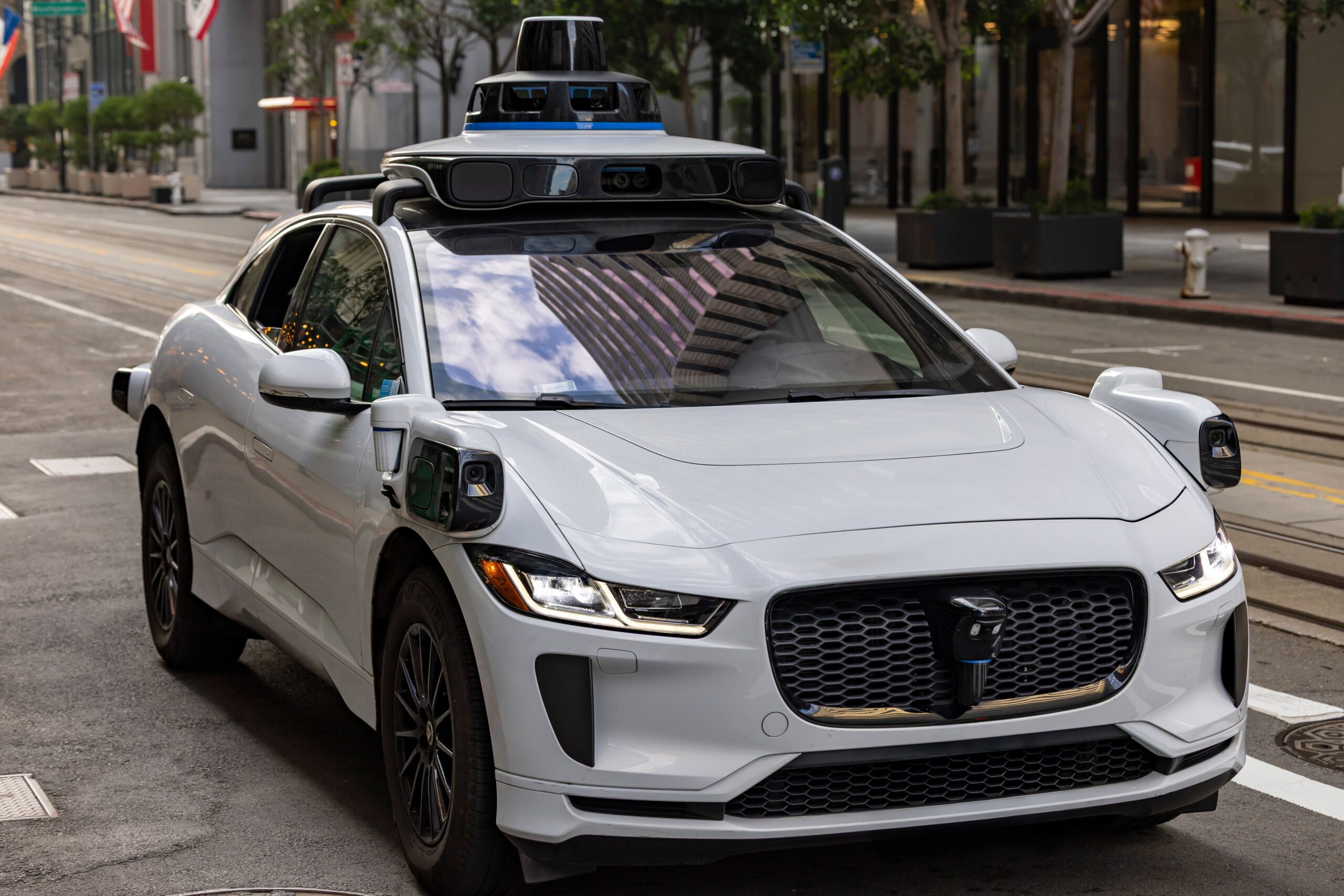
Bolt intends to develop autonomous mobility services using future Lucid vehicles equipped with Nvidia Hyperion hardware and Alpamayo autonomous driving software.
The companies plan to adapt the software for European roads and eventually support vehicles from several manufacturers, combining the driving technology with Bolt’s existing fleet management and transport operations.
Initial work includes collecting real-world driving data in Madrid during 2027, subject to regulatory approval. Germany is another priority market within the proposed European rollout.
Bolt’s longer-term plan involves at least 25,000 future Lucid vehicles capable of supporting level 4 autonomous driving.
That figure is a programme ambition, not the number of robotaxis already operating. Nvidia has not established that the vehicles have entered commercial service, that the proposed fleet has been purchased or that deployment has been authorised across the intended markets.
Level 4 automation allows a vehicle to perform the driving task without continuous human supervision within a defined operational design domain.
The permitted conditions may restrict a service to particular locations, roads, weather conditions or other operating circumstances.
A vehicle described as level 4 capable is therefore not necessarily authorised to drive autonomously everywhere. Technical capability and regulatory permission remain separate requirements.
For Bolt, operating the service would also involve maintaining vehicles, supervising fleet activity and establishing procedures for situations in which a journey cannot be completed automatically.
The economics will depend on vehicle costs, utilisation, maintenance, insurance and the amount of operational support required, rather than the driving software alone.
Manufacturers pursue different forms of automation
Volkswagen Commercial Vehicles is presenting an autonomous ID. Buzz AD platform using Hyperion to support the integration of different automated driving systems.
A common computing and sensor architecture can simplify some engineering work where developers use comparable hardware components, although individual vehicle programmes still require their own validation.
Volvo Cars is adopting Hyperion and Nvidia Alpamayo Stack alongside its established safety engineering systems, intending to develop vehicles capable of handling more demanding driving tasks.
Mercedes-Benz is extending its collaboration with Nvidia on level 3 and level 4 capabilities while preparing further advanced driver assistance functions.
Its MB.DRIVE ASSIST PRO system is approaching approval for urban point-to-point driver assistance in Germany, according to Nvidia’s announcement.
The anticipated approval does not establish that the system can operate without driver supervision in every situation. Advanced driver assistance and conditional or highly automated driving involve different responsibilities and operating requirements.
Manufacturers must distinguish the functions performed by software from those that remain the driver’s responsibility, particularly where a system can operate only under specified conditions.
Beyond passenger vehicles, Einride is developing the next generation of its autonomous freight system using Hyperion, Halos, Alpamayo and Nvidia Cosmos models.
Autonomous freight introduces additional considerations involving vehicle size, commercial routes, depot operations and interactions with other road users.
Those systems must also support procedures for dealing with equipment faults, unexpected road conditions and situations requiring assistance.
TIER IV and the Technical University of Munich plan to integrate Hyperion into development and validation of autonomous public transport systems in Germany.
The programmes illustrate different uses for common computing technology, but success in one environment does not automatically establish suitability for another.
Safety evidence connects simulation with road testing
Autonomous driving systems must respond appropriately to a wide variety of traffic situations, including events that occur too infrequently to test efficiently through ordinary road driving alone.
Simulation allows developers to reproduce selected scenarios under controlled conditions, varying road layouts, vehicle movements, visibility and the behaviour of surrounding traffic.
However, simulated performance depends on how accurately the environment represents real conditions. A system that performs well in a virtual test may encounter different sensor behaviour or road-user decisions during physical operation.
Nvidia’s Halos SAFE, the Safety Assurance Framework for Evaluation, is intended to connect simulation with software testing, hardware testing, physical road trials and monitoring after deployment.
The framework provides a structure for recording test conditions and performance against defined criteria, helping engineers trace which evidence supports particular safety claims.
Testing specialists dSPACE and IVEX are collaborating with Nvidia on the framework, alongside TÜV Rheinland.
The presence of a testing or certification organisation does not mean that every vehicle using Halos SAFE has received formal safety certification.
Vehicle manufacturers and operators remain responsible for completing the relevant validation and approval processes in the jurisdictions where they intend to operate.
Traceable evidence may support those processes, but a common framework cannot substitute for demonstrating that an individual system meets its applicable requirements.
New software expands data preparation
Nvidia has also introduced additional models and tools for developing autonomous vehicle software.
Alpamayo 2 Edge is a two-billion-parameter model intended to run on Nvidia DRIVE AGX Thor, supporting in-vehicle scene interpretation and motion planning.
The company has designed the model for processing at 10Hz, corresponding to ten updates each second under its intended operating configuration.
That specification concerns the model’s target processing rate, not a guarantee that a vehicle will respond safely to every event encountered on the road.
Other additions include AlpaJudge, which evaluates driving explanations, and Foundation4D, which supports the labelling of video collected from multiple cameras.
New Cosmos 3 Nano models are intended to generate synthetic driving data and support simulation involving multiple views and sensor inputs.
These resources could reduce some of the manual effort involved in preparing training datasets and evaluating driving software, although generated scenarios must be checked against realistic conditions.
Nvidia is also developing Alpamayo Agentic Factory, a framework connecting data preparation, model training and simulation evaluation through AI agents.
That blueprint is expected to become available in early 2027 and should not be treated as a completed generally available product.
European deployment remains a regulatory process
Automated driving programmes must satisfy requirements concerning vehicle safety, operational responsibility and permission to operate on public roads.
Those conditions can differ between European countries and between services carrying passengers, transporting goods or assisting drivers in privately owned vehicles.
Developers also need arrangements for data protection, cybersecurity, software updates and investigating incidents involving automated systems.
Reusing computing hardware and development tools may reduce some engineering effort, but it does not remove those responsibilities.
For mobility operators, commercial viability also depends on whether autonomous systems can operate reliably enough to justify their development, vehicle and support costs.
The programmes announced in Berlin provide evidence of continuing investment in European autonomous mobility, accompanied by more structured tools for evaluating performance.
Bolt’s planned Madrid data collection in 2027 will be one prospective milestone, subject to approval. Other manufacturers must complete their own development and validation before the proposed systems can support routine services.
Nvidia’s platform gives participants shared technology for computing, model development and safety testing, but its commercial contribution will depend on demonstrable vehicle performance and authorisation within each intended operating environment.


