Summary
- Monopulse has raised over €2 million from Lithuanian and international investors.
- Its reconnaissance platforms are designed to operate where positioning and communications are disrupted.
- Production capacity and expansion into additional NATO markets are priorities.
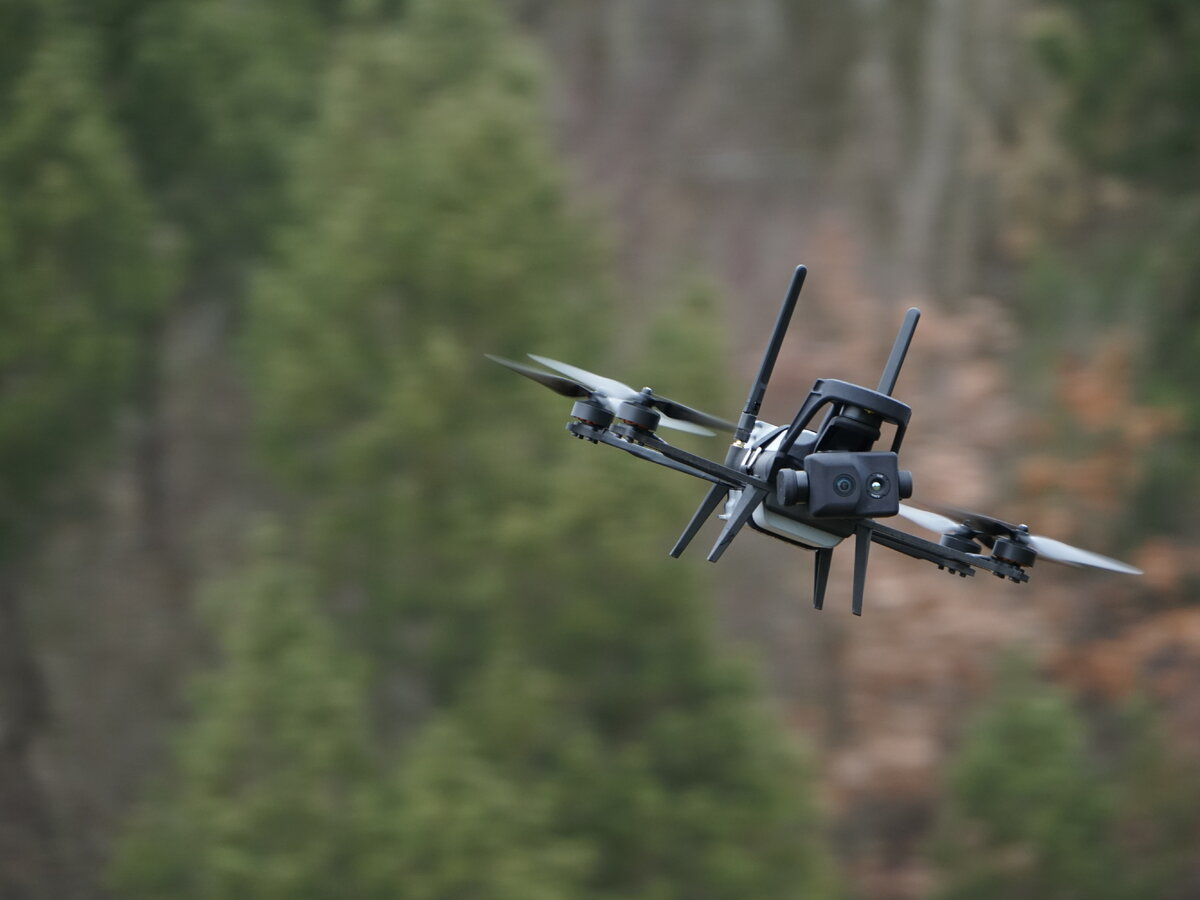
Danish-Lithuanian drone developer Monopulse has raised more than €2 million to increase production of reconnaissance aircraft and strengthen research into systems able to operate despite disrupted navigation and communications. The funding round brings together Coinvest Capital, Plug and Play, NGL Ventures and other investors, as defence customers look for equipment that can remain useful in environments affected by electronic warfare.
The business trades under the Monopulse brand through MNP Technologijos and says its technology is already used by Lithuanian and Danish armed forces. Its products include Falcon reconnaissance drones and a Hydrohex platform, with engineering work spanning sensors, electronics, computer vision and autonomous control. The company intends to expand into further NATO markets as its production capacity grows.
Maintaining a drone's performance in a contested electromagnetic environment is a different task from making an aircraft fly reliably in ordinary conditions. Satellite navigation signals can be jammed or manipulated, radio links may be interrupted, and the operator may be unable to provide continuous commands. A useful system must detect degraded conditions, avoid unsafe responses and determine what tasks can continue within prescribed limits.
Monopulse says it combines sensor fusion, autonomy and communications technology to support missions when signals are unavailable. Those claims have to be assessed in the context of the aircraft, payload, threat conditions and operating doctrine. A system might maintain stable flight after losing positioning data without being able to provide reliable surveillance or return safely to an intended recovery point.
The company has disclosed that its equipment is being used by defence customers, a stronger market signal than a prototype exhibited at a trade show. It has not, however, released detailed independent test results establishing performance across different forms of jamming, spoofing or adverse weather. Nor does an existing purchase order specify the scale of fleet deployment or the amount of recurring maintenance and software revenue.
The new capital is expected to help industrialise manufacturing, an increasingly important consideration for small defence technology firms. Customers need repeatable quality and access to spare parts, batteries, sensors and replacement airframes, especially when equipment is used intensively. The manufacturing bill may be sensitive to imported electronic components, creating supply constraints beyond a developer's control.
Monopulse's combination of in-house hardware and software development can help its engineers adjust designs rapidly in response to field feedback. The same model places demands on a relatively small team, which must balance product modification, certification, cybersecurity, documentation and production planning. Increasing output without stabilising the build process can cause delivery delays or inconsistent hardware configurations.
Investor NGL Ventures has disclosed that 68 business angels contributed €560,000 through its syndicate. Coinvest Capital is among the investment participants, and the company's stated plan includes research and development and expansion into Scandinavia and other European markets. The financing should be distinguished from defence procurement commitments: investment gives the company more capacity, while contracts depend on customer requirements and acquisition decisions.
There is a policy dimension in the demand for European-made systems capable of surviving interference. Defence customers increasingly want shorter update cycles and resilient supply chains as they seek to adapt lessons from current conflicts. Smaller suppliers can contribute specialised designs, but integration with communications networks, training, export controls and support systems remains essential.
Monopulse now has capital to build more aircraft and develop their capabilities. Evidence of repeat orders, production throughput and independently assessed performance under interference will show whether the technology can extend from specialist deployments into sustained service.
Defence equipment purchasers increasingly evaluate how rapidly firmware and mission software can be updated after new threats appear. A drone purchased for one communications environment may need changes within months if interference methods evolve. A supplier that provides reliable configuration management and field support can retain value beyond the initial airframe sale. It also carries responsibility for ensuring that updates are tested rather than introducing new failures.
Autonomous behaviour should not be confused with immunity from electronic attack. If communication is lost, an aircraft may have to follow pre-programmed rules, but the usefulness and safety of those rules depend on the mission and surrounding airspace. Any claim about resilience should identify the conditions tested and the functions that remained available. Countermeasures and threats both change over time.
For customers, long-term value also depends on industrial consistency. Drones produced in small engineering batches can contain component variations that complicate repairs and software compatibility. Repeatable manufacturing records and parts availability can be as important to operational users as the latest sensor or autonomy feature. The funding gives Monopulse more room to tackle that less visible part of scaling.