

Summary
- Schneider Electric has deployed software-defined medium-voltage switchgear in a live Equinix data centre, with pilots continuing through 2027.
- The company says standardised hardware and software-configured controls can cut ordering and manufacturing time by up to two thirds and halve commissioning time.
- Moving protection and control functions into software may simplify deployment, but it also makes software assurance, cybersecurity, and update management part of safety-critical electrical operations.
Some of the slowest components in an AI data centre have little to do with processors or software, which is why Schneider Electric is trying to turn part of the electrical distribution system from bespoke engineered hardware into a standardised platform configured increasingly through code.
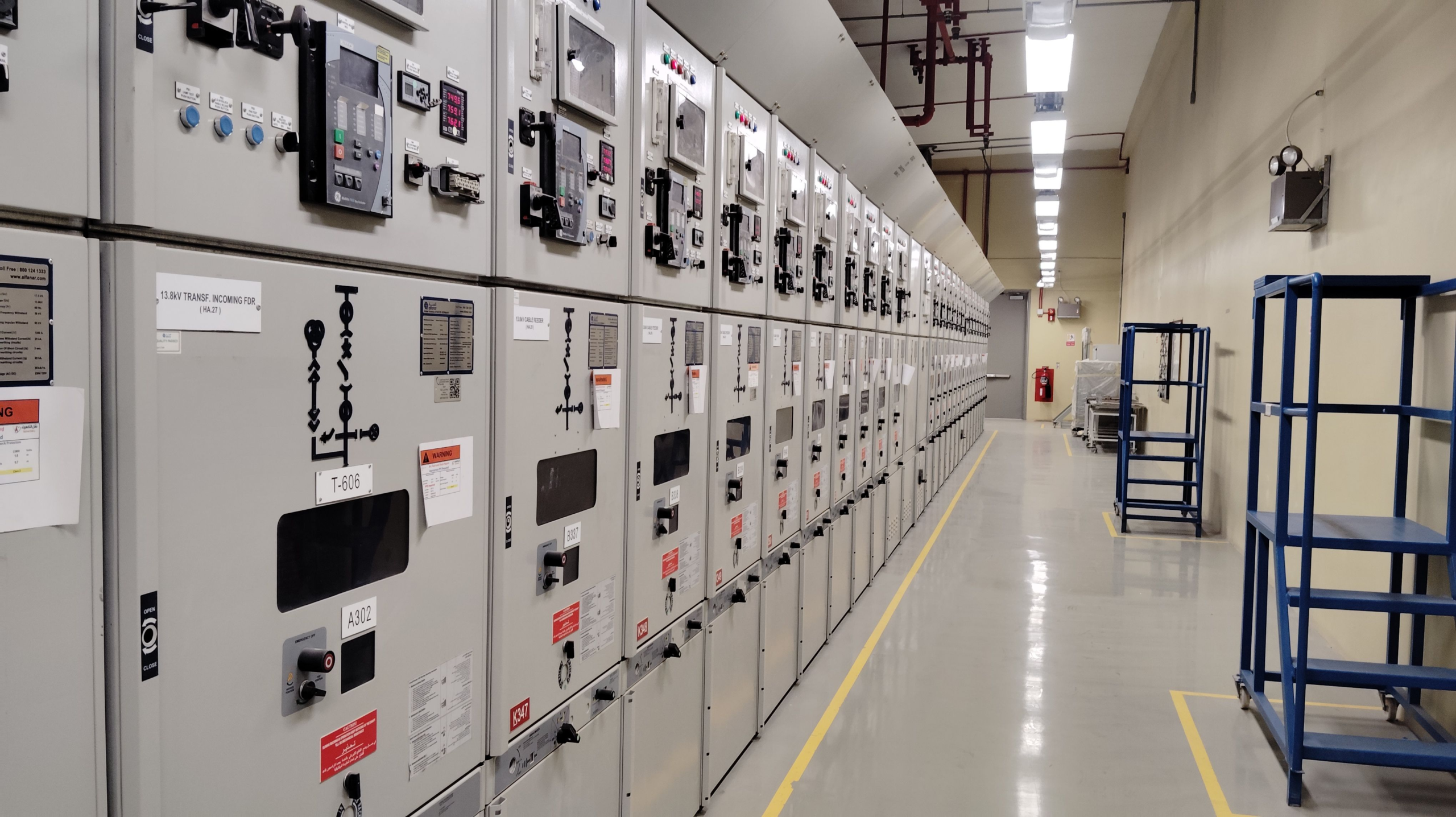
Schneider Electric has deployed what it describes as the first fully software-defined medium-voltage switchgear architecture in a live Equinix colocation facility. The location has not been disclosed, and the equipment remains in a pilot phase rather than broad commercial deployment.
Medium-voltage switchgear sits between incoming electrical infrastructure and lower-voltage systems further inside a site, controlling and protecting the distribution of electricity while isolating faults when necessary. In a large data centre, it is part of the less visible electrical machinery that has to be designed, manufactured, tested, installed, and commissioned before servers can be energised.
Conventional installations are often engineered around individual projects, creating a long chain of bespoke drawings, components, wiring, factory testing, and on-site acceptance work. Schneider’s approach replaces more of that customised architecture with standardised hardware, while protection, automation, metering, monitoring, and control functions can increasingly be configured through software.
Standardisation targets construction time
Schneider says its software-defined architecture can make ordering and manufacturing up to three times faster and commissioning and on-site acceptance testing up to twice as fast compared with conventional engineered-to-order medium-voltage switchgear. Those figures come from the company’s own comparison rather than independent field benchmarking, so the Equinix pilot will be more informative once operational evidence becomes available.
The hardware simplification is substantial on paper. In a 20-panel comparison cited by Schneider, the software-defined configuration used 87% less control wiring, 91% fewer terminals, and 85% less copper in that wiring. Removing physical connections reduces the number of components that need to be specified, installed, checked, and potentially fault-found during construction.
At a time when operators are trying to build AI infrastructure more quickly, shaving weeks from internal electrical deployment has an obvious commercial appeal. Accelerators can become obsolete more quickly than traditional data-centre assets, while customers seeking large amounts of GPU capacity increasingly care about when the power becomes available rather than merely whether a facility has been announced.
Faster switchgear does not solve the larger electricity problem outside the data centre. Standardised equipment cannot accelerate a transmission connection, create generation capacity, or shorten every planning and construction process upstream of the building. It addresses one part of the schedule inside the site rather than removing grid constraints altogether.
Electrical upgrades become software changes
The more consequential change may arrive after installation. Schneider says capabilities can be added through over-the-air software updates without physical modifications, allowing operators to change or improve parts of the switchgear’s functionality while retaining a standard hardware platform.
That resembles a broader trend across industrial equipment, where software is taking over functions previously fixed into individual hardware configurations. Standard platforms can support several use cases, manufacturers can introduce features later in the asset’s life, and operators may avoid replacing equipment simply because control requirements have changed.
Electrical infrastructure, however, has a different tolerance for failed updates than ordinary workplace software. Switchgear protects systems carrying substantial electrical loads, which means authentication, testing, rollback procedures, configuration management, and access control become part of the safety and resilience case once more behaviour is determined by software.
The commercial advantages therefore arrive with another form of operational dependency. Operators that previously treated a medium-voltage line-up principally as electrical equipment will need to think more explicitly about software versions, update governance, cybersecurity, vendor support, and the consequences of configuration errors over a service life measured in years rather than software release cycles.
The pilot runs ahead of wider availability
Equinix is using the technology in an operational colocation environment, giving Schneider a chance to test standardisation against the safety, uptime, and maintenance expectations of a live data centre rather than a demonstration facility. Pilot programmes are expected to continue through 2027, with broader availability planned for 2028.
Schneider intends to extend the approach across more of its medium-voltage portfolio, while its wider data-centre strategy is also addressing higher-density power delivery and liquid cooling. The common problem is that AI infrastructure is forcing operators to reconsider systems that previously changed on a slower timetable than servers.
The processor cycle has accelerated dramatically, yet switchgear, substations, cooling plant, utility connections, and buildings cannot be replaced whenever a new GPU generation arrives. Standardising more of that physical layer, while making some behaviour configurable in software, is one way suppliers are trying to reconcile long-lived infrastructure with much faster changes in computing equipment.
Whether Schneider’s claimed time savings survive deployment across different countries, electrical standards, facility designs, and operating environments will only become clear as the pilots expand. The Equinix installation nevertheless moves software-defined infrastructure into a part of the data centre where software failure has decidedly physical consequences, making speed only one measure of whether the approach works.


