Summary
- SURF has selected Eurofiber Cloud Infra to host the Netherlands’ first large-scale AI Factory in Groningen.
- The wider programme has €200 million available from EuroHPC, the Dutch government, and regional funding.
- Residual heat will feed district heating, while the proposed cooling system will use no potable or surface water.
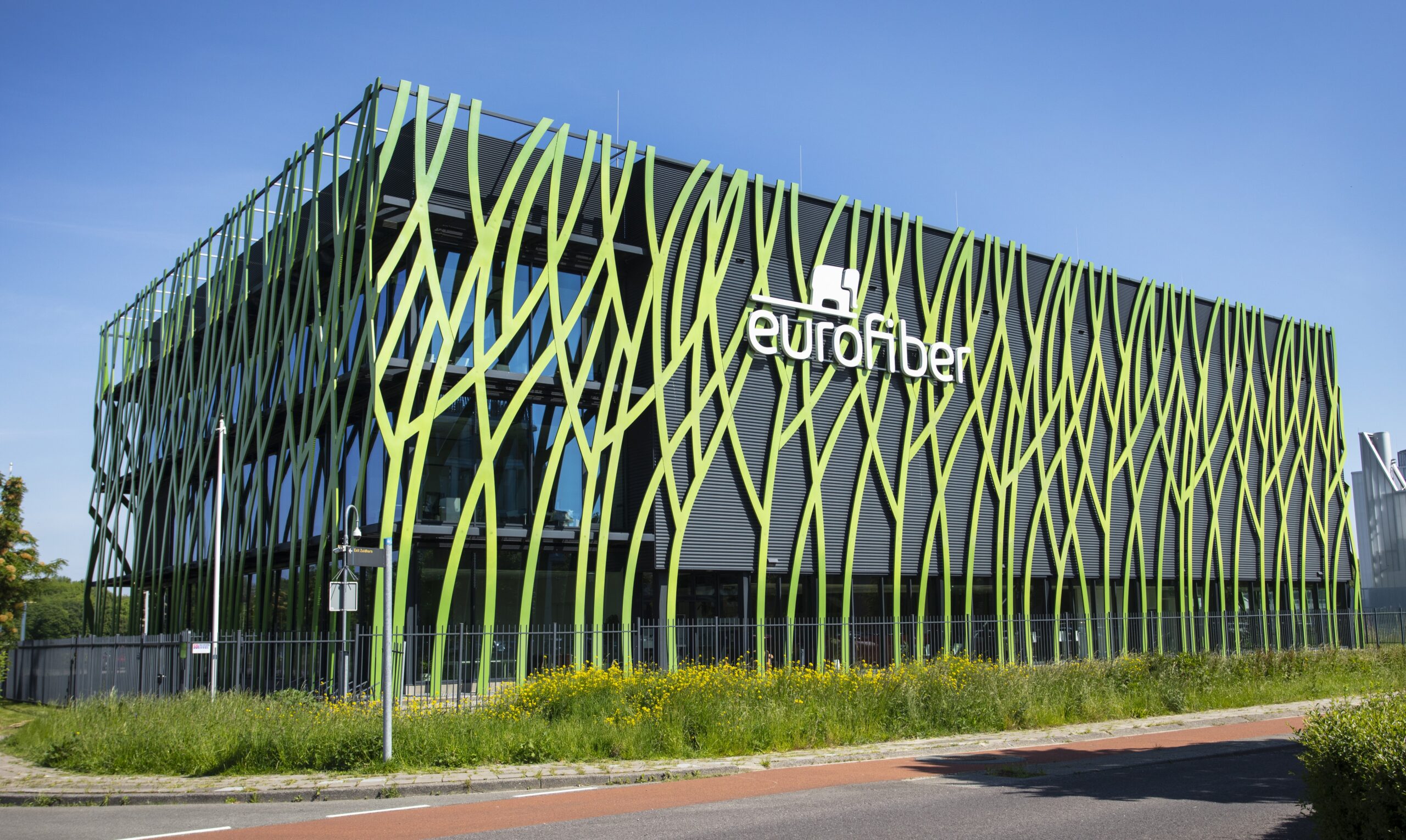
Eurofiber will host the Netherlands’ first large-scale AI Factory at its Groningen data centre, giving one of Europe’s publicly backed compute programmes a physical home as governments try to expand artificial-intelligence capacity without simply recreating dependence on US hyperscalers.
Dutch research and education network SURF has awarded Eurofiber Cloud Infra the contract to provide high-performance computing data-centre services for the facility. The site is intended to serve researchers, universities, government bodies, and businesses by combining a supercomputer with specialist expertise and data infrastructure for developing and running AI applications.
The wider programme has €200 million available after EuroHPC awarded €70 million in European funding, alongside €70 million from the Dutch government and €60 million through Nij Begun, the regional investment programme for Groningen and North Drenthe.
Eurofiber expects the data-centre work to be completed during 2027, with the AI supercomputer fully operational in early 2028. The contract fixes the physical location, energy model, and infrastructure architecture behind an attempt to turn European AI sovereignty from policy language into usable compute.
Compute policy reaches the electricity grid
Large accelerator clusters require substantial electricity supply, while grid congestion has become a constraint on new data-centre development in several European markets. Groningen has been selected partly because the region retains capacity for significant digital infrastructure while many other locations face tighter network conditions.
Eurofiber says it has designed the facility with regional grid operators so the AI installation does not simply become another large, inflexible load. Battery energy storage and other congestion-reduction measures are planned, while direct cooling for the AI processors is intended to operate without potable or surface water.
Nearly all excess heat is expected to feed the WarmteStad district-heating network, supplying approximately 2,000 homes in Groningen. Eurofiber estimates that using the waste heat could reduce carbon emissions associated with that heating supply by around 85%.
Those design choices arrive as the environmental cost of European computing infrastructure moves from voluntary reporting towards regulation. the EU is preparing a common sustainability rating system for data centres, alongside work on minimum performance standards covering energy, water, and heat reuse.
Sovereignty still depends on usable capacity
The Dutch project also shows what digital sovereignty looks like once it reaches physical infrastructure. SURF has described the AI Factory as a way to develop sensitive or strategically important workloads without relying entirely on American or Chinese platforms, with access built around public values including transparency, collaboration, and control over data.
A European data centre does not become technologically independent simply because it sits on European soil. Accelerators, networking equipment, software stacks, and model ecosystems remain internationally interdependent, while the commercial usefulness of an AI Factory will depend on whether organisations can obtain capacity when they need it.
The Commission’s wider AI Factory programme is intended to connect supercomputing resources with universities, startups, SMEs, industrial businesses, and public organisations rather than keeping high-performance computing confined to academic research. That broad access could be useful to organisations unable to justify buying their own GPU clusters, particularly where data location or procurement requirements complicate use of conventional hyperscale cloud services.
Commercial competition will nevertheless continue to move quickly. Cloud providers and specialist AI infrastructure companies are adding accelerator capacity of their own, while European telecoms and infrastructure groups are pursuing sovereign-compute strategies. Deutsche Telekom is among those preparing larger-scale European compute proposals.
Construction is only the first test
Public funding can pay for a supercomputer and Eurofiber can provide power, cooling, and the data-centre environment, but the facility will ultimately be judged by how much useful work passes through it. Allocation, pricing, technical support, and integration will matter as much as construction.
Smaller organisations need more than raw GPU hours when they lack teams able to train, optimise, or deploy models on supercomputing infrastructure. Public bodies may also need new procurement and governance arrangements before sensitive workloads can reach the machines.
Those issues will become more visible as the facility moves towards completion in 2027 and operation in early 2028. By then, Europe’s AI infrastructure market will be larger and more competitive, leaving Groningen as an early test of whether publicly backed sovereign compute can become working economic infrastructure rather than simply another strategic asset.