Summary
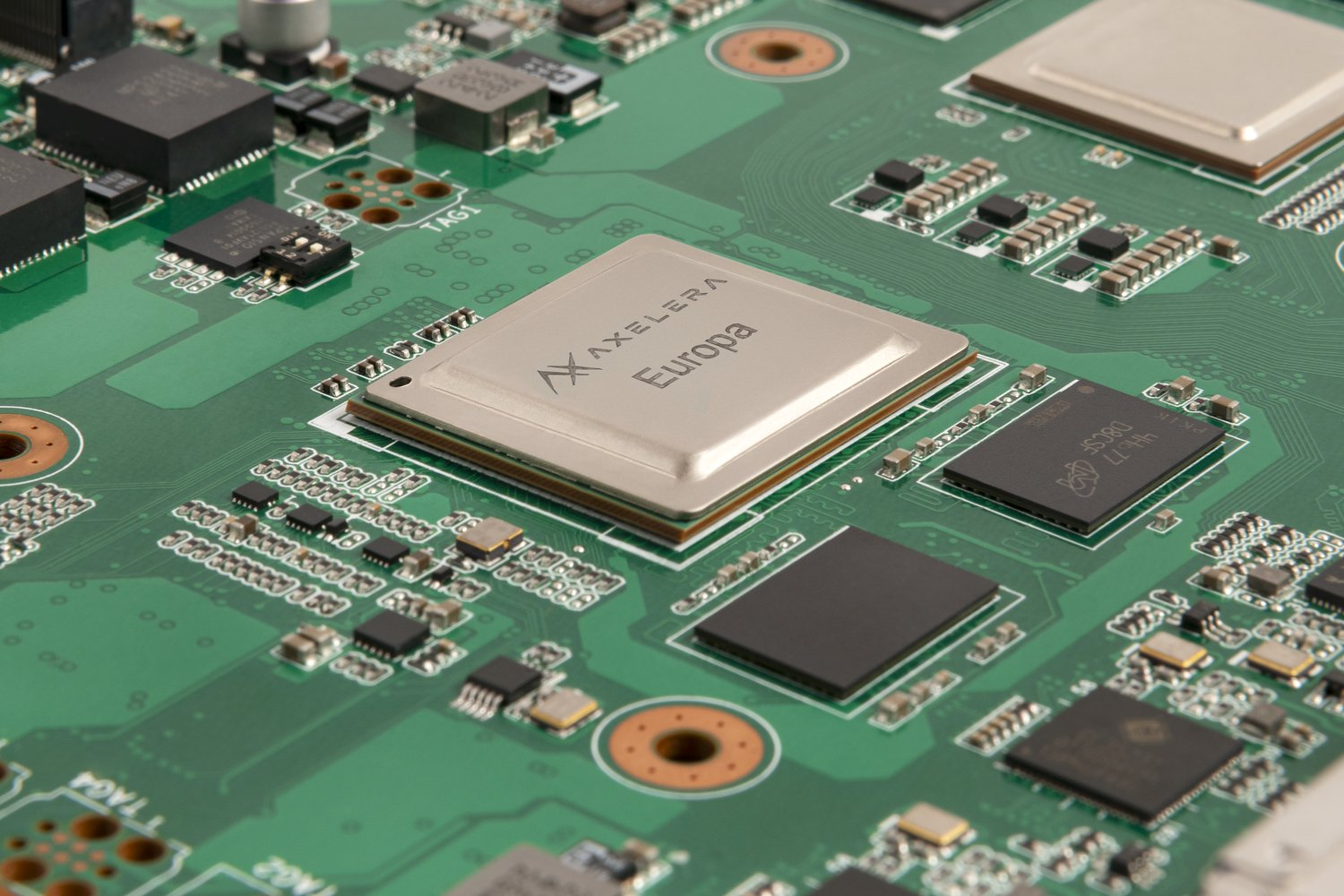
- Eindhoven-based Axelera AI has introduced its second-generation Europa accelerator for enterprise and physical-AI inference workloads.
- Dell, Supermicro, and European AI-infrastructure projects are among the routes through which the company intends to put the processor into systems.
- Axelera's efficiency comparisons remain vendor claims, leaving shipping volume, measured performance, and customer deployment as the harder tests.
Eindhoven-based Axelera AI is moving its second-generation Europa accelerator towards commercial deployment, extending a European semiconductor business that began with edge AI into enterprise servers and larger computing environments. The company is working with systems and infrastructure partners including Dell Technologies and Supermicro, while European AI-factory projects are preparing to evaluate or integrate its technology. The development gives Europe’s semiconductor policy a more practical test than another processor roadmap: whether locally developed accelerators can enter systems customers are prepared to buy and operate.
Europa is designed primarily for inference — running models after they have been trained — rather than the enormous training clusters associated with frontier-model development. Axelera lists 629 trillion operations per second of INT8 performance and a 45-watt thermal design point for the processor, alongside expanded memory bandwidth and support for generative AI, computer vision, robotics, and other workloads. Those figures come from the company and should be treated as product specifications rather than independent performance measurements.
Axelera has also published comparisons claiming higher performance per watt and per dollar than competing platforms. Such figures depend heavily on model choice, software configuration, precision, utilisation, and the competing hardware selected, while some of the company’s earlier Europa benchmark material relied on projected or simulated results before production availability. Commercial deployment will provide a more meaningful test once customers can compare shipping systems across sustained workloads.
The integration route matters because specialist accelerators rarely succeed as standalone chips. Customers need compatible servers, drivers, model support, monitoring, procurement channels, and long-term software maintenance, while technology teams have to fit new hardware into data centres already designed around established processor ecosystems. Axelera’s use of partner systems and its Voyager software tooling is therefore as relevant to adoption as the headline TOPS figure.
European compute policy reaches procurement
The expansion arrives as the EU puts more money behind shared AI infrastructure through the EuroHPC programme. National and regional AI factories are being developed to give startups, researchers, public bodies, and industrial users access to computing resources and support, while a separate gigafactory initiative is intended to create much larger installations for frontier-model work. That spending creates a possible European market for accelerators, networking, storage, and supporting software alongside the better-known GPU suppliers.
Italy’s IT4LIA AI Factory is among the initiatives preparing to validate Europa hardware, with Axelera presenting the project as a route into real high-performance AI workloads. The company is also participating in infrastructure partnerships elsewhere in Europe. Validation inside a publicly backed computing facility does not guarantee commercial scale, but it creates a setting in which European hardware can be tested against demanding workloads rather than discussed only in industrial-policy terms.
Power consumption is another part of the proposition because AI infrastructure is being constrained by electricity, cooling, and rack density as well as processor availability. Inference runs continuously once models reach production, which can make the cost of serving requests as important as the one-off expense of training a model. Hardware able to run useful models inside existing servers or edge environments may therefore address a different market from the largest GPU clusters, particularly where latency or data control favour local deployment.
Axelera’s architecture uses digital in-memory computing intended to reduce the movement of information between processing and memory, one source of energy consumption in conventional systems. The company is attempting to exploit that design across smaller edge systems and larger enterprise installations rather than competing only for one class of workload. Whether the architecture produces a durable advantage will depend on measured performance across models customers actually use, not simply on laboratory or vendor comparisons.
Software still determines whether silicon travels
Alternative accelerators have to contend with an AI software market built around incumbent GPU tooling, which makes developer experience and compatibility commercially important. Axelera’s Voyager stack is intended to compile and deploy supported models on its hardware, while a growing model catalogue gives customers a route from existing frameworks into its accelerators. The business is consequently selling a combination of silicon, software, server validation, and partner integration rather than expecting buyers to adopt a processor in isolation.
Europa also moves Axelera beyond the lower-power edge systems associated with its first-generation Metis platform. The company has a further architecture, Titania, aimed at heavier high-performance computing, giving it an intended path from embedded and physical AI towards larger compute estates. Such roadmaps are common in semiconductors, although each generation still has to arrive on time, achieve acceptable manufacturing yields, and retain software compatibility.
Europe’s AI-hardware ambitions will ultimately be judged through procurement rather than the number of companies able to announce accelerator designs. Customers need to know that systems can be bought, supported, upgraded, and kept compatible with new models over several years. Europa gives Axelera an opportunity to demonstrate those capabilities, but the useful benchmarks now move from architecture slides towards production silicon, repeat orders, and workloads running outside the company’s own test environment.