

Summary
- CPP Investments now controls about 51% of atNorth, with Equinix holding around 34% and Partners Group about 10%.
- atNorth operates eight Nordic data centres and has further sites and capacity under development across the region.
- The transaction concentrates more capital behind Nordic AI infrastructure as access to power, cooling, and grid capacity becomes a competitive constraint.
The ownership of one of the Nordic region’s largest independent data-centre platforms has changed hands as institutional investors and infrastructure operators compete for the physical capacity needed to support Europe’s expanding AI workloads.
atNorth is now controlled by Canada Pension Plan Investment Board following completion of a $4 billion acquisition alongside Equinix, with Partners Group retaining a minority position after deciding to reinvest. The deal was first announced in February and has now closed after the required approvals.
CPP Investments will hold roughly 51% of the business after committing $1.3 billion, while Equinix will own about 34% following a commitment of $895 million. Partners Group will take approximately 10% with a $260 million investment, and the remainder stays with atNorth insiders who rolled over part of their holdings.
The transaction is supported by a $4.1 billion financing package, equivalent to about €3.6 billion, underwritten by European and Canadian lenders. The funding covers both the acquisition and further investment in atNorth’s expansion, making the deal more than a simple transfer of ownership.
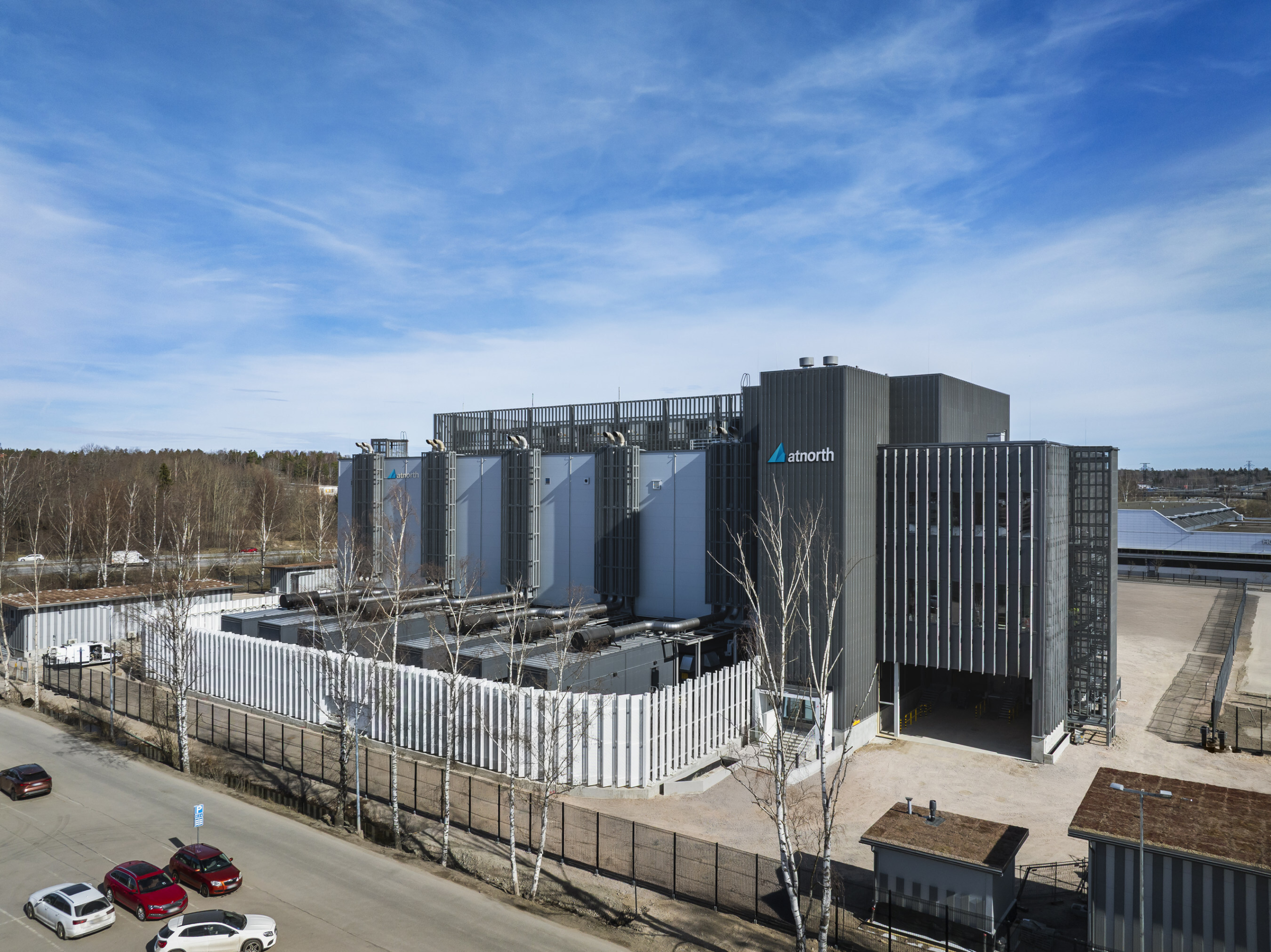
Headquartered in Iceland, atNorth currently operates eight data centres across Denmark, Finland, Iceland, Norway, and Sweden, while new facilities are under development in Finland, Denmark, Sweden, and Norway. The company has also been expanding existing sites and building a wider pipeline aimed at enterprise, hyperscale, AI, cloud, and high-performance-computing customers.
When the acquisition was announced in February, atNorth said its active development pipeline amounted to roughly 800MW expected to come online over five years, alongside another 1GW of secured power for potential future expansion. Several facilities support liquid cooling for denser computing equipment increasingly associated with AI training and inference.
Power is becoming part of the product
The acquisition lands as the economics of European data-centre development are being reshaped by access to electricity. Securing enough power, obtaining timely grid connections, and building cooling systems capable of supporting denser equipment have become central to where new computing capacity can realistically be deployed.
The Nordics enter that contest with relatively cool climates, established renewable generation, and locations where large industrial power connections can sometimes be developed more readily than in Europe’s most congested metropolitan markets. Those advantages do not make development simple, but they have made the region increasingly attractive to operators trying to place large blocks of computing capacity outside traditional hubs.
That pressure is already producing new markets around access to power and grid capacity, as data-centre developers, energy companies, landowners, and infrastructure investors search for sites capable of supporting sustained demand. AI has intensified the competition because its economics favour clusters of expensive accelerators that consume large amounts of electricity and need to run at high utilisation.
atNorth’s proposition consequently combines conventional colocation with high-density infrastructure, renewable-energy integration, and heat reuse. Those characteristics become commercially important when customers are trying to increase compute density without losing control of energy costs or thermal limits.
The acquisition also gives Equinix access to a sizeable Nordic expansion platform without absorbing atNorth fully into its own brand. atNorth says it will continue operating independently, although Equinix brings global enterprise relationships and connectivity infrastructure that could help direct customers towards the Nordic estate.
Infrastructure capital follows AI demand
For CPP Investments, the transaction adds another large digital-infrastructure asset to a portfolio built around long-duration capital. Data centres suit that model when customer demand and power availability can support high utilisation over many years, although the present AI investment cycle also creates a risk that capacity is developed against expectations that prove difficult to sustain.
The changed ownership structure since February is noteworthy in that respect. The original agreement envisaged CPP Investments owning about 60% and Equinix roughly 40%, whereas the completed transaction brings Partners Group back in with around 10% and leaves a minority position with internal stakeholders. Even so, the underlying strategy remains centred on giving atNorth enough financing to keep building.
Europe’s infrastructure market is increasingly separating companies that can announce ambitious AI capacity from those that can secure land, power, financing, cooling, equipment, and customers. The atNorth deal bundles several of those scarce ingredients together, particularly because the operator already has facilities running rather than relying entirely on proposed campuses.
For enterprises buying AI infrastructure, that distinction becomes more important as deployment expands beyond small clusters and cloud experiments. Organisations running high-density private infrastructure or hybrid workloads need locations where power and connectivity are dependable, while sovereignty, latency, and cost can push some workloads towards regional facilities rather than a single hyperscale cloud region.
The acquisition does not settle how much AI capacity Europe will ultimately need, nor whether the current pace of investment will generate acceptable returns across the sector. It does, however, put one of the Nordic region’s more developed platforms behind owners with substantial capital and established infrastructure businesses, while giving atNorth financing to turn more of its secured power and development pipeline into operating capacity.


