

Summary
- Schwarz Group plans to invest €5.6bn in a northern German datacentre reaching 240MW of connected load by 2033.
- The site could later expand towards 1GW as the group builds cloud and AI capacity for Germany and Europe.
- The investment extends Schwarz’s move from major technology buyer to infrastructure provider through Schwarz Digits and STACKIT.
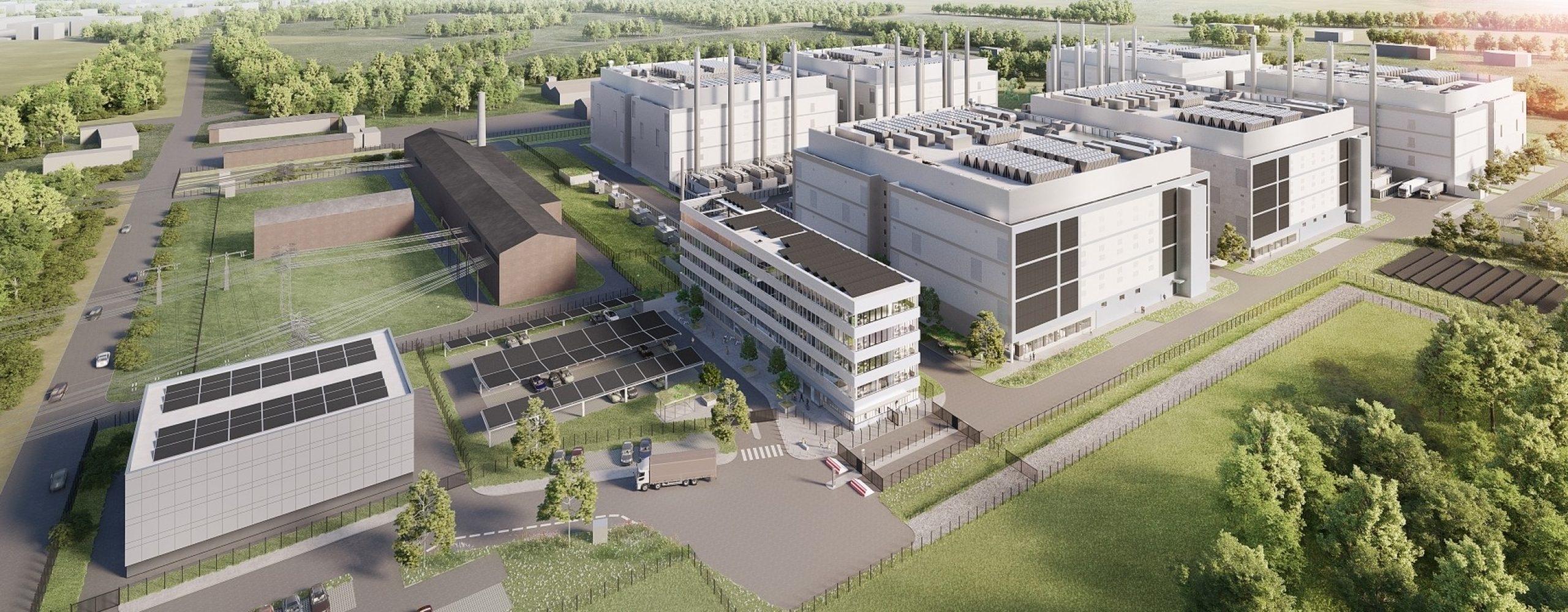
Schwarz Group, the German retail conglomerate behind Lidl and Kaufland, plans to invest €5.6 billion in another large datacentre as it expands a digital infrastructure business that is becoming increasingly distinct from its supermarket operations. The facility in Mecklenburg-Western Pomerania is expected to reach 240MW of connected load by 2033, with the group identifying potential for expansion to 1GW by 2045.
The investment is intended to add cloud and artificial intelligence capacity in Germany and Europe through Schwarz Digits, the group’s technology division. Although much of Schwarz’s computing estate was originally developed to serve its own retail operations, the business now sells cloud, cybersecurity, AI, communications, and workplace technology to external organisations.
A 240MW facility already sits well beyond the scale of an ordinary enterprise datacentre, while a later expansion towards 1GW would make access to electricity one of the defining constraints on development. AI workloads are increasing rack density and power demand, pushing grid connections, generation, cooling, and heat reuse much further into the economics of computing infrastructure.
Schwarz has unusually deep pockets for that contest. The wider group generated €185.6 billion of revenue in its 2025 financial year and employed more than 600,000 people, while its IT and digital division increased revenue by 15.8% to €2.2 billion.
A retailer is becoming an infrastructure operator
Schwarz Digits’ STACKIT cloud began in 2018 as an internal platform for managing the group’s own data and systems before opening to external customers in 2022. The company now markets STACKIT around European jurisdiction, data control, and reduced dependence on non-European hyperscalers.
That proposition increasingly extends beyond data residency. Schwarz Digits has assembled cloud, cybersecurity, communications, and enterprise software capabilities intended to run as a more integrated European technology stack, while public-sector and regulated organisations form part of the addressable market.
Physical capacity has consequently become central to the commercial strategy. Schwarz Digits is already developing a 200MW datacentre on a former power-station site in Lübbenau, Brandenburg, which it says could accommodate as many as 100,000 GPUs and increase the group’s current computing capacity severalfold.
The Mecklenburg-Western Pomerania project adds another large site rather than replacing that programme. Taken together, the investments suggest Schwarz intends to compete through ownership of the underlying infrastructure rather than assemble a European-facing service on capacity rented entirely from established US hyperscalers.
Power remains the limiting resource
European companies and governments are putting more weight on where data is stored, which jurisdiction governs cloud services, and whether critical workloads can continue operating without complete dependence on infrastructure controlled elsewhere. AI adds another source of demand because training and serving larger models requires concentrated computing resources.
Yet datacentre development increasingly leads back to electricity. As Europe’s AI infrastructure build-out is already showing, access to grid connections can determine where facilities are viable irrespective of customer demand.
Schwarz’s proposed expansion from 240MW in 2033 to as much as 1GW by 2045 illustrates the timescale involved. The later figure is potential connected load rather than committed near-term capacity, and reaching it would depend on grid reinforcement, generation, planning, cooling infrastructure, and local acceptance as well as servers and accelerators.
The group is already using its Lübbenau project to demonstrate how it wants to handle some of those constraints. Schwarz Digits says the brownfield site will use renewable electricity, direct liquid cooling, recycled construction materials, and waste-heat recovery into the local district-heating network.
Those measures do not remove the underlying electricity demand, but they show how hyperscale projects are becoming more closely tied to regional energy systems. Data infrastructure is no longer simply another commercial property category when individual sites can place industrial-scale loads on local grids.
Schwarz also approaches cloud competition from an unusual position because its own retail, logistics, and corporate systems provide an enormous internal customer. That gives STACKIT an anchor workload while the group tries to persuade external organisations that European ownership, infrastructure control, and sovereignty justify moving services away from established hyperscalers.
The €5.6 billion commitment therefore extends beyond another construction project in northern Germany. Schwarz is using retail-generated capital to build a European cloud and AI infrastructure business with its own physical estate underneath it, while the scale of the proposed site shows how quickly digital sovereignty becomes a question of power, land, and long-duration industrial investment.


