

Summary
- Echelon and Trinovium will develop direct-to-chip cooling fluids and thermal-management systems for dense computing.
- Their work extends into corrosion, contamination, microbial growth, and monitoring coolant condition.
- Rising processor density is pulling chemical management and fluid monitoring into the data-centre supply chain.
As AI servers concentrate more computing power into each rack, keeping a data centre operational is becoming partly a problem of fluid chemistry, because removing heat from processors is useful only when the coolant itself remains stable, clean, and predictable throughout the life of the equipment.
Irish-headquartered Echelon Data Centres is working with Trinovium, a subsidiary of Trinity Biotech, on liquid-cooling technology for AI and other high-density computing. The programme will initially cover direct-to-chip cooling fluids, thermal-management systems, and modular cooling arrangements.
The collaboration brings an unusual discipline into data-centre engineering. Trinovium was created to apply expertise in high-purity fluid manufacturing and analytical technology to computing infrastructure, where corrosion, particulates, microbial growth, and changes in coolant chemistry can affect reliability once liquid becomes part of the critical thermal path.
Echelon says it has more than 700MW of data-centre capacity under development and more than 1.4GW of secured capacity across Ireland, the UK, Italy, and other European markets, giving the work a potential route into hyperscale operating environments rather than remaining a laboratory exercise.
More compute changes the mechanical system
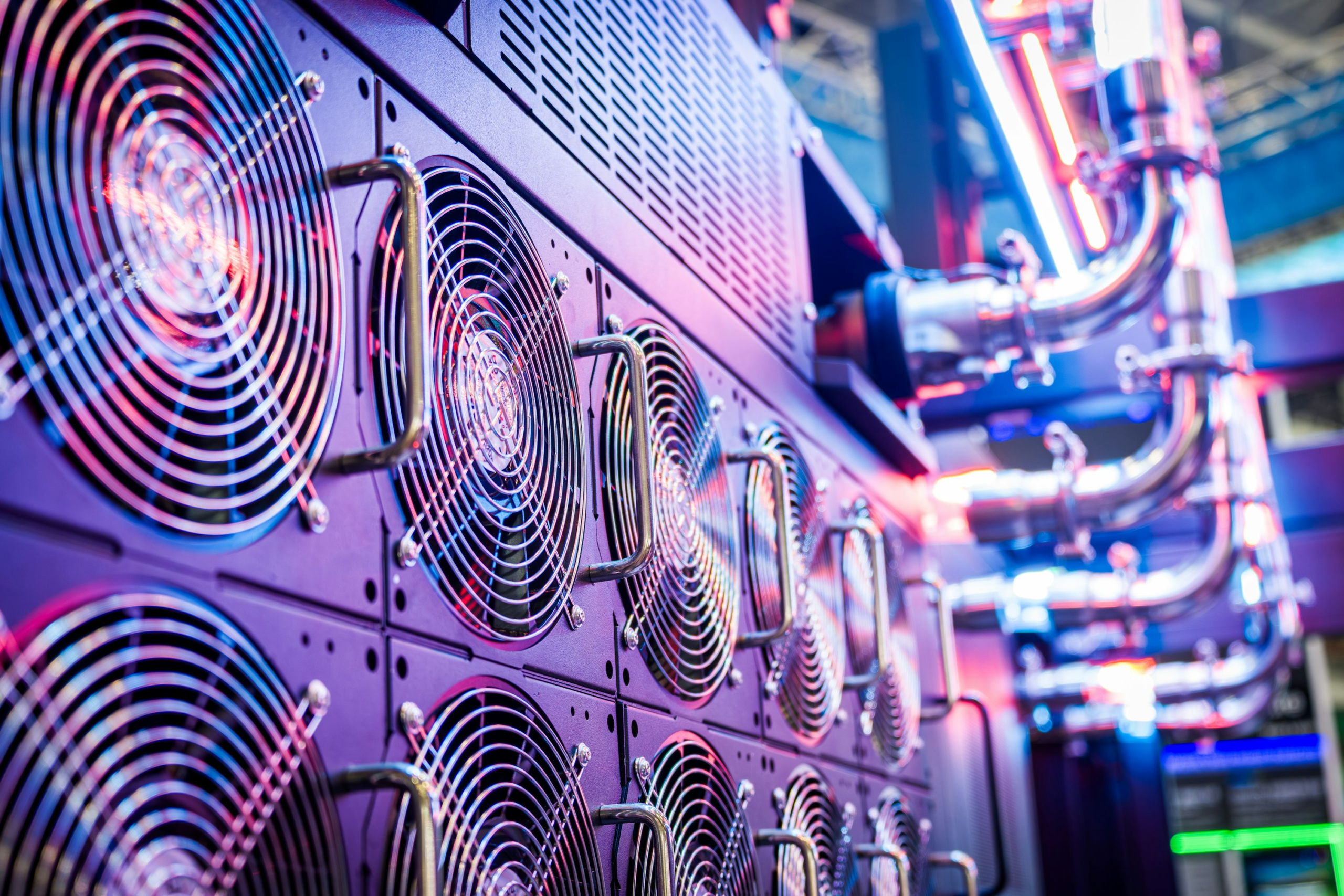
Conventional air cooling remains sufficient for a large part of the data-centre market, although the power density of modern AI accelerators places increasing amounts of heat inside comparatively small spaces. Direct-to-chip cooling brings liquid close to processors and other high-temperature components, moving heat more efficiently than relying entirely on conditioned air.
The technique changes the engineering risk rather than removing it. Once fluid circulates close to expensive computing equipment, operators need to understand not only its temperature but whether its chemical condition is damaging pipework, cold plates, seals, pumps, or other parts of the cooling system.
Trinovium is developing coolant around high-purity aqueous chemistry and corrosion protection, together with monitoring technology intended to identify conditions including scaling, particulate contamination, microbial growth, and biofilm formation.
Those concerns are familiar in other industrial fluid systems but acquire different economics beside clusters of AI accelerators. A cooling problem can reduce available compute even when processors, electricity, and network capacity are otherwise present, making thermal reliability part of the commercial capacity a data centre can sell.
Cooling moves into capacity planning
Europe’s data-centre expansion is already encountering physical constraints around grid access, land, energy efficiency, and, in some markets, water. Denser hardware introduces another consideration inside the building because a nominal megawatt of power is commercially useful only when the operator can remove the resulting heat.
AI infrastructure projects are already being designed around electricity and heat-management constraints together, while direct liquid cooling gives operators one way to increase rack density without expanding traditional air-handling systems at the same rate.
Deployments nevertheless introduce new infrastructure. Pipework, heat exchangers, pumps, coolant-distribution units, sensing equipment, and fluid-management procedures become part of an environment whose mechanical design historically centred much more heavily on air.
That can alter procurement as well. Customers buying high-density data-centre capacity need confidence not only in headline megawatts but in whether the facility can support the thermal characteristics of the hardware they intend to install, while operators may have to make design decisions before the exact processors deployed several years later are known.
Modular systems can reduce part of that risk because cooling capacity can develop alongside compute demand. Echelon and Trinovium are therefore working on surrounding thermal-management architecture as well as the coolant itself.
AI infrastructure pulls in new suppliers
The partnership also shows AI spending reaching companies outside the conventional computing supply chain. Trinity Biotech’s background lies in diagnostics and healthcare manufacturing rather than servers, yet high-purity fluid production, analytical chemistry, sensing, and traceability become relevant once liquid cooling requires tighter operational control.
Similar crossovers are likely as AI infrastructure matures. A modern data centre already combines electrical engineering, construction, telecommunications, energy procurement, mechanical systems, software, and physical security; higher-density liquid cooling adds chemical monitoring and another set of maintenance disciplines.
Echelon cites industry forecasts suggesting rapid growth in the liquid-cooling market during the rest of the decade, although forecasts of that kind are better treated as indicators of supplier expectations than measurements of deployed infrastructure.
The engineering pressure behind them is less speculative. Processors are concentrating more electricity and heat into smaller spaces, which forces the surrounding facility to change. As that density rises, the fluid passing across a cold plate becomes another piece of critical infrastructure whose condition helps determine how much computing a site can reliably operate.


